The State Department has a new obsession, and it’s kicking off in Washington on Thursday, July 16, 2026.
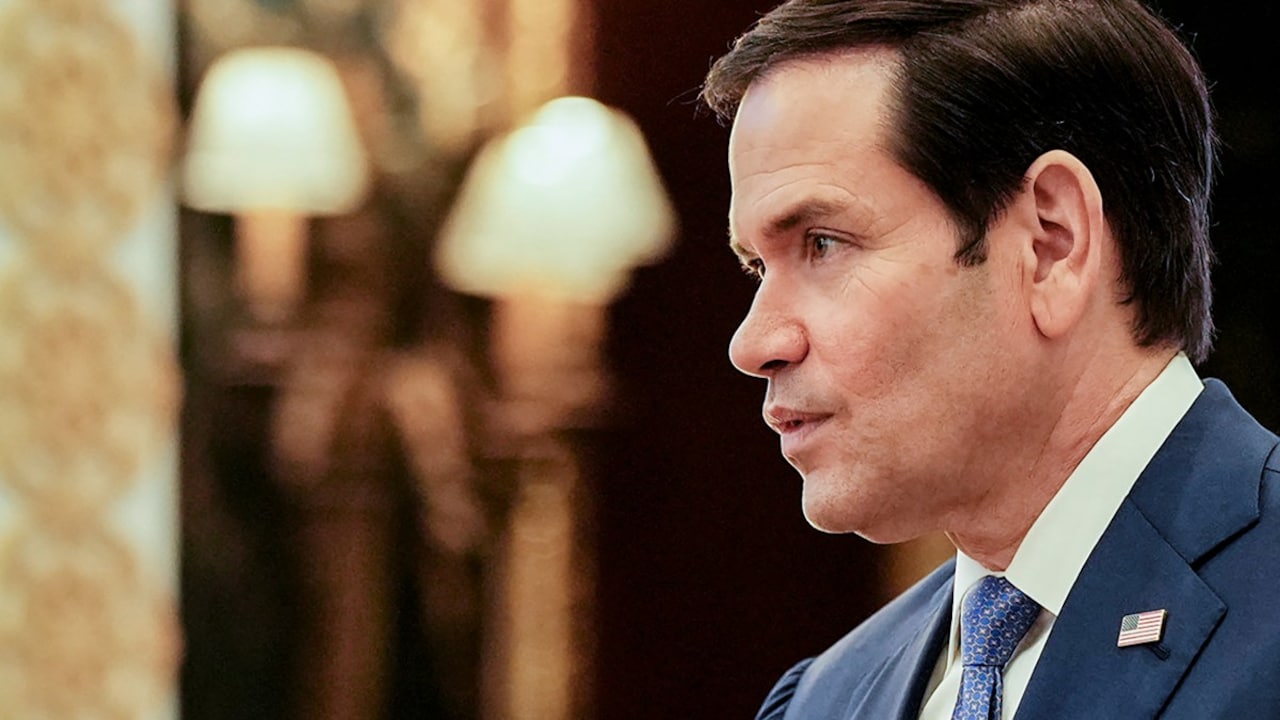
Secretary of State Marco Rubio is hosting a massive, high-level ministerial meeting focused on what the administration calls the "resurgence of transnational far-left terrorism". Over seventy countries have been invited, pulling in representatives from Europe, Latin America, and Asia.
On paper, the goal is simple. The State Department wants to coordinate law enforcement, swap intelligence, and track the money flow of violent far-left networks. But look beneath the diplomatic press releases and you'll find a highly controversial campaign that has career diplomats, intelligence officials, and foreign allies deeply worried.
What is really going on behind closed doors at this summit? Why are some of America’s closest allies keeping their distance?
To understand the real agenda, we have to look at the legal machinery of American counterterrorism and how it is being pointed in a radical new direction.
The Four Groups in the Crosshairs
This summit isn’t just a talking shop. The State Department has already spent months laying the groundwork for a major offensive. Since November 2025, the U.S. government has officially designated four specific European far-left groups as Foreign Terrorist Organizations (FTOs) and Specially Designated Global Terrorists.
These aren't household names in America, but they are highly active in Europe:
- Antifa Ost: An militant, German-based anti-fascist network known for targeted violent attacks against right-wing activists and police.
- Informal Anarchist Federation/International Revolutionary Front (FAI/FRI): An Italian-born anarchist network with a decades-long history of package bombs, arson, and armed attacks across Greece, Spain, and Italy.
- Armed Proletarian Justice: A violent anti-capitalist group active in southern Europe.
- Revolutionary Class Self-Defence: A militant Greek anarchist outfit known for targeting government buildings and security forces.
To put teeth into these designations, the State Department is putting up real money. They have authorized rewards of up to $10 million for information that disrupts the financial pipelines of these four specific groups.
During a preliminary law enforcement workshop in May 2026, U.S. prosecutors and counterterrorism agents brought in teams from 14 nations to coordinate prosecutions. Rubio’s summit is the grand finale of this build-up. The official line is that these groups represent a "globally networked" threat aiming to violently destabilize Western democracies.
But is that actually true? Or is there a more calculated, domestic play at work?
The Hidden Legal Backdoor to Domestic Surveillance
If you want to know why career intelligence analysts are nervous about this summit, you have to look at how American law treats domestic versus foreign terrorism.
In the United States, there is no official domestic terrorism list. The FBI cannot simply designate a domestic group—like Antifa or a far-right militia—as a terrorist organization because of first amendment protections on free speech and association. Because of this, investigating domestic political groups is incredibly difficult and legally sensitive.
Foreign Terrorist Organizations are a completely different story.
Once the State Department labels a foreign group an FTO, a massive suite of powerful intelligence and law enforcement tools opens up. The government can monitor communications, freeze assets, and prosecute anyone who provides "material support" to that group.
Here is the real strategy. If the administration can prove that domestic American activists are linked to designated foreign groups like Germany's Antifa Ost or Italy's FAI/FRI, they can use foreign intelligence powers to spy on Americans.
Intelligence officials have quietly confirmed that counterterrorism adviser Sebastian Gorka has pushed for exactly this strategy. By pinning foreign terrorism labels onto the broader anti-fascist movement, the administration can build a legal bridge to investigate domestic activists.
It’s a clever legal workaround. It’s also incredibly dangerous.
Why America's Allies Are Backing Away
This domestic-first agenda explains why the summit is receiving a frosty reception from several foreign capitals.
European diplomats aren’t stupid. They know that groups like FAI/FRI and Antifa Ost are violent and destructive. But they prefer to handle these groups through local police work, not global geopolitical campaigns. Several European allies are deeply concerned that Washington is dragging them into an American culture war. They don’t want their local police resources used as a pretext for the U.S. government to run surveillance operations on political dissidents back home.
Then there's the giant elephant in the room: India.
Despite Marco Rubio’s personal trip to New Delhi in May 2026 to strengthen bilateral ties with Prime Minister Narendra Modi, Indian officials are highly unlikely to attend the Washington summit.
Why? India has its own massive, decades-long battle with far-left militancy—specifically the Naxalite-Maoist insurgency in its red corridor. New Delhi has spent years fighting these armed groups on its own terms. They are highly skeptical of a U.S.-led, Western-centric framework that packages local guerrilla insurgencies together with European street-level anarchists. For India, entering a global, Washington-defined alliance on "far-left political terrorism" brings more diplomatic headache than practical security value.
The Threat Level: What the Data Actually Says
Let’s look at the actual numbers. Is transnational far-left terrorism really a surging, existential threat to the West?
According to independent national security research, the short answer is no.
A comprehensive analysis conducted by the Center for Strategic and International Studies (CSIS) tracked domestic political violence. The findings were clear: while left-wing violent incidents in the U.S. have crept up slightly over the last decade, they started at a near-zero baseline. Far-left violence remains significantly lower than historical levels of violence carried out by far-right extremists and jihadist attackers.
Political Violence Incidents in the U.S. (CSIS Historical Baseline)

Far-Right & Jihadist Violence: ■■■■■■■■■■■■■■■■■■■■ (Historically Dominant)
Far-Left Violence:            ■■■ (Rising slightly, but historically very low)
By prioritizing far-left violence as a primary global threat, the State Department is shifting resources away from groups that have historically caused far more casualties. This shift has sparked fierce pushback from civil rights groups. The ACLU has warned that the administration is systematically targeting political opponents and peaceful anti-war donors under the guise of combatting global terror.
Setting a Dangerous Precedent
Even within the Republican establishment, some officials are quietly warning about the long-term consequences of using counterterrorism tools this way.
If you build a weapon, you have to assume your political enemies will eventually get their hands on it.
One Trump administration official put it bluntly, warning that building these aggressive legal workarounds sets a dangerous precedent. If Rubio's State Department successfully uses foreign terrorist designations to investigate left-wing activists, what stops a future, progressive administration from doing the exact same thing to conservative groups?
Imagine a future administration designating an overseas, right-wing nationalist group as a Foreign Terrorist Organization, then using that designation to justify mass surveillance on conservative donors, pro-life groups, or gun-rights activists in America.
It’s a classic case of short-term political gain creating a long-term constitutional nightmare.
Actionable Takeaways for Following This Summit
If you want to understand the true impact of Rubio's summit, don't focus on the official joint statements or diplomatic photo-ops. Watch these three indicators instead:
- Watch the Attendee List: See which countries actually send high-level ministers and which ones quietly send low-ranking embassy staff. If major European players like France, Germany, or the UK send low-level delegates, it’s a clear sign of a diplomatic boycott.
- Look for New Sanctions and FTO Designations: The real indicator of success for this summit is whether other nations agree to mirror the U.S. designations of Antifa Ost, FAI/FRI, Armed Proletarian Justice, and Revolutionary Class Self-Defence. If European allies refuse to black-list these groups under their own laws, the U.S. initiative is effectively dead in the water.
- Track the Domestic Prosecutions: Watch the Justice Department over the coming months. Look for federal conspiracy or "material support for terrorism" charges brought against American activists. If we start seeing domestic protesters charged with providing support to obscure European anarchist cells, we'll know the legal bridge has been successfully built.
The threat of political violence is real, and it deserves serious, professional attention from law enforcement. But turning localized, street-level extremism into a massive, global geopolitical crusade is an entirely different game. By trying to force an international alliance to fight an American domestic political battle, Marco Rubio risks alienating key allies, stretching security resources thin, and setting a legal precedent that both sides of the aisle will eventually regret.