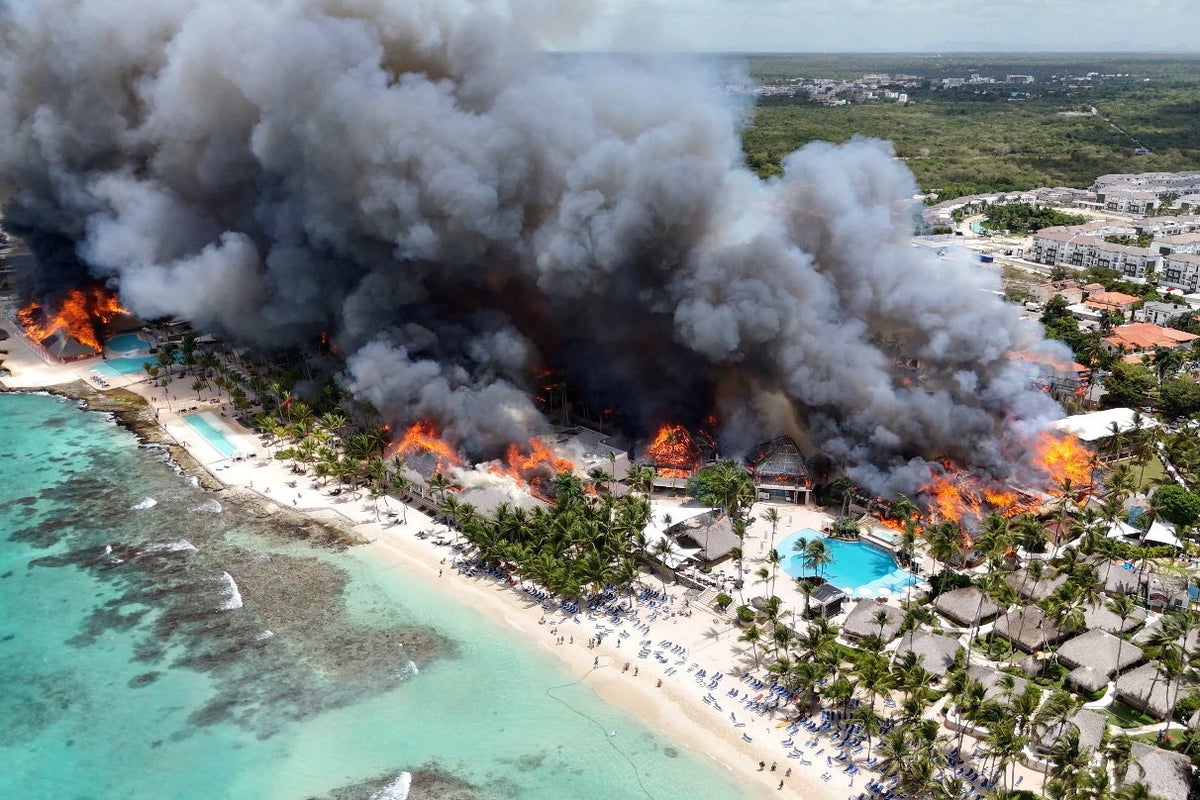
A tropical paradise can turn into a nightmare in seconds. On June 19, 2026, a massive Dominican Republic resort fire tore through the popular Viva Wyndham Dominicus Beach Hotel in Bayahibe. The images captured by local witnesses and drone footage were terrifying. Plumes of thick, pitch-black smoke billowed high over the white sands and crystal-clear waters of the Caribbean coastline. While the visual drama dominated social media feeds, the human cost was devastating. A 46-year-old Italian tourist named Francesca Valentino tragically lost her life, and emergency workers had to scramble to evacuate nearly 1,700 guests and staff from the rapidly spreading inferno.
Most news outlets focused purely on the shocking footage. They showed the flames licking the sky and the panicked crowds running toward the beach. But if you look past the raw shock value, this disaster highlights a glaring, systemic vulnerability in international holiday infrastructure that travelers routinely ignore. Paradise comes with hidden structural risks. When you book a luxury getaway, you assume the highest safety standards are baked into the price tag. This incident proves that assumption can be dead wrong. For a different perspective, read: this related article.
The Day Paradise Burned in Bayahibe
The fire started on a Friday afternoon, a time when most guests were either relaxing by the pool or returning from daytime excursions. The Viva Wyndham Dominicus Beach resort is located in the La Altagracia province, a sweeping stretch of southeastern coastline known for drawing millions of international travelers every year. It sits right in the heart of the country's economic engine. The Dominican Republic is the most visited destination in the Caribbean, logging over 5.6 million visitors in just the first five months of 2026 alone.
When the first sparks ignited, the situation escalated with terrifying speed. Within minutes, the central structures of the resort were fully engulfed. Local authorities deployed 15 firefighting units to the scene, but the first responders faced an uphill battle from the moment they arrived. The fire didn’t just crawl; it leaped across buildings. Further reporting on this matter has been shared by Associated Press.
While the neighboring sister property, the Viva Wyndham Dominicus Palace, escaped damage and remained operational, the main beach resort was fundamentally ruined. The emergency services agency, DAEH, confirmed the fatality of Valentino, while three other individuals were rushed to nearby medical facilities with severe injuries. Another six people, including a mix of hotel guests, day visitors, and initial emergency responders, required immediate treatment on-site for smoke inhalation and minor burns.
The immediate logistics of moving 1,690 tourists out of harm's way created total chaos. Guests were forced to abandon their belongings, passports, and medication in their rooms as staff and local citizens directed them toward the relative safety of the open beach. The Emergency Operations Center eventually coordinated the relocation of these thousands of displaced travelers to surrounding hotels and temporary housing units, but the emotional fallout and financial loss for those families will linger for months.
Why Tropical Thatch Roofs Are a Fire Trap
Every postcard of a Caribbean resort features them. Beautiful, rustic, hand-woven palm-thatch roofs that give you that authentic, disconnected-from-the-world feeling. Architects call it vernacular styling, and marketers sell it as eco-luxury. Fire safety engineers, however, view it with sheer dread.
The Dominican Republic's Emergency Operations Center openly stated that the fire spread rapidly because major portions of the resort's roofing were built with highly flammable natural palm thatch. When you combine bone-dry palm leaves with the relentless, stiff sea breezes characteristic of the Bayahibe coast, you get the perfect recipe for a firestorm.
- The Chimney Effect: Natural thatch creates a highly porous overhead structure. Air moves easily through the woven layers. When a fire starts underneath, the thatch acts like a chimney, drawing oxygen upward and feeding the flames.
- Embers on the Wind: Burning thatch doesn't just sit there. High winds break off chunks of burning palm leaves and carry them hundreds of feet away. These airborne embers land on adjacent bungalows, igniting multiple separate fires simultaneously.
- The Chemistry of Dry Palm: Under the intense Caribbean sun, these natural roofs bake for years. They lose every ounce of moisture, turning into pure tinder. Without heavy, expensive chemical treatments applied at regular intervals, they are essentially fuel waiting for a spark.
Resorts love thatch because it keeps buildings cool naturally and looks fantastic on Instagram. But the structural reality is that a fire in a thatch-roofed building behaves entirely differently than a fire in a concrete or asphalt-shingled building. It eliminates the buffer time guests need to escape safely. You don’t have fifteen minutes to realize what is happening. You have seconds.
The Reality of Emergency Response Abroad
When you stay at a resort in a developing nation, you aren't backed by the same dense network of municipal emergency services you find in major Western cities. This isn't a knock on the bravery of local firefighters. It's a matter of geography and funding.
Bayahibe is a relatively isolated coastal village. While it's close to major hubs like La Romana and Punta Cana, getting fifteen specialized firefighting units to a rural coastal point takes critical time. Roads can be narrow, clogged with tourist transport vans, or poorly mapped.
Furthermore, water pressure is a constant struggle in coastal resort zones. Resorts often rely on private cisterns and wells. When a massive fire demands thousands of gallons of water per minute to suppress a blaze fueled by wind and thatch, the local infrastructure gets pushed past its breaking point almost instantly.
We also have to talk about the language barrier during a mass evacuation. When you have nearly 1,700 guests from Italy, the United States, Canada, and Germany running for their lives, clear communication is non-existent. Resort staff are trained for hospitality, not crisis management. Expecting a low-wage worker to effectively manage a panicked crowd of hundreds of foreigners during a fast-moving disaster is a gamble that rarely pays off.
How to Vet a Hotel for Fire Safety Before Booking
You don't need to stop traveling to the tropics, but you do need to change how you choose your accommodation. Stop looking only at the pool photos and start looking at the construction. You can spot red flags before you ever enter your credit card information.
Look closely at the guest room photos. Are the actual sleeping quarters housed under massive thatch roofs, or are the thatch structures limited to open-air lobby spaces and beach bars? It's much safer to sleep in a concrete-block building with a standard roof and walk over to a thatch bar during the day than it is to sleep directly under a tinderbox.
Don't hesitate to email the property directly before booking. Ask a simple question. Does the resort have hardwired smoke detectors and automated fire sprinkler systems in every single guest room? Many older resorts, or those built under older local building codes, only have battery-operated alarms, or worse, no alarms in individual rooms at all, relying instead on common-area pull stations.
Read the negative reviews on major travel forums. Search specifically for terms like "fire," "alarm," "safety," or "electricity." Guests frequently complain about exposed wiring, sparking outlets, or flickering lights in reviews. These aren't just minor inconveniences. They are structural failures that directly cause catastrophic electrical fires.
What to Do If Your Resort Catches Fire
If you find yourself caught in a crisis like the one at Viva Wyndham Dominicus Beach, survival depends on immediate, decisive action. You can't wait for instructions that might never come in your language.
Pack a small, waterproof "go-bag" that stays right by the door or inside your room safe. This bag should hold your passports, essential prescription medications, a external battery bank, and cash. If an alarm sounds, you grab this bag and exit immediately. Never waste time opening suitcases to save clothing or expensive cameras.
Locate your escape routes the moment you check-in. Don't just glance at the map on the back of the door. Walk the path out to the open air. Know exactly how many doors sit between your room and the nearest exit stairwell or open courtyard. If the hallway fills with thick black smoke, you will need to count those doors in the dark.
If you smell smoke or hear a commotion, don't wait for the official resort alarm system to sound. The fire in Bayahibe proved that natural materials can burn faster than manual alert systems can be triggered by staff. Trust your senses. If something feels wrong, get out of the building immediately and head to the beach or an open parking lot.
Move upwind from the smoke. In a coastal environment, the wind generally blows from the sea toward the land during the day, or vice versa at night. Look at which way the smoke is blowing and run in the opposite direction. Inhaling the smoke from burning synthetic resort furniture and treated thatch can knock you unconscious in just two or three breaths.
Next Steps for Smarter Travel
The tragedy in the Dominican Republic should change the way you pack and plan for your next vacation. Do these three things before your next international flight.
- Buy a Portable Smoke Detector: Spend twenty dollars on a travel-size, battery-operated smoke and carbon monoxide detector. Throw it in your suitcase and place it on the bedside table of every hotel or villa you rent. It could save your life if the property's system fails.
- Scan Your Documents to the Cloud: Take clear photos of your passport, driver's license, travel insurance policy, and medical cards. Store them in a secure, cloud-based folder that you can access from any smartphone or computer worldwide. If your physical documents burn, having digital copies speeds up the emergency consular replacement process exponentially.
- Verify Your Travel Insurance: Call your provider and verify that your policy covers emergency medical evacuation and catastrophic trip interruption. You need to know exactly who pays for your flights and emergency lodging if your resort burns to the ground mid-vacation.
Stop choosing resorts based purely on the aesthetic of the architecture. A beautiful thatch roof looks great until it doesn't. Prioritize your safety, understand the vulnerabilities of your destination, and always have an exit plan.