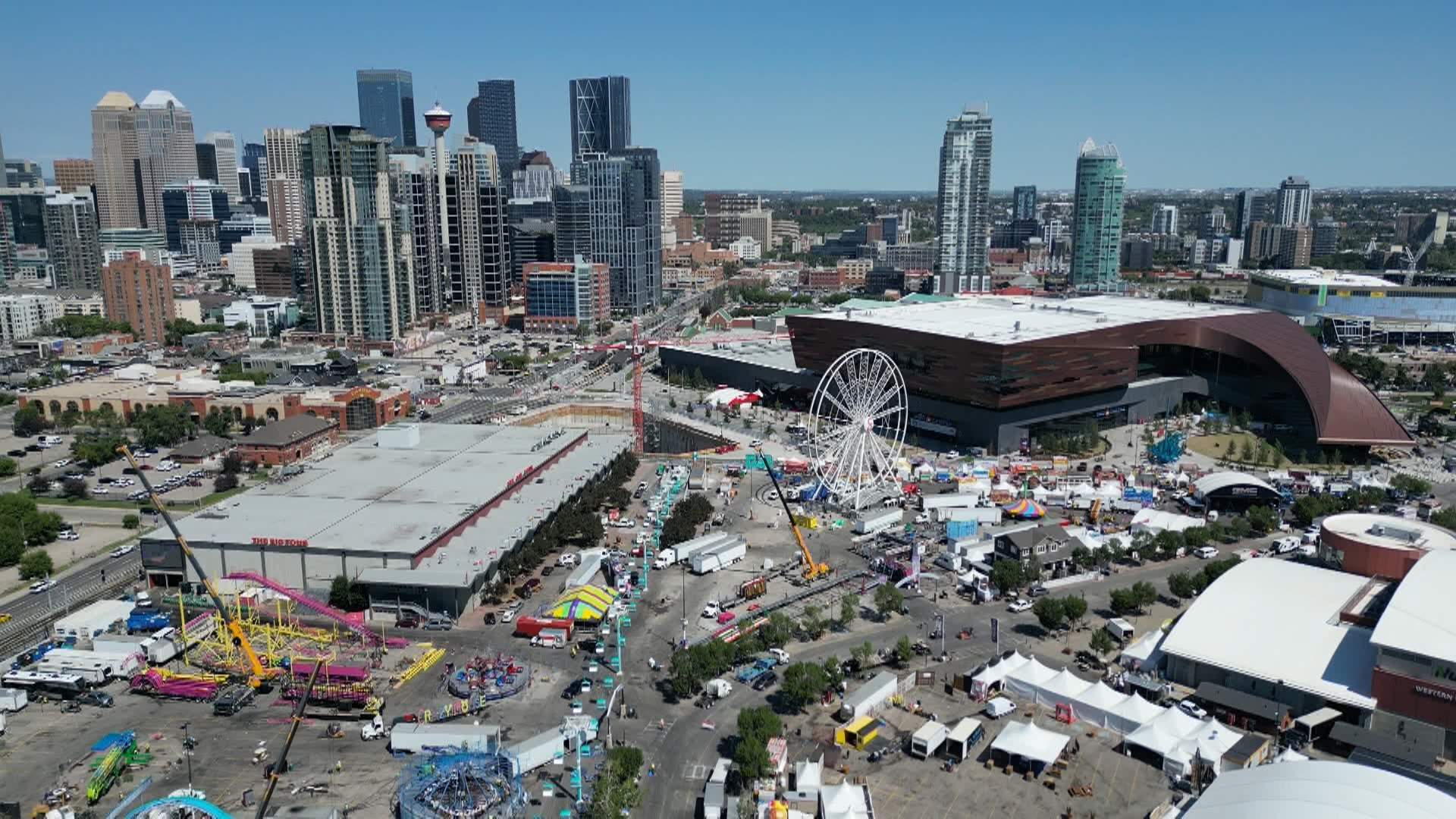
The gates have closed, the boots are packed away, and the midway trucks are heading up the highway to Edmonton. Once again, the arm-chair analysts are out in full force.
You've probably seen the headlines. Calgary Stampede attendance declines slightly for 2nd season running. Some commentators are already sounding the alarm, wondering if the magic of "The Greatest Outdoor Show on Earth" is starting to fade. In related updates, read about: Why Laura Loomer Wants You To Think Every Political Photo Is Fake.
Let's look at the actual numbers before anyone panics.
This year, exactly 1,411,954 people walked through the turnstiles. Yes, that's down by roughly 60,000 visitors compared to 2025's count of 1,470,288. And yes, it sits below the absolute peak of 1,477,953 set during that wild, post-pandemic high of 2024. Associated Press has provided coverage on this critical issue in great detail.
But calling this a failure is just flat-out wrong.
In a year where people are watching every single dollar they spend, pulling in over 1.4 million visitors is a massive victory. It is officially the third-busiest Stampede in history. If this is what a slump looks like, most festivals on the planet would kill for it.
Why the gate numbers don't tell the whole story
Focusing strictly on gate clicks misses how modern festivals work.
I've watched these numbers closely for years. The Stampede isn't just a theme park with roller coasters and deep-fried butter. It's a massive, multi-faceted cultural machine. Gate attendance is a vanity metric. What actually matters is who is showing up, what they are spending, and how the local economy responds.
The city downtown was packed. Restaurants were full. Hotel rooms were booked solid. Shelia Taylor, who heads the Calgary Downtown Association, made it clear that local merchants felt the boom regardless of a minor dip at the main gates.
If you talk to local business owners, they'll tell you the same thing. The corporate parties were back. The patios along 17th Avenue were overflowing.
We also saw massive names draw crowds that didn't necessarily show up in the daily grounds-admission tallies. Rapper A$AP Rocky packed out the Scotiabank Saddledome. Prime Minister Mark Carney spent his weekend flipping pancakes and wandering the midway, bringing a massive media circus along with him.
The energy was there. The crowd just looked slightly different this year.
The reality of the 2026 wallet squeeze
Let's talk about the elephant in the room. Life has gotten incredibly expensive.
Canadians are dealing with relentless affordability struggles. When a family of four faces a steep bill just to get through the gates, buy a few corn dogs, and ride the Ferris wheel, they start making hard choices.
Stampede CEO Joel Cowley acknowledged this head-on. He noted that the organization had to fight hard against the economic headwinds.
To keep things accessible, they did something smart. They pushed four different free-admission days. They leaned heavily into off-park community activations. That meant hundreds of thousands of people got their Stampede fix at local community pancake breakfasts without ever buying a gate ticket.
That is not a sign of a dying brand. That's a sign of a legacy event adapting to keep its community happy.
If people chose to eat free pancakes in a parking lot instead of spending $100 on the midway, the community still celebrated. The spirit remained intact.
The local vs tourist breakdown
Who actually goes to the Stampede? This is where the data gets incredibly interesting.
The organizers tracked the demographics of this year's crowd, and the results show how deeply rooted the event is in the local community:
- 70 percent of the attendees were from the Calgary area.
- 11 percent traveled from other parts of Alberta.
- 12 percent came from other Canadian provinces.
- 7 percent were international visitors, including 2 percent from the United States.
Some might look at that 7 percent international number and think it's low. But that small slice of the pie is doing the heavy lifting.
Cowley pointed out that the 30 percent of attendees who come from outside Calgary are the ones driving the massive economic engine. They stay in the hotels, rent cars, and buy high-end tickets to the Rangeland Derby and the afternoon rodeos. Last year, that outside crowd generated an estimated $389 million in economic activity across the province of Alberta.
Even with a slight dip in local casual gate-goers, the high-spending tourist base remained remarkably stable.
Great weather vs economic friction
We can't ignore the role of mother nature.
Historically, Stampede attendance lives and dies by the weather. A couple of heavy thunderstorm afternoons can easily shave 50,000 people off the final tally.
This year, the weather was exceptionally good. We had clear skies, warm temperatures, and almost no major weather delays.
This tells us something crucial. If the weather was perfect and attendance still dipped slightly, the economic friction was real. The cost of living is the main dampener here. People simply had less disposable cash to burn on the midway games.
When people did show up, they loved it. Mid-Stampede surveys showed that 91 percent of guests felt the event met or exceeded their expectations. On top of that, 86 percent said they'd definitely be back next year.
The product isn't broken. The customers are just broke.
The shifting cultural expectations
There's another factor at play that traditional news reports don't like to talk about. The cultural expectations around large-scale western events are evolving.
Animal welfare remains a hot-button issue. A chuckwagon collision on Saturday night left one horse injured. It quickly sparked fresh debates and protests from advocacy groups.
The Stampede has made massive strides here. They have introduced heart monitors for horses, shaded pens for bulls, and strict veterinary protocols. But the pressure isn't going away.
For a younger, more urban demographic, these concerns matter. If the Stampede wants to keep drawing over 1.4 million people in the future, they have to navigate this divide carefully. They must balance traditional rodeo heritage with modern urban values.
What to do if you are planning for next year
If you want to experience the Stampede without draining your savings, you have to play the game smarter. Don't just show up on a Saturday afternoon and expect a cheap day out.
First, target the value days. The Stampede always offers family days, kids' days, and community days with free or heavily discounted admission. Watch the schedule and plan your entry times around those windows.
Second, explore off-park events. Some of the best parts of Stampede week happen in city parks, local block parties, and corporate parking lots. You can get world-class food, live music, and incredible energy without spending a dime on a gate ticket.
Third, buy rodeo and evening show tickets early. If you are traveling from out of town, don't leave these to the last minute. The premier events like the Rangeland Derby still sell out fast, and buying early secures the best prices.
The minor drop in attendance isn't a crisis. It's a market correction. The Calgary Stampede remains a massive, cash-generating cultural powerhouse that isn't going anywhere anytime soon.