Peace in the Middle East rarely arrives with a neat bow on top. Instead, it usually lands amidst a flurry of contradictory headlines, late-night social media declarations, and sudden explosions on the ground.
US President Donald Trump just announced what he calls a historic breakthrough: a phased agreement mediated by Egypt, Qatar, and Turkey through his newly formed "Board of Peace" aimed at the complete disarmament of Hamas and other armed groups in Gaza. Yet, within hours of that grand announcement, Israeli airstrikes were once again shaking parts of the enclave.
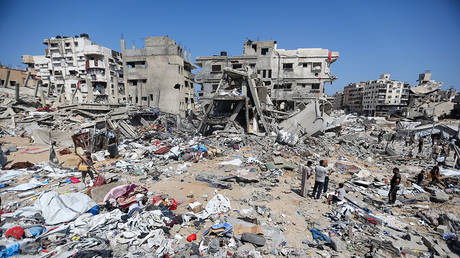
If you look only at the official press releases, you see a masterclass in diplomatic momentum. If you look at the smoking rubble in Gaza, you see the brutal reality on the ground hasn't caught up with the rhetoric.
The Reality Behind the Board of Peace Agreement
Let's break down what was actually promised. According to announcements made via Truth Social and confirmed by regional mediators, the plan relies on a sequenced handoff. Hamas is supposedly slated to surrender its arms gradually to a technocratic Palestinian committee. In exchange, Israeli forces are supposed to withdraw from the strip in coordination with the deployment of an international stabilization force.
Sounds simple on paper. In practice? It’s a structural nightmare.
Israel didn't immediately jump to endorse every facet of the arrangement, maintaining deep skepticism that Hamas will ever genuinely lay down its weapons. Prime Minister Benjamin Netanyahu’s government has historically insisted on complete demilitarization without leaving loopholes, while parts of Hamas continue to condition heavy weapon surrenders on the future creation of an independent Palestinian state—a political outcome that the current Israeli coalition fiercely opposes.
Why the Disarmament Timeline Doesn't Add Up
US officials are privately admitting that while the roadmap exists, the actual execution could easily take a year or longer. That is an eternity in a conflict zone where a single stray rocket or miscalculated airstrike can torch months of delicate negotiations.
Look at the track record since the fragile ceasefire took hold last October. More than 1,000 Palestinians have been killed in ongoing Israeli military operations, keeping the baseline level of hostility exceptionally high. When Trump claims that all threats are being systematically dismantled, local residents staring at fresh craters know the war never truly stopped for them.
Mediators from Cairo and Doha face an uphill battle trying to get the National Committee for the Administration of Gaza physically operational inside the strip. Until governance and security handoffs move from conference tables in luxury hotels to the actual streets of Gaza City, every peace framework remains highly fragile.
The International Divide
The friction isn't just local. Trump's "Board of Peace"—anchored by figures like Marco Rubio, Steve Witkoff, Jared Kushner, and Tony Blair—has received a chilly reception from traditional Western allies. Countries like France, Germany, and the UK have raised sharp questions about whether this parallel diplomatic structure bypasses established international institutions.
Meanwhile, billions in pledges are floating around, tied to post-war reconstruction and relief packages. But money doesn't clear roadblocks or disarm militants.
What Comes Next
Don't expect an overnight transformation. The path forward depends entirely on whether the multi-phased security arrangements can survive the inevitable spoilers on both sides. If the international stabilization force actually deploys and local administrative committees manage to take over daily governance without triggering immediate clashes, this might genuinely mark a turning point.
If not, it will join the long graveyard of Middle Eastern peace plans that looked brilliant on a screen and collapsed under the weight of real-world mistrust. Watch the operational movements on the ground, ignore the optimistic press statements, and keep a close eye on whether the temporary quiet holds past the weekend.