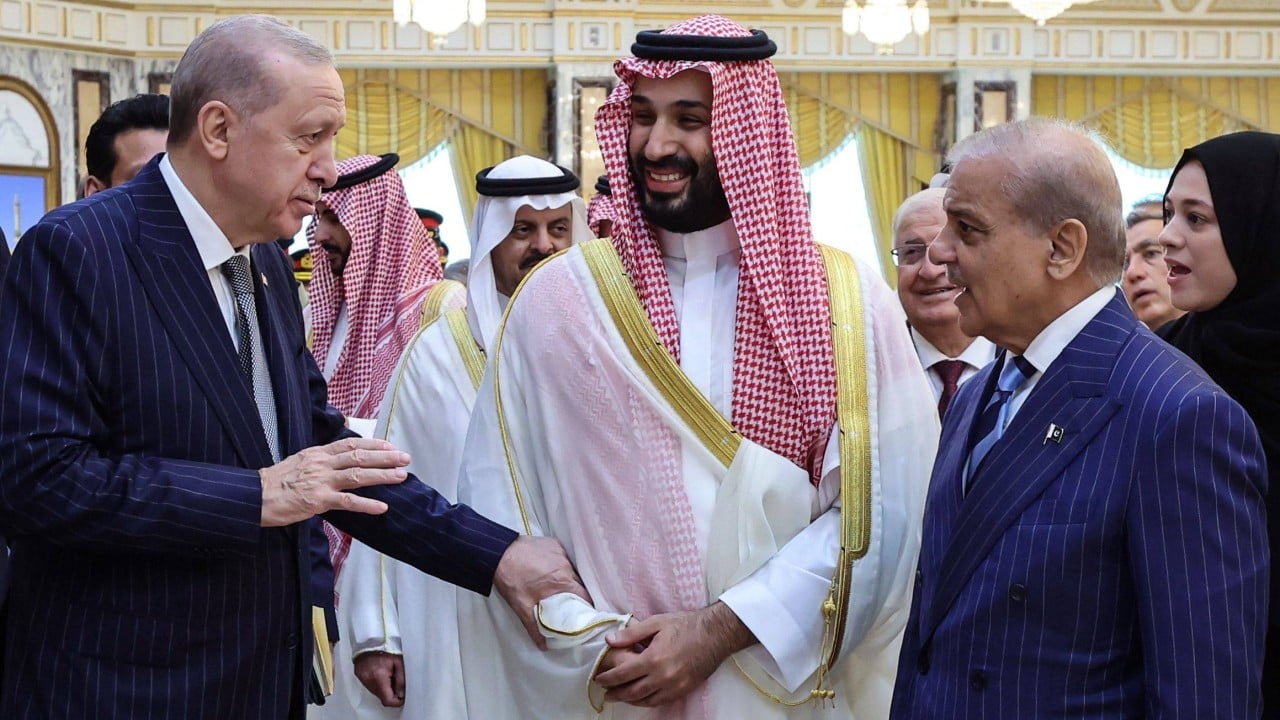
Headlines blare about a new Islamic NATO. They call the Mecca Joint Defense Agreement a game-changing security axis. You shouldn't believe the hype. When Saudi Crown Prince Mohammed bin Salman, Turkish President Recep Tayyip Erdogan, and Pakistani Prime Minister Shehbaz Sharif signed that mutual defense pact in Mecca, they created a diplomatic shield, not an integrated military machine.
If you look past the sweeping rhetoric about an armed attack on one being an attack on all three, you find a very different reality. This arrangement lacks the operational backbone, joint command structures, and binding automatic triggers that make organizations like NATO actually work. But calling it toothless misses the point entirely. For another look, see: this related article.
The Anatomy of the Mecca Agreement
Let's look at what the pact actually establishes. Signed on August 7, 2026, the agreement unites three heavyweights of the Muslim world: Saudi capital, Turkish defense manufacturing, and Pakistan's massive military manpower alongside its nuclear deterrent.
Turkish Foreign Minister Hakan Fidan noted that the framework envisions a ministerial committee and a permanent secretariat. That sounds impressive on paper. Yet, look closely at the text. Unlike NATO's Article 5, which demands concrete and coordinated responses, the Mecca pact leaves the nature of the actual response entirely up to each individual state. Related analysis on this matter has been shared by Wikipedia.
There is no shared military headquarters. There is no combined air defense network. If a crisis erupts, Riyadh, Ankara, and Islamabad will interpret their obligations through the lens of their own national interests first.
Why Saudi Arabia, Turkey, and Pakistan Signed It Now
Geopolitics rarely moves without pressure. Regional hostilities involving Iran and its proxies have exposed raw vulnerabilities across the Gulf. Saudi Arabia wanted an upgraded security blanket, building directly upon the bilateral defense agreement signed with Pakistan.
Turkey wants deeper integration into Gulf procurement markets while balancing its own complex regional frictions. Pakistan gains a vital anchor for financial and diplomatic cooperation.
Washington's reaction was muted surprise. U.S. officials didn't panic because American defense planners know how hard it is to operationalize a trilateral pact across such vast geographic distances with vastly different strategic doctrines. Burden-sharing is welcomed in Washington, even when it wears an independent coat of paint.
The Industrial Realities Behind the Headlines
Forget the battlefield scenarios for a moment. The real action here is industrial and economic.
Turkey's defense sector has boomed over the last decade. Riyadh wants access to that technology without being completely dependent on Western export controls. Pakistan possesses skilled military personnel and defense manufacturing capacity that can scale rapidly with Saudi capital injection.
This pact functions much more like a strategic industrial consortium than a traditional military alliance. It formalizes trade routes, drone purchases, and joint manufacturing initiatives that were previously handled through messy, ad-hoc bilateral deals.
What the Critics Miss
Analysts rushing to compare this to historical blocs are missing the subtle shifts on the ground. The signatories aren't trying to isolate themselves. Turkish officials explicitly stated the agreement remains open to other regional states and doesn't replace existing bilateral treaties.
It is an insurance policy. It signals to adversaries that these three nations will consult and coordinate when pushed, raising the diplomatic cost of aggression.
Stop treating the Mecca pact as a Middle Eastern NATO. Treat it for what it is: a pragmatic, transactional alignment of convenience between three states trying to secure their own borders while the old security order cracks apart.
Take a hard look at defense supply chains and regional trade corridors over the next year. That's where you'll see if this agreement actually changes the map.
Saudi Arabia, Turkey And Pakistan sign historic Mecca defense pact
This video provides a detailed breakdown of the signing ceremony and the immediate strategic implications of the Mecca defense agreement.
http://googleusercontent.com/youtube_content/1