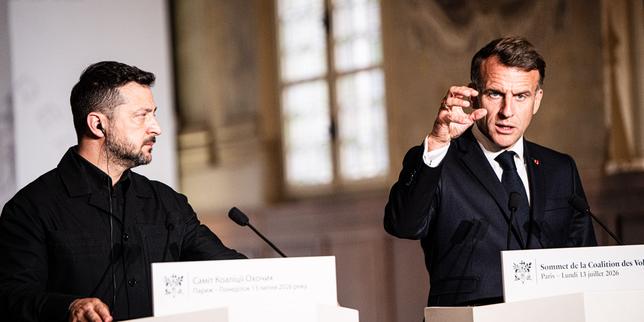
Public handshakes and warm hugs on the tarmac can easily fool you. Watching Emmanuel Macron and Volodymyr Zelensky stand side by side at the Elysee Palace, you might think they're perfect partners in European security. The reality is far messier. For over four years, the bond between the French president and his Ukrainian counterpart has been a rollercoaster of sudden policy shifts, deep frustration, and strategic misreadings.
This isn't a simple wartime bromance. It's a complicated, transactional alliance built on conflicting political DNAs. Macron likes long diplomatic games and macro-strategic visions. Zelensky lives in the immediate, desperate present where survival depends on concrete weapon deliveries.
As Paris hosts a massive military parade for the July 14 celebrations, the two men are showing a united front. Yet behind the scenes, the friction points haven't vanished. Understanding how they got here tells us exactly where the future of European defense is heading.
From Early Warmth to the Humiliation Trap
The relationship didn't start with the 2022 invasion. It began back in 2019. Macron was the first Western leader to meet Zelensky when the former comedian was just a candidate testing the political waters. Macron saw a fellow young disruptor, an outsider who had upended the status quo.
Then came February 2022. The invasion changed everything, but it didn't instantly align their worldviews.
During the first few months of the war, Paris and Kyiv were speaking completely different languages. Macron kept trying to play the mediator. He spent endless hours on the phone with Vladimir Putin, convinced that French diplomacy could find an off-ramp for the Kremlin. This led to his infamous remark that the West must not "humiliate Russia".
In Kyiv, those words felt like a stab in the back. Zelensky didn't want an off-ramp for Putin. He wanted artillery. The Ukrainian government grew deeply suspicious of French intentions, worrying that Macron would try to force them into a premature peace deal that sacrificed Ukrainian territory. The early warmth evaporated, replaced by a cold, transactional distance.
The Pivot to Strategic Ambiguity
The real turning point didn't happen because of a sudden burst of empathy. It happened because Macron realized his diplomatic track with Moscow was dead. He needed a new strategy to assert French leadership in Europe, especially as Washington's long-term commitment to NATO began to look shaky.
France shifted from being the cautious mediator to the loudest hawk in Western Europe. Macron began pushing a doctrine of "strategic ambiguity." He openly refused to rule out sending Western troops to Ukraine, a move that stunned Berlin and Washington but caught Zelensky's attention.
Suddenly, France wasn't the country dragging its feet. Paris was setting the pace. The delivery of Scalp cruise missiles and the announcement of Mirage 2000 fighter jets solidifies this shift. Zelensky learned to stop listening to Macron's theoretical speeches and start looking at the shipping manifests.
Two Leaders with Conflicting Pressures
To understand why they misread each other so often, look at their domestic battlegrounds. Zelensky answers to a population fighting an existential war. He cannot afford to be patient. He uses public shaming as a diplomatic tool, frequently calling out Western allies on social media for not moving fast enough.
Macron detests being publicly pressured. He views himself as the architect of a sovereign Europe, someone who looks decades ahead rather than week to week. He also has to manage a fractured domestic political landscape where both the far-right and the far-left criticize his financial and military support for Kyiv.
When Ukraine demands immediate entry into NATO, Macron hesitates, weighing the risks of a direct clash between nuclear powers. When Macron talks about rebuilding European security architectures after the war, Zelensky sees a distraction from the Russian bombs hitting civilian infrastructure.
The Coalition of the Volunteers Real Test
The diplomatic dance reaches its peak with the 2026 Paris summit. France and the UK have gathered dozens of countries under the "Coalition of the Volunteers" banner, an initiative designed to provide security guarantees to Ukraine once the fighting stops.
On paper, this looks like a massive win for both leaders. Macron gets to showcase his vision of European strategic autonomy. Zelensky gets a concrete promise that his country won't be left vulnerable to another invasion.
The friction lies in the execution. Some coalition members are ready to put boots on the ground for training and stabilization forces. Others are terrified of the logistics. The mismatch between French rhetoric and actual industrial capacity remains an issue. France can design brilliant geopolitical frameworks, but it simply cannot match the raw manufacturing output of the United States. Zelensky knows this. He praises Paris publicly while keeping his main phone line open to Washington.
What Happens When the Cameras Turn Off
The missteps and misunderstandings between these two men aren't just historical trivia. They define the limits of European power. The relationship works best when both sides accept what the other cannot change. Macron isn't going to stop giving grand philosophical speeches about European destiny. Zelensky isn't going to stop demanding more weapons.
Their alliance is a marriage of convenience, hardened by years of crisis. They don't need to be best friends. They just need to keep delivering on their shared survival strategy.
For anyone tracking European foreign policy, watch the actual military deliveries over the next six months. Ignore the diplomatic dinners at the Elysee. Keep a close eye on the French defense budget allocations for Ukraine and the actual deployment schedules of the international coalition staff in Kyiv. That's where the real story is written.