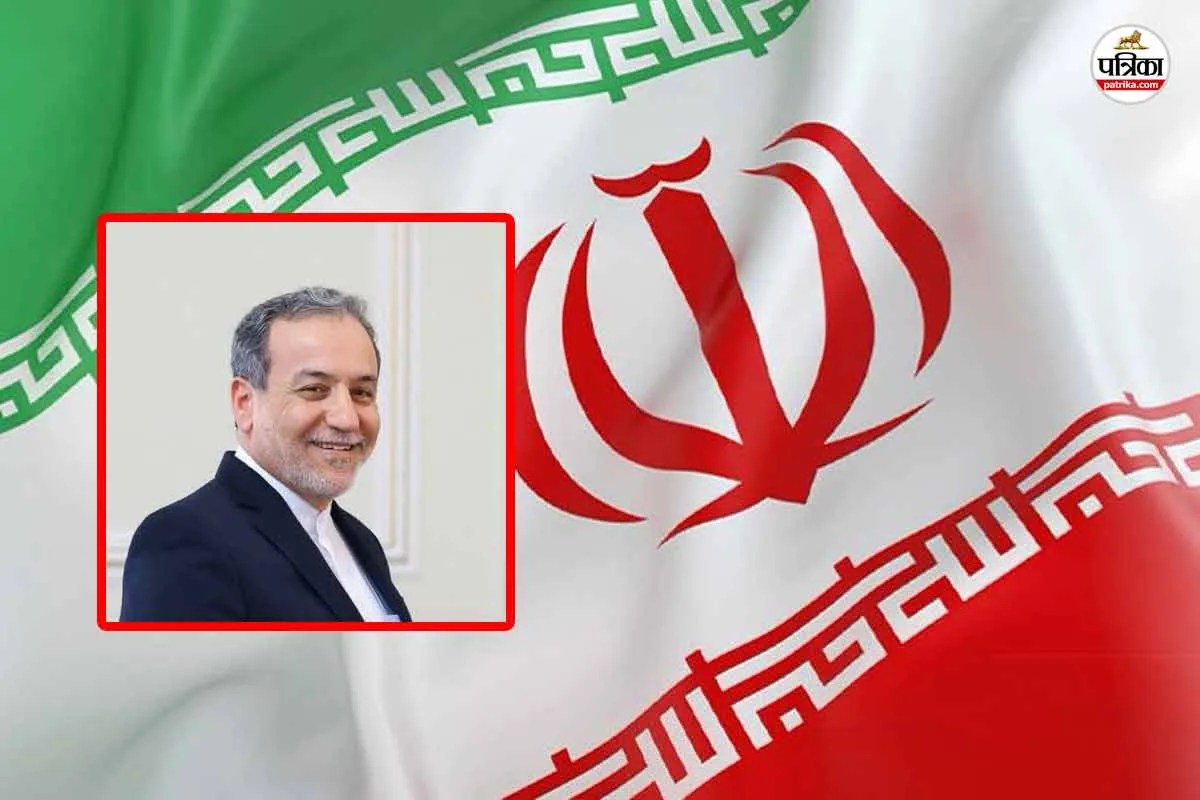
The headlines are screaming about a potential breakthrough or an absolute catastrophe in the Middle East, but most analysts are missing the real story. Iranian Foreign Minister Abbas Araghchi recently turned heads by drawing a hard line on when and how Tehran will actually negotiate with Washington. If you think this is just standard diplomatic posturing, you're looking at the chessboard all wrong.
Iran isn't begging for peace. They're demanding recognition for what they call a strategic victory after weeks of brutal, high-stakes military exchanges.
The competitor networks want you to believe that a simple ceasefire is right around the corner. It isn't. Tehran just made it clear that diplomatic talks won't even get off the ground for a final deal while Washington keeps making threats. This isn't just about pride. It's a calculated geopolitical strategy rooted in the brutal realities of the recent 40-day war that rocked the Persian Gulf and the Strait of Hormuz.
Let's break down exactly what Araghchi said, why the military field is driving the diplomacy, and what this actually means for global stability, energy markets, and the risk of an all-out global flashpoint.
The Illusion of Immediate Peace in the Persian Gulf
Many Western commentators assumed that heavy U.S. airstrikes against Iranian coastal radar systems, air defense batteries, and Islamic Revolutionary Guard Corps (IRGC) assets would force Tehran to the negotiating table on bended knee. They were wrong. The conflict has instead morphed into a test of political endurance. Araghchi explicitly stated that the Islamic Republic secured a strategic victory on the battlefield. In his view, the combined weight of Iran's armed forces, public resilience, and media strategy forced the U.S. and its allies to rethink their goals of forced regime change or unconditional surrender.
Don't mistake this for empty rhetoric. Iran is playing a very specific hand. They believe that their grip on the Strait of Hormuz is a much more valuable asset than their heavily damaged nuclear program. By disrupting navigation and driving up the cost of maritime insurance, they've turned a narrow shipping lane into a massive geopolitical lever.
The preliminary 14-article Memorandum of Understanding (MoU) that was floated in Switzerland seemed like a step forward. It promised a multi-stage process starting with a comprehensive ceasefire, the lifting of blockades, and the release of roughly $6 billion in frozen Iranian assets currently sitting in Qatar. But that preliminary understanding is now hanging by a thread. Araghchi point-blank refused to move toward a finalized treaty because of renewed warnings from Washington. When the U.S. signals that it's ready to use ultimate military force if diplomacy fails, Tehran's immediate reaction is to dig in its heels.
Why the Battlefield Dictates the Diplomatic Table
You can't understand Iranian foreign policy without looking at the internal power dynamics between the diplomats and the military commanders. Acting Defense Minister Majid Ebn al-Reza dropped a massive truth bomb recently when he noted that military gains only become permanent when they are officially registered through legal and political channels. He made it obvious that Iran is perfectly capable of fighting and talking at the exact same time.
This tells us that the diplomats don't operate in a vacuum. They are explicitly using the chaos in the shipping lanes to squeeze concessions out of Western powers. If the U.S. hits an under-construction power plant or bombs infrastructure near Bandar Abbas, Iran doesn't just retreat. They retaliate via asymmetric warfare, drone deployments, and targeted harassment of commercial vessels.
The main issue right now is Paragraph 13 of that secret or semi-secret MoU. Araghchi took to social media to tell the world that Paragraph 13 explicitly forbids the commencement of final deal negotiations if threats continue. He told Washington to honor its signature. This creates a massive diplomatic logjam. The White House feels it must project strength to appease domestic voters and regional allies like Israel. Meanwhile, Iran views any public threat as a direct violation of the preliminary terms, giving them an excuse to stall the talks or escalate actions in the Gulf.
The Massive Friction Inside Tehran
It's a mistake to view Iran as a monolithic entity where everyone agrees on the path forward. There's a fierce political civil war happening behind closed doors in Tehran. On one side, you have President Masoud Pezeshkian, Foreign Minister Araghchi, and Parliament Speaker Mohammad Baqer Qalibaf trying to navigate a diplomatic exit ramp that stabilizes the economy and claws back billions in frozen funds. They know the civilian toll of the war has been heavy, with infrastructure destroyed and communities suffering under tight blockades.
On the other side, hardline lawmakers like Hamid Rasaei and Amirhossein Sabeti are furious. These conservative factions are aggressively pushing to declare the entire Washington-Tehran understanding completely dead. They look at the U.S. strikes on logistics hubs and nuclear sites and conclude that Western promises are fundamentally worthless. They believe that any pause in military readiness is a sign of weakness.
This domestic rivalry means Araghchi has almost zero room to compromise. If he looks even slightly soft, the hardliners will destroy him politically. That's why he has to use incredibly aggressive language, demanding a total cessation of Western threats before a single official sits down at a negotiation table. He has to prove to the IRGC and the supreme leadership core that diplomacy is just an extension of their battlefield resistance, not a surrender.
What Happens to Global Markets if Talks Fail
The stakes couldn't be higher for the rest of the world. The Strait of Hormuz is the literal jugular vein of the global energy supply. When the IRGC bans maritime traffic or when commercial oil tankers get scared to pass through due to missile and drone strikes, energy markets panic. We aren't just talking about a minor spike in gas prices. We are talking about potential systemic shocks to global supply chains.
The U.S. strategy has been to surgically target Iran's naval capabilities while avoiding direct hits on major commercial ports or energy production facilities. They want to keep the oil flowing while stripping Tehran of its teeth. But that's a razor-thin line to walk. A single miscalculation, a stray drone strike on a civilian hub, or an attack on an under-construction nuclear site can instantly turn a localized conflict into a regional wildfire.
If Araghchi holds his ground and refuses to talk, the alternative isn't a peaceful status quo. It's an ongoing, grinding war of attrition. U.S. Vice President JD Vance has defended the diplomatic track, arguing that walking away entirely is a strategic mistake. He even suggested that covert campaigns are actively trying to sabotage the peace process. But with both sides boxed in by their own domestic political realities, finding a middle ground feels nearly impossible.
Your Next Steps to Track This Crisis
Don't rely on generic news aggregators that just copy and paste old press releases. If you want to know where this conflict is actually heading, you need to watch specific indicators.
First, track the movement of commercial oil tankers through the Strait of Hormuz. If insurance premiums skyrocket or if major shipping firms officially reroute away from the Gulf, it means they know the diplomatic track has completely failed.
Second, watch the rhetoric out of the Iranian parliament. If the hardline factions manage to pass resolutions suspending Iran's commitments under the preliminary agreements, it signals a green light for the IRGC to ramp up military operations.
Finally, monitor whether the U.S. actually dials down its public warnings or if it continues to pair diplomacy with explicit military ultimatums. Until one side blinks, that 14-article MoU isn't worth the paper it's written on. Keep your eyes on the actual data and the shipping lanes, because that's where the real truth is being written.