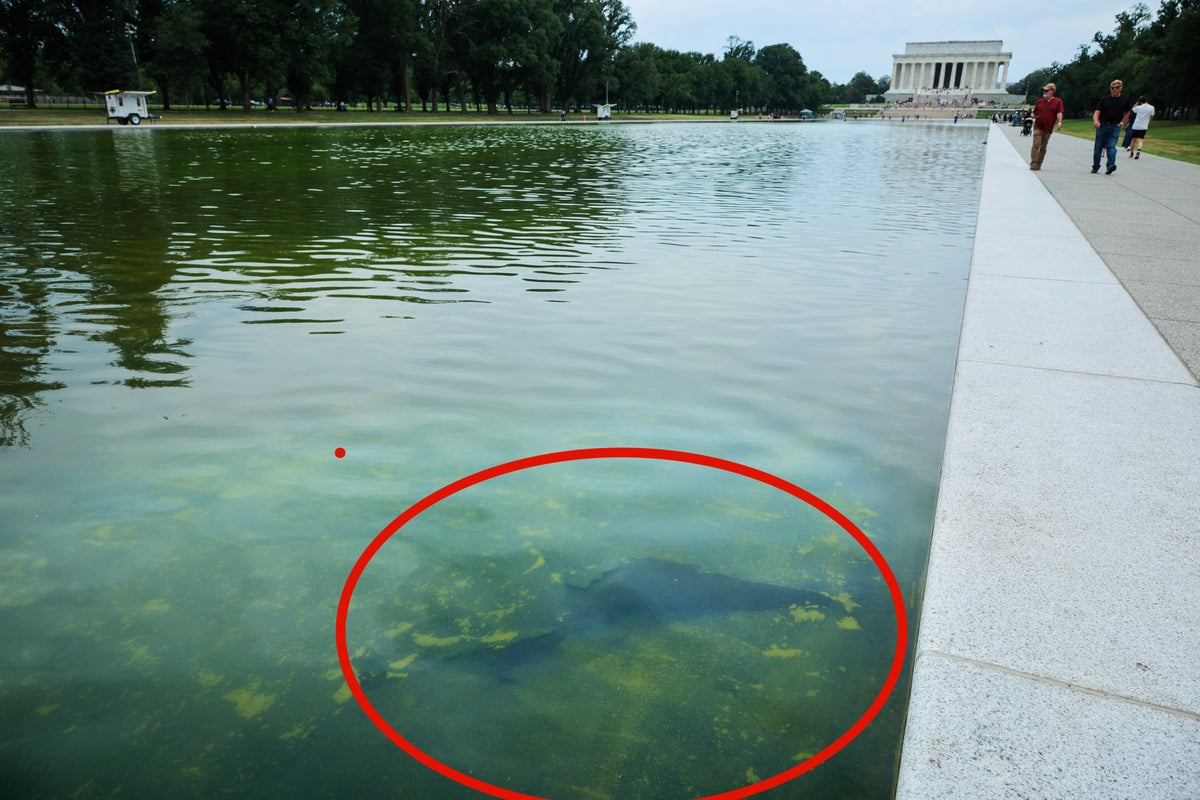
The Lincoln Memorial Reflecting Pool was supposed to look like a pristine sheet of American flag blue glass just in time for the nation's 250th birthday celebrations. Instead, it looks like a thick broccoli soup. Over the last few days, Washington visitors have watched a multi-million-dollar renovation project devolve into an environmental and political finger-pointing match.
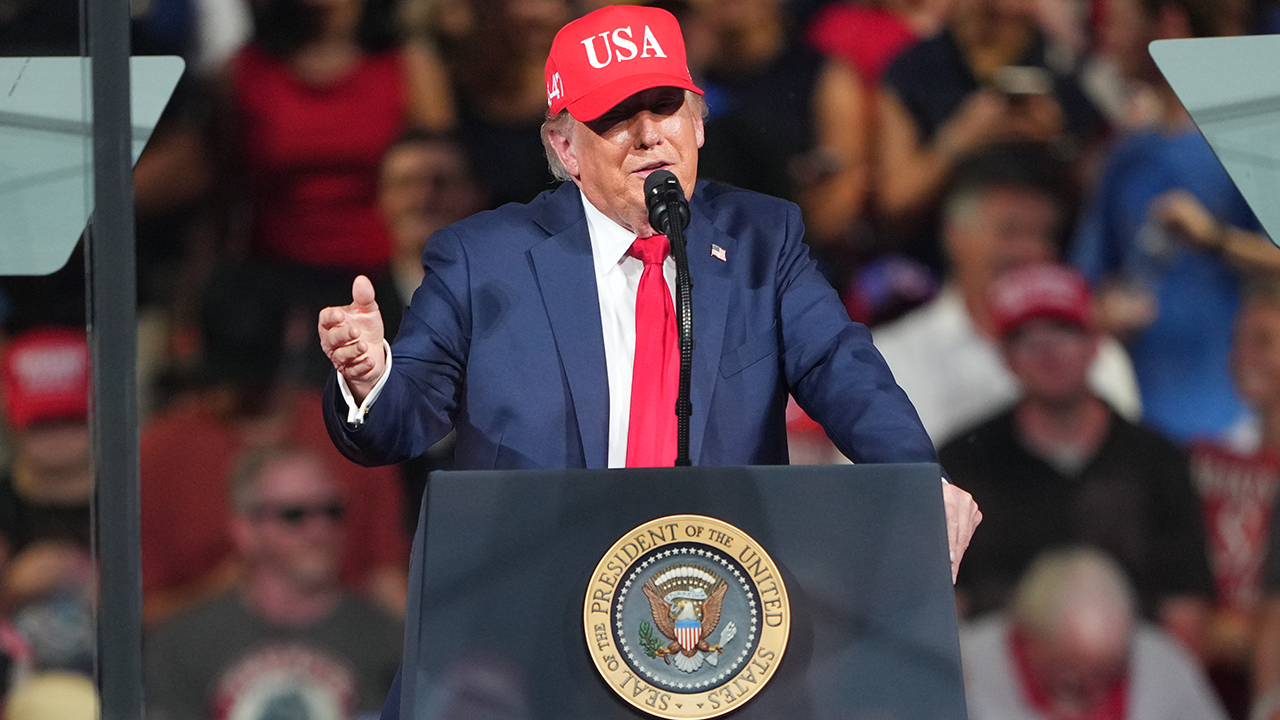
President Donald Trump claims that saboteurs and left-wing radicals are to blame for the Reflecting Pool algae and the massive sheets of blue paint peeling off the bottom of the basin. He argues that vandals used knives to slice a 300-foot gash into the brand-new liner and poured corrosive chemicals into the water to destroy the administration's beautification efforts.
The real story is a lot more complicated than midnight sabotage. It involves a mix of hasty construction timelines, intense summer heat, and a basic misunderstanding of aquatic biology. If you look past the political noise, the science reveals why this historic landmark keeps turning green and why the fix won't be as simple as catching bad actors in the dark.
The real story behind the green water in the Reflecting Pool
The federal government spent over 14 million dollars to overhaul the 2,000-foot-long iconic pool. The main goal of the project was to drain the filthy, murky water that has historically plagued the Mall and coat the concrete floor with a deep blue tint. The logic seemed sound to the planners. A dark blue bottom would better reflect the Washington Monument and the Lincoln Memorial, giving the area a crisp, mirror-like finish.
The pool reopened on June 6. Within days, the water completely lost its clarity. Clouds of bright green algae took over the basin. Then came the second disaster. Chunks of the expensive new blue coating began separating from the concrete floor, rising to the surface, and drifting around like blue plastic trash bags.
The administration immediately went on the defensive. Trump took to Truth Social to claim that law enforcement was actively investigating malicious activity. He stated that people had done everything possible to hurt the inside surface. U.S. Attorney Jeanine Pirro even went on television to warn that anyone adding substances to the water to trigger an algae bloom would face severe federal prosecution.
But talk to pool builders and water ecologists, and they will tell you a completely different story. They see a classic case of chemistry and nature fighting back against a heavy-handed cosmetic fix.
What science says about the sudden algae breakout
Algae loves three things. It loves stagnant water, it loves shallow basins, and it loves direct, unfiltered sunlight. The Reflecting Pool provides all three in abundance every single June. The water is barely a couple of feet deep. It sits under the blazing Washington sun all day long. During typical summer months, the water temperature in the pool routinely climbs north of 85 degrees Fahrenheit.
When the administration chose to paint the basin a dark blue color, they accidentally created a giant solar heater. Darker colors absorb more light energy and hold onto heat. By darkening the floor of the pool, the renovation team inadvertently warmed the water even faster than usual. Warm water accelerates the life cycle of green algae, specifically a genus called Scenedesmus, which laboratory testing recently confirmed is the dominant organism choking the pool right now.
To combat this, the project had installed a 1.7-million-dollar nanobubbler filtration system designed to strip nutrients out of the water and starve the algae before it could start growing. The Department of the Interior boasted that this advanced system would permanently fix the biological issues that had embarrassed previous administrations.
The system simply couldn't keep up with the sheer volume of sunlight and heat. When the nanobubblers failed to stop the first bloom, the National Park Service panicked. Maintenance crews rolled up their sleeves, waded into the pool, and began dumping massive quantities of hydrogen peroxide directly into the water.
Hydrogen peroxide acts as a powerful bleaching agent that tears through algae cells on contact. It cleans the water quickly, but it also creates a massive chemical hangover.
The mystery of the peeling blue paint
The decision to pour gallons of heavy-duty hydrogen peroxide into a freshly painted concrete basin is likely what triggered the second half of this disaster. Commercial pool specialists note that industrial coatings require weeks to cure completely and bond with the underlying substrate. If you flood a freshly coated surface with aggressive oxidative chemicals like peroxide, you risk disrupting the delicate chemical bond between the paint and the concrete.
The peroxide treatment may have seeped underneath tiny imperfections in the blue liner. Once inside, the chemical reaction generates gas and pressure, bubbling the paint upward until it tears away from the floor.
Independent water testing near the National Mall also showed that the chemical treatments spiked the water's phosphate levels. High phosphate levels act like a super-fertilizer for any surviving algae spores. The more the crews tried to chemically burn the algae away, the more they upset the chemical balance of the pool, creating a perfect loop of blooming plants and peeling paint.
A 300-foot tear in the liner sounds like the work of a blade, but physical tension from water movement can easily rip a compromised, bubbling coating into long, continuous ribbons. Once a small seam opens up, the natural drag of the water can pull hundreds of feet of material up from the floor without any human intervention.
Arrests and accusations on the National Mall
That hasn't stopped the legal machinery from spinning. The U.S. Park Police have arrested five individuals for vandalism and issued federal citations to several others. The administration points to these arrests as absolute proof of a coordinated conspiracy to ruin the monument.
A closer look at the actual arrests reveals a situation that looks less like an eco-terrorism ring and more like a collection of confused tourists and curious locals.
Take the case of David Hearn. He is a 67-year-old local resident, a three-time U.S. Olympian canoe racer, and an expert in watercraft manufacturing materials. He was out on a 64-mile bicycle ride when he noticed the bizarre blue sheets floating in the pool. Out of pure scientific curiosity, he stopped his bike, walked to the edge, and reached his hand into the water to feel the floating material.
Park Police immediately swarmed him, slapped him in handcuffs, and held him for five hours. He was hit with a misdemeanor charge for the destruction of government property. Hearn insists he didn't rip, tear, or vandalize a single thing. He was simply touching a piece of rubberized paint that had already detached itself from the concrete.
The administration has also publicly targeted members of the media. Trump openly accused ABC News reporter Jonathan Karl of vandalism after Karl was filmed reaching into the shallow water during a broadcast segment to show viewers a chunk of the loose, floating blue material.
There is real vandalism happening nearby, though it might not be connected to the water chemistry. Security teams found that a section of the newly installed grass turf next to the pool had been carved up with the numbers "86 47" which is political slang for removing or canceling the 47th president. It's highly likely that real political tension is mixing with genuine engineering failures, creating a muddled narrative where every mechanical breakdown is treated as a political attack.
Next steps for the historic landmark
The immediate future of the National Mall landmark looks messy. Contractors have already concluded that the only way to fix the peeling blue facade is to drain all the water out of the pool yet again.
Draining a 2,000-foot-long basin takes time, money, and thousands of gallons of wasted water. Once empty, crews will have to scrape away the remaining ruined coating, prep the concrete surface again, and apply a new finish. With the major national celebrations just days away, the pressure to deliver a quick fix is immense.
If you want to track the progress of the restoration or understand how city infrastructure handles these public projects, focus on the engineering decisions over the next week. Watch whether the maintenance teams continue to rely on heavy chemical dumps or if they adjust the water flow and filtration settings to handle the summer heat naturally.
Stop focusing on the political blame game on social media. Pay attention to whether the contractors flush the plumbing lines properly before refilling the pool. Check if they allow the new surface coatings to cure fully before exposing them to harsh sunshine and chemical treatments. The success of the next repair depends entirely on respecting basic fluid dynamics and aquatic chemistry, not on increasing the police presence around the water's edge.