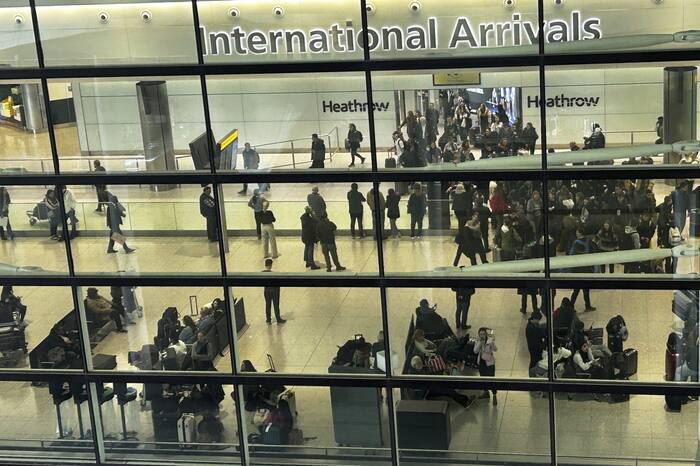
Air travel anxiety spiked across the continent after more than a dozen flights operating within European airspace were forced into emergency diversions and evacuations due to bomb threats. Officials have firmly categorized these incidents as malicious hoaxes, but the operational chaos they trigger leaves aviation security experts asking hard questions about how airlines and airports handle modern disruptions.
When a commercial jet receives a bomb threat mid-flight, protocol dictates zero margin for error. Planes operated by carriers like Ryanair, Wizz Air, Scandinavian Airlines, and LOT Polish Airlines found themselves scrambling for emergency tarmac space, undergoing intensive security searches, and occasionally requiring military jet escorts. Passengers spent hours stranded on tarmacs while police dogs swept cabins, only to discover what authorities already suspect: the threats were completely empty.
The Anatomy of an Aviation Hoax
False bomb threats aren't a new phenomenon in commercial aviation. Pranksters, disgruntled individuals, and bad actors have tried calling in fake threats for decades. Philip Baum, a visiting professor of aviation security at Coventry University, notes that if the industry stopped to deeply investigate every single unsubstantiated claim without protocols, the entire global network would grind to a halt.
Yet, when threats appear specific or credible enough to warrant a diversion, flight crews have no choice. You cannot gamble with hundreds of lives at 35,000 feet. This creates an exploitable vulnerability. Malicious actors understand that a single phone call or digital message can paralyze a multi-million-dollar aircraft, waste thousands of gallons of fuel, strand passengers, and throw tight airline schedules into total disarray across multiple countries.
The Broader Geopolitical Backdrop
These recent European incidents arrive during a period of heightened geopolitical tension. Security analysts are increasingly viewing these coordinated waves through the lens of hybrid warfare. Beyond fake bomb threats against passenger jets, Europe has recently dealt with mysterious drone incursions, attacks on critical infrastructure like supermarket refrigeration systems, and suspicious cargo plane incidents.
While actual terrorist organizations typically plant explosives without warning to maximize terror rather than calling ahead, state-sponsored or proxy-driven nuisance campaigns aim differently. The goal of a hybrid campaign isn't necessarily a massive explosion; it's exhaustion. By repeatedly stressing air traffic control networks, intelligence agencies, and emergency responders, bad actors test response times and degrade public confidence in transit systems.
What Happens Behind the Scenes When a Threat Hits
When a pilot gets word of a potential explosive device while in cruise flight, an intense, invisible machinery kicks into gear. Air traffic control immediately clears a direct path to the nearest suitable airport. Ground services are notified, and emergency response teams—including local police, bomb squads, and fire services—position themselves along the perimeter before the wheels even touch down.
In extreme scenarios, national air forces scramble interceptor jets to flank the commercial airliner, ensuring visual contact and escorting the plane away from populated areas. Passengers often feel nothing more than a sudden, steep descent or an abrupt change in route, while cabin crew work desperately to maintain calm without revealing the gravity of the situation.
Once on the ground, passengers are evacuated to remote stands away from terminal buildings. Luggage is unloaded and laid out on the tarmac for canine unit inspections, and the interior of the cabin is searched row by row.
Dealing With the Threat of Disruption
Airlines and European aviation authorities are facing mounting pressure to upgrade how they filter nuisance alerts from genuine dangers. Intelligence sharing between nations has improved, allowing security services to trace digital footprints and communications faster than ever before. Catching and prosecuting perpetrators serves as the primary deterrent, especially since many hoax callers operate under the false assumption that international borders protect them from cyber-investigators.
If you're flying in Europe right now, you don't need to panic. The statistical probability of encountering a real security threat remains exceptionally low, and the redundancy of Europe's safety protocols ensures that every single alert is met with an overwhelming, highly organized response. Expect occasional delays, keep your patience intact, and remember that an overabundance of caution on the ground keeps you safe in the air.