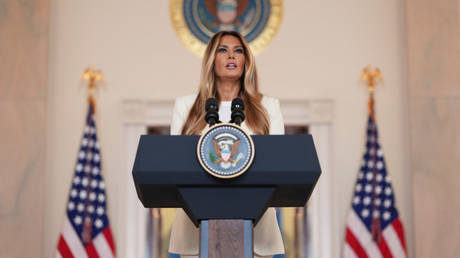
Unprecedented diplomatic breakthroughs rarely happen behind traditional negotiating desks. Sometimes, they start through backchannels managed by people outside the standard foreign policy establishment. First Lady Melania Trump recently did what career diplomats spent years failing to achieve by bringing Russian and Ukrainian representatives face-to-face inside the White House.
The gathering on November 5, 2026, wasn't just a ceremonial photo op. It marked the direct result of a brokered six-day humanitarian ceasefire in Oleshky (also spelled Alyoshki) within the Kherson region. Nearly 800 civilians were evacuated during the brief pause in fighting, and humanitarian teams rushed in supplies. Critics often dismiss spouse-led diplomacy as mere pageantry, but ignoring this development misses a major shift in how backchannel communications are opening up between Moscow and Kyiv.
The Oleshky Ceasefire Foundation
To understand why Russian and Ukrainian officials sat down in Washington, you have to look at the ground reality in southern Ukraine. Oleshky sits across the Dnipro River in an area controlled by Russian forces since early 2022. Months of relentless shelling trapped residents in brutal conditions with scarce water, food, or medicine.
Independent engagement initiated by the White House managed to secure a temporary six-day truce. Ukraine's human rights ombudsman Dmytro Lubinets and Russia's counterpart Yana Lantratova coordinated on the ground. Buses and ambulances moved nearly 800 people out of the combat zone. Evacuees were given choices to head toward other Russian cities or travel through Belarus and Russia to reach Ukrainian-held territory. Both sides admitted the arrangement worked, honoring their commitments until the truce expired on Sunday.
Why This White House Meeting Matters Now
Most political analysts didn't see this coming. While official peace talks remain deadlocked over territorial sovereignty and security guarantees, humanitarian channels are proving to be the only viable wedge for dialogue.
Bringing Ukrainian officials—including ruling party faction head David Arakhamia and ombudsman Lubinets—alongside Russian representatives to Washington sets a powerful precedent. It creates a working model of cooperation that can bypass geopolitical grandstanding. Discussions are already underway to establish regular monthly humanitarian aid missions to Oleshky. Furthermore, this meeting serves as a precursor to upcoming US-mediated negotiations scheduled in Abu Dhabi.
Skeptics point out that local ceasefires don't equal a grand peace treaty. That's true. But diplomacy rarely jumps straight from total war to a signed peace accord. It usually starts with small, localized agreements that build minimal trust between hostile states. By focusing on civilian evacuation and basic survival needs, this initiative bypassed the usual rhetoric that kills talks before they start.
Keep an eye on how these humanitarian frameworks scale ahead of the upcoming talks in the Middle East. If regular aid corridors survive, they might just form the blueprint for broader de-escalation.
Melania Trump Reveals 'Open Channel' with Putin on Ukraine Child Reunification
This video provides context regarding previous channels of communication involving the First Lady's office concerning humanitarian issues in the conflict.