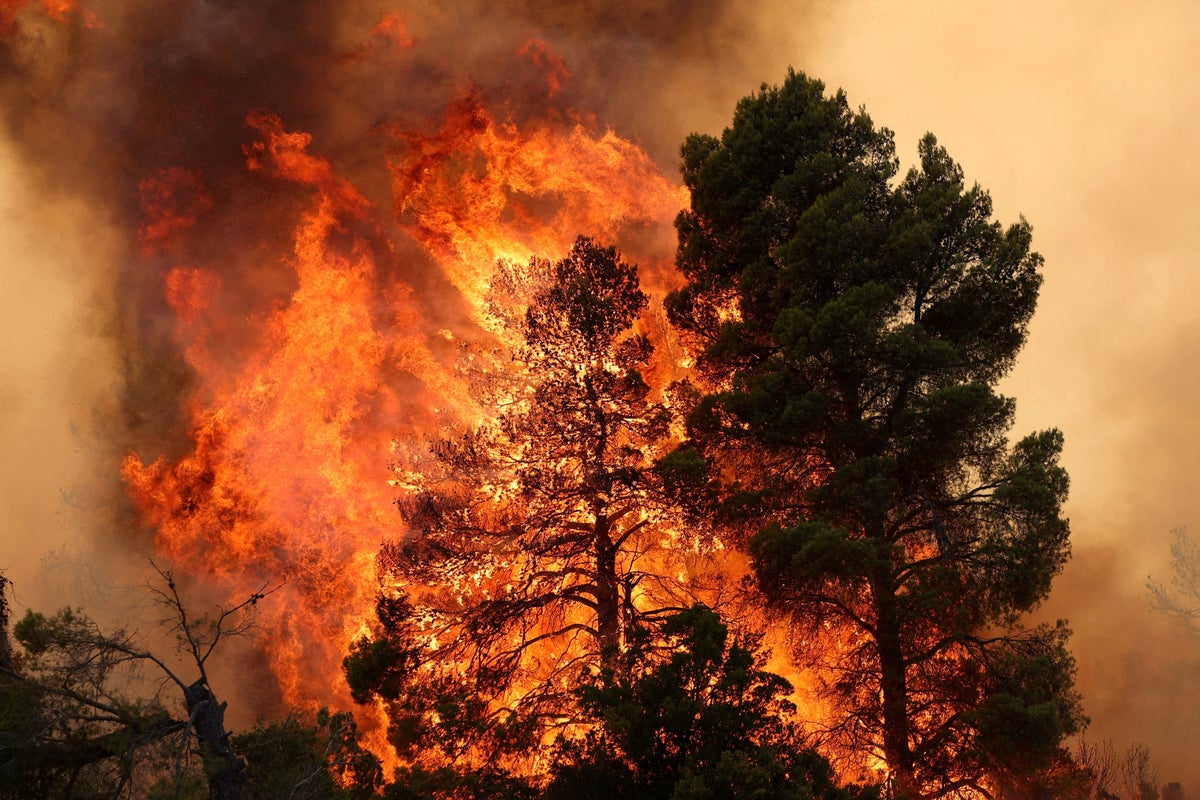
Record-shattering heatwaves and exploding wildfire statistics are no longer future projections—they are happening right now across Europe. When you look past the daily weather forecasts, the hard data tells a brutal story of an ecological system pushed past its absolute breaking point.
The numbers are staggering. According to satellite-based tracking from the European Forest Fire Information System (EFFIS), recent seasonal destruction has rewritten the history books. Over one million hectares burned across European Union member states in a single recent cycle, doubling historical averages and reducing areas equivalent to entire countries like Cyprus to ash.
The Brutal Math Behind the Flames
You can't understand modern European wildfires by looking at weather patterns alone. You have to look at the fuel.
An unusually wet winter creates massive vegetation growth across grasslands and forest floors. Then, consecutive scorching heatwaves hit. That lush vegetation dries out into kindling. When temperatures cross forty degrees Celsius—as they have repeatedly across Spain, France, and Greece—the landscape turns into a tinderbox.
Consider what happened during the peak summer surges:
- Spain recorded catastrophic blazes like the mega-fire in Ávila, which scorched roughly 50,000 hectares on its own, later merging with neighboring zones to swallow 77,000 hectares—an expanse matching the total land area of New York City.
- Southwestern France saw its worst destruction in decades, with fires near Bordeaux destroying over 42,000 hectares and forcing massive emergency evacuations.
- Economic losses across hard-hit eurozone nations like France, Spain, Portugal, Greece, and Romania crossed €3.1 billion in just the first two months of the peak season.
Firestorms That Create Their Own Weather
When fires get big enough, they stop reacting to the weather and start creating it. That is what terrifies meteorologists.
During the height of the crisis in southwestern France, intense thermal energy generated a rare pyrocumulonimbus cloud—a towering firestorm system that sucks in air and spits out lightning, erratic wind gusts, and spot fires miles ahead of the main front. Ground crews face conditions that render traditional firefighting strategies useless. Water drops evaporate before they hit the canopy. Winds shifting at forty kilometers per hour turn safe zones into traps within minutes.
It is easy to blame nature, but human infrastructure takes the brunt of the hit. Roughly 39 percent of all burned territory falls directly inside Natura 2000 protected ecological sites, destroying irreplaceable habitats that take decades to recover.
What Actually Needs to Change
Governments keep treating these disasters as emergency anomalies. They aren't. They are the new baseline.
If you live in a vulnerable region or manage rural property, relying on local fire departments to show up with hoses is a losing strategy. Prevention requires active management: controlled burns, clearing underbrush before spring, and enforcing strict building boundaries near dense timberland.
The European Commission has introduced integrated risk management frameworks to improve early warning tools, but policy shifts take years. The fires move much faster. Expect shorter windows between evacuations, higher insurance premiums in southern Europe, and a permanent shift in how the continent views summer.

:max_bytes(150000):strip_icc():focal(749x0:751x2)/cindy-crawford-family270-05202026-7a3e5fd008b24bf5bf16da2a6a67f37a.jpg)