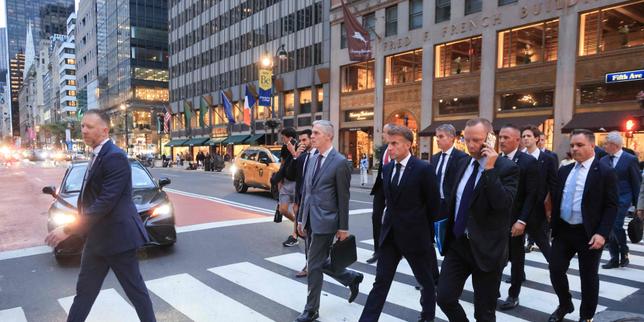
World leaders roll into Manhattan for the United Nations General Assembly, but the real fireworks happen behind closed doors. French President Emmanuel Macron and U.S. President Donald Trump sit down at Trump Tower for a high-stakes clash. Ukraine and the global energy squeeze sit right at the top of the agenda. If you want to understand where international foreign policy shifts next, watch this exact room.
Emmanuel Macron arrives straight from the French archipelago of Saint Pierre and Miquelon off the Canadian coast. He steps into New York with a clear objective: steer Washington back toward robust military and financial backing for Kyiv. Meanwhile, Donald Trump faces immense pressure over domestic energy costs and oil market shocks, driving a frantic conversation about how to cap surging fuel prices worldwide.
The Interceptor Shortage and Ukraine's Defense
Kyiv faces a brutal onslaught. Russia's military escalates drone and missile strikes, capitalizing on critical gaps in Ukrainian air defense. Ukrainian President Volodymyr Zelensky reports thousands of attack drones launched in just a single week. Casualties climb.
Macron presses Trump on this exact vulnerability. During their sit-down, the French leader emphasizes that interceptor missiles remain the absolute priority for defensive survival. While the U.S. State Department recently approved a multi-billion-dollar defense package for Ukraine, skepticism persists in Washington. Trump points to competing military commitments, especially involving conflicts in the Middle East and Iran, arguing that U.S. stockpiles need protection too.
Macron doesn't mince words. He frames European security as inseparable from global economic stability. If Ukraine's grid collapses entirely, the ripple effects slam European economies and inflate costs globally.
The Energy Truce and the Oil Market Squeeze
Beyond battlefield interceptors, a secondary crisis dominates the talks: global oil and diesel spikes.
Energy infrastructure sits squarely in the crosshairs of this diplomatic chess match. Reports indicate that Trump has pushed Kyiv to dial back strikes on Russian oil refineries and fuel depots. Why? Because those retaliatory attacks disrupt global diesel supplies and drive up pain at the pump for everyday consumers.
During their New York talks, Macron and Trump explore the feasibility of an energy infrastructure moratorium. The idea: a localized ceasefire preventing both Russia and Ukraine from targeting power grids and fuel refineries.
Zelensky maintains a hard line on any such truce. Kyiv demands concrete de-escalation steps from Moscow before halting refinery strikes, insisting that critical infrastructure and food export corridors must be respected symmetrically. Macron plans to test these contours directly with Zelensky on the sidelines of the General Assembly.
What This Means for Global Markets
You can't separate foreign policy from your monthly utility bill. When crude prices surge and refineries take hits, inflation spikes everywhere.
For ordinary citizens, these closed-door Manhattan meetings dictate whether fuel prices stabilize or keep climbing through the winter. For diplomats, it is a desperate balancing act. They must keep Ukraine armed enough to survive while preventing global energy markets from completely boiling over.
Keep your eyes on the follow-up announcements from the General Assembly floor. The compromises struck in New York this week will shape the trajectory of the war and your energy costs for months to come.