Throwing around millions of dollars to influence an election might fly in the tech world, but Wisconsin regulators aren't amused.
In a surprising bipartisan move, the Wisconsin Elections Commission voted 5-1 to find probable cause that tech billionaire Elon Musk violated the state's election bribery laws. The decision stems from his controversial $1 million voter giveaways during the high-stakes 2025 state Supreme Court election. Meanwhile, you can read other events here: Why The Nepal Border Flash Floods And Missing Australians Demand Answers Now.
This isn't just another political dispute. This is a formal referral to local prosecutors that could lead to actual criminal charges against the richest man on Earth.
Let's break down exactly what happened, why Musk's legal defense is wearing thin, and why this decision has sent shockwaves through the political establishment. To explore the complete picture, check out the excellent article by The New York Times.
The Bipartisan Crackdown on the World's Richest Man
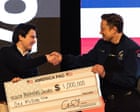
For years, wealthy donors have pushed the boundaries of campaign finance laws. Musk didn't just push the boundary; he ran right through it with a giant novelty check.
The Wisconsin Elections Commission, which is evenly split with three Democrats and three Republicans, decided that Musk likely crossed the line into criminal behavior. During a closed-door session, five of the six commissioners voted to refer two confidential complaints to the Brown County District Attorney's Office.
The commission's finding of "probable cause" means they believe there is enough evidence to suggest a crime was committed. Now, the ball is in the court of Brown County District Attorney David Lasee. Lasee, a Republican, has exactly 40 days to decide whether to officially prosecute Musk.
If you think this is just partisan bickering, think again. The 5-1 vote means at least two Republican commissioners looked at the evidence and agreed that Musk's operation looked like illegal election bribery.
How a Deleted Post on X Triggered a Criminal Referral
The core of the legal trouble goes back to a single, panicked social media post.
On March 27, 2025, Musk posted on his platform, X, announcing an upcoming town hall event in Wisconsin. He wrote that entrance was strictly limited to "those who have voted in the Supreme Court election". He then added the kicker:
"I will also personally hand over two checks for a million dollars each in appreciation for you taking the time to vote."
Musk deleted the post a few hours later, likely after a frantic call from a campaign lawyer warning him that he had just written down an open confession to a felony.
Under Wisconsin Statute, offering anything of value over $1 to induce someone to go to the polls, cast a ballot, or vote for a specific candidate is a class I felony. It doesn't matter if you call it "appreciation." If you offer money conditional on someone voting, you've committed election bribery.
Musk quickly replaced the post with a revised version. The new rules stated that attendance was open to anyone who signed his America PAC petition opposing "activist judges," and the $1 million winners would be chosen as "spokespeople" for the petition.
But the elections commission didn't buy the quick fix. The formal motion approved by the panel explicitly targets that original, deleted post as the primary source of probable cause. Deleting a tweet doesn't erase the legal consequences of making the offer in the first place.
The Shell Game of Petitions and Spokespeople
Musk's legal team has repeatedly argued that these giveaways are protected free speech. They claim the money is meant to build a grassroots movement against activist judges, not to buy votes.
During the 2024 presidential election, Musk used a similar petition strategy in key battleground states. A Pennsylvania judge allowed that program to continue, ruling that prosecutors failed to prove it was an illegal lottery.
Wisconsin is a different story. The state's bribery laws are remarkably strict.
By tying the initial offer directly to whether someone voted in the state Supreme Court election, Musk gave Wisconsin regulators the exact evidence they needed. Changing the wording to "petition signers" and calling the winners "spokespeople" looks less like a legitimate marketing campaign and more like a flimsy legal shield.
Two of the three Wisconsin voters who eventually walked away with $1 million checks received them in person from Musk at a Green Bay rally, just days before the election. One of those winners was the chairman of the Wisconsin Federation of College Republicans. It is hard to argue the giveaway was a neutral, non-partisan exercise when the giant checks are handed directly to active partisan operatives on stage.
Why This Wisconsin Race Mattered So Much
You might wonder why a billionaire tech mogul cares so much about a state judicial race.
The 2025 Wisconsin Supreme Court election was a battle for control of the state's highest court. The court has the power to decide crucial issues, including congressional redistricting and state voting rules.
Musk and his political action committees poured over $20 million into supporting conservative candidate Brad Schimel. In total, spending on the race surpassed $100 million, making it the most expensive judicial election in United States history.
There was also a clear corporate angle. Tesla, Musk's electric vehicle giant, had an active lawsuit pending in Wisconsin that could ultimately land in front of the state Supreme Court. The campaign for Susan Crawford, the Democratic-backed candidate, loudly criticized the payouts as a blatant attempt to buy a favorable court.
Despite the record-breaking cash dump from Musk, Crawford won the election by a decisive 10 percentage points. The defeat preserved the court's liberal majority, proving that even a mountain of tech money can't always buy a win in a battleground state.
The Legal Battles Looming Over Musk
The criminal referral to the Brown County District Attorney is only one of Musk's legal headaches in Wisconsin.
In 2025, Democratic Attorney General Josh Kaul tried to secure an emergency injunction to halt the giveaways before the election took place. The state Supreme Court ultimately declined to hear the case, allowing the event to proceed without ruling on whether the checks were actually legal.
With the election over, the gloves are off.
A civil lawsuit filed by the watchdog group Wisconsin Democracy Campaign is still moving forward in Brown County. The lawsuit accuses Musk, America PAC, and associated groups of running an unauthorized lottery, civil conspiracy, and committing a public nuisance. The goal of the suit is simple: to make sure Musk can never use these cash-giveaway tactics in Wisconsin again.
What Happens Next
The clock is ticking for District Attorney David Lasee. Within 40 days, we will know if he plans to indict the world's most prominent billionaire for election bribery.
If Lasee decides to bring charges, it will set up a massive legal showdown over the limits of political spending and free speech. If he declines to prosecute, it will likely prompt fierce public backlash and fuel demands for state campaign finance reform.
Either way, the bipartisan finding of probable cause sends a clear warning to wealthy political donors. Trying to gamify elections with million-dollar checks might get you views on social media, but it can also land you in a criminal courtroom.