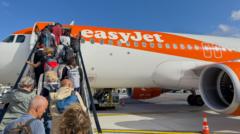
Buying a premium asset during a temporary market downturn is the oldest trick in the private equity playbook. That is exactly what Minneapolis-based investment firm Castlelake is trying to pull off with its massive £4.74 billion hostile approach for EasyJet. The budget carrier flatly rejected the proposal on Sunday, June 21, 2026, and honestly, the airline's board made the right call.
Corporate raiders look for external crises to mask a company's true value. Castlelake thought it could sweep in while European airline stocks were depressed from regional tensions, specifically the geopolitical shock waves of the Middle East conflicts and the Iran war.
EasyJet chose to punch back. The board openly labeled the 625p-a-share cash offer as highly opportunistic and a blatant attempt to buy the company on the cheap. By Monday morning, Castlelake went public with the details of its third rejected bid, trying to force the board's hand by going straight to the shareholders. It set up a high-stakes corporate showdown ahead of the official Takeover Panel deadline on Friday, June 26, 2026.
Anatomy of a Lowball Private Equity Play
The math tells a clear story of a predator trying to time the bottom of a market cycle. Castlelake did not just show up overnight. It has been chipping away at EasyJet's defenses all month.
The bidding war progressed in three quiet stages:
- First bid: A lowball offer of 560p per share.
- Second bid: A minor bump up to 600p per share.
- Third bid: The public 625p-a-share offer that values the entire airline at roughly £4.74 billion.
On paper, Castlelake claims this final number represents a 24% premium over the closing price of 504p on Friday, June 19, 2026, and a 59% premium against pre-bid levels from a month ago. That sounds impressive if you look at it in a vacuum.
But looking at short-term stock metrics ignores the broader reality. Before the takeover rumors leaked, EasyJet stock had lost nearly a fifth of its value since the start of the year. This drop was not caused by poor management or broken planes. It happened because the entire European travel sector took a hit from geopolitical anxieties and temporary fuel cost spikes.
The EasyJet board pointed out that Castlelake's math relies heavily on Middle East conflict-affected share prices and short-term earnings. It completely ignores what the airline is actually worth when the skies clear.
The Financial Reality of Europe Second Largest Budget Carrier
EasyJet is not a distressed business in need of a savior. It is Europe's second-biggest low-cost carrier, sitting right behind Ryanair and holding a comfortable lead over Wizz Air. The underlying financials show an operation that has been executing a highly successful turnaround.
Consider the actual performance data leading up to this point. In the two full financial years ending September 2025, EasyJet delivered a massive 46% increase in pre-tax profit. This growth was not a fluke. It was driven by a brilliant corporate pivot: the explosive growth of EasyJet Holidays.
By bundling flights with hotels, the airline tapped into a high-margin revenue stream that traditional low-cost models usually ignore. The company also boasts an investment-grade balance sheet with a net cash position. It does not owe money it cannot pay, and it does not need a cash injection to survive.
When an investment firm tries to buy an airline with a massive pile of net cash and a booming holiday business using a valuation based on a temporary war-induced dip, that is not a fair deal. It is a smash-and-grab.
The Regulatory Mess of an American Ownership Structure
Even if the price were right, the structural mechanics of Castlelake's proposal are a regulatory nightmare. European aviation laws are incredibly strict about who can own an airline. To maintain flying rights within the European Union, a carrier must be majority-owned and controlled by EU nationals. This rule applies to EasyJet's European operations, and navigating it post-Brexit is already a delicate balancing act.
Castlelake is a US firm managing $36 billion in assets. To get around the legal roadblocks, it had to build a complex, multi-layered bidding coalition. The firm brought in former Malaysia Airlines CEO Peter Bellew alongside a handful of undisclosed EU investors to front a vehicle that would be 51% owned by EU nationals, leaving Castlelake with a 49% stake.
EasyJet's leadership did not mince words about this setup, calling the proposed ownership structure opaque. They have considerable reservations about whether such a structure could actually pass the intense scrutiny of aviation regulators in Brussels and London. If the ownership structure gets tied up in European courts, the airline's daily operations could face severe disruption.
Castlelake Aviation History Suggests a Clear Playbook
If you want to know what Castlelake intends to do with EasyJet, look at its track record. The investment firm is a specialist in aviation distressed assets, but it does not usually stick around to run airlines for decades.
The firm previously bailed out the collapsed Scandinavian Airlines (SAS) during its bankruptcy restructuring. Once the airline was stabilized, Castlelake flipped its shares to Air France-KLM. More recently, Castlelake entered intense negotiations with the struggling US budget carrier Spirit Airlines to manage its financial troubles.
The strategy is clear: buy low, restructure, slash costs, and sell to a legacy airline group for a massive premium.
EasyJet is a prime target for consolidation. In 2021, the airline successfully beat back a hostile takeover attempt from its eastern European rival Wizz Air. Late last year, rumors swirled that the Swiss shipping giant MSC was eyeing a bid. The European aviation market is consolidating fast, and EasyJet knows it holds the keys to some of the most valuable, slot-constrained airports in Europe, like London Gatwick and Paris Orly. The board knows that giving away those assets to a US private equity firm at a discounted price would be a massive disservice to long-term investors.
What Happens Before the Friday Deadline
The clock is ticking loudly for both sides. Under City takeover rules, Castlelake faces a strict put-up or shut-up deadline. By 5pm on Friday, June 26, 2026, the US firm must either announce a firm, binding intention to make an offer or walk away for at least six months.
With the details now public, institutional shareholders hold the power. Market analysts note that the pressure on the EasyJet board will intensify significantly over the next few days. Some short-term hedge funds might want to take the quick 625p payout and run. Long-term institutional investors will likely back the board's view that the business is worth far more.
If you are tracking this corporate battle, keep your eyes on three specific indicators this week:
- The Share Price Gap: Watch how close EasyJet's trading price gets to the 625p offer. If the stock hovers significantly below it, the market is signaling that it expects the deal to fail.
- Shareholder Alliances: Look out for public statements from major EasyJet stakeholders. If key investment funds publicly back the board's rejection, Castlelake's bid is dead in the water.
- The Regulatory Blueprint: See if Castlelake releases more details about its EU-national partners to counter the board's accusations of opacity.
EasyJet is in a position of strength, protected by an investment-grade balance sheet and solid post-pandemic momentum. Succumbing to an opportunistic private equity play right when travel demand is proving resilient would be an unnecessary retreat. The board drew a line in the sand, and they should hold it.