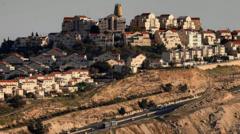
The map of the West Bank is changing again. It’s not a subtle shift, but a calculated move that has drawn a rare, sharp rebuke from some of the world’s most powerful capitals. The Israeli government just launched tenders for the E1 settlement project, and for once, the international community isn’t just offering polite concern. They are furious.
On August 20, 2026, a joint statement from the leaders of France, Germany, the UK, and Italy labeled the move "unacceptable." If you’ve been following the region’s friction points, you know E1 isn’t just another plot of land. It’s a strategic corridor that could effectively bisect the West Bank.
Understanding the E1 controversy
Why all the heat over one project? To understand the outrage, you have to look at the geography. E1 sits between Jerusalem and the settlement of Ma’ale Adumim. If built out, it creates a continuous strip of Israeli infrastructure that would isolate East Jerusalem from the rest of the Palestinian West Bank.
Think of it as a barrier to viability. If you’re a diplomat pushing for a two-state solution, E1 is the ultimate nightmare. It doesn’t just add homes; it redraws the map in a way that makes a sovereign, contiguous Palestinian state geographically impossible.
The UK’s Foreign Secretary, Ed Miliband, didn't mince words. He called the tender an "unacceptable and destructive act" and confirmed that the government summoned the Israeli Chargé d’Affaires to protest directly. This isn't just diplomatic noise. It’s a warning shot.
What is actually happening
The Israeli government’s decision to publish these bid offers for construction isn't a bolt from the blue. It’s the latest escalation in a long-standing tension between the Netanyahu administration’s expansionist goals and the crumbling consensus of the international community.
Egypt also weighed in with a heavy statement, echoing the sentiment that this move undermines the geographic contiguity of Palestinian territories. When you have this many nations—traditionally allies to both sides—lining up to use terms like "flagrant breach of international law," the political cost for the Israeli government is climbing.
Why this matters in 2026
You might wonder why this matters now. The region has been in a state of high alert for years. But the E1 project is different because of its permanence. Settlements are often criticized as obstacles to peace, but E1 is viewed by many experts as the "death blow" to the two-state model.
It’s not just about building houses. It’s about infrastructure, roads, and security checkpoints that permanently alter the demographic and territorial reality. Once these projects break ground, they are incredibly difficult to reverse.
The UK has already hinted that this is just the beginning. The government promised a "comprehensive set of measures" in the coming weeks. This could mean anything from targeted sanctions against specific entities involved in the expansion to shifts in how these countries interact with the Israeli government on broader security agreements.
The human cost on the ground
Beyond the headlines and the joint statements, there is a tangible impact on the ground. Palestinian communities in the West Bank are already grappling with rising levels of settler violence. For families living in the path of proposed expansion, this isn't a theoretical debate about sovereignty. It’s about access to their own land, water, and the ability to travel between their own towns without crossing through a settlement zone.
When the international community signals it has had enough, they are reflecting a reality that hasn't changed for decades: the status quo is becoming unsustainable.
What happens next
If you are tracking how this evolves, keep your eyes on the specific sanctions promised by the UK and potential European counterparts. We are moving past the phase of written statements.
- Watch the tenders: See if the bid offers actually draw interest from major construction firms or if the political heat scares them off.
- Look for diplomatic isolation: If the coalition against this project grows beyond the current group of five, the Israeli government will face a genuine diplomatic crisis.
- Monitor local pushback: The reaction from Palestinian leadership and local activists will likely intensify in the coming weeks.
The era of ignoring warnings on settlement expansion is coming to a close. Whether this specific project proceeds or stalls under international pressure, one thing is certain: the conversation has shifted from "should we talk about this" to "what are the consequences." The diplomatic game has changed.