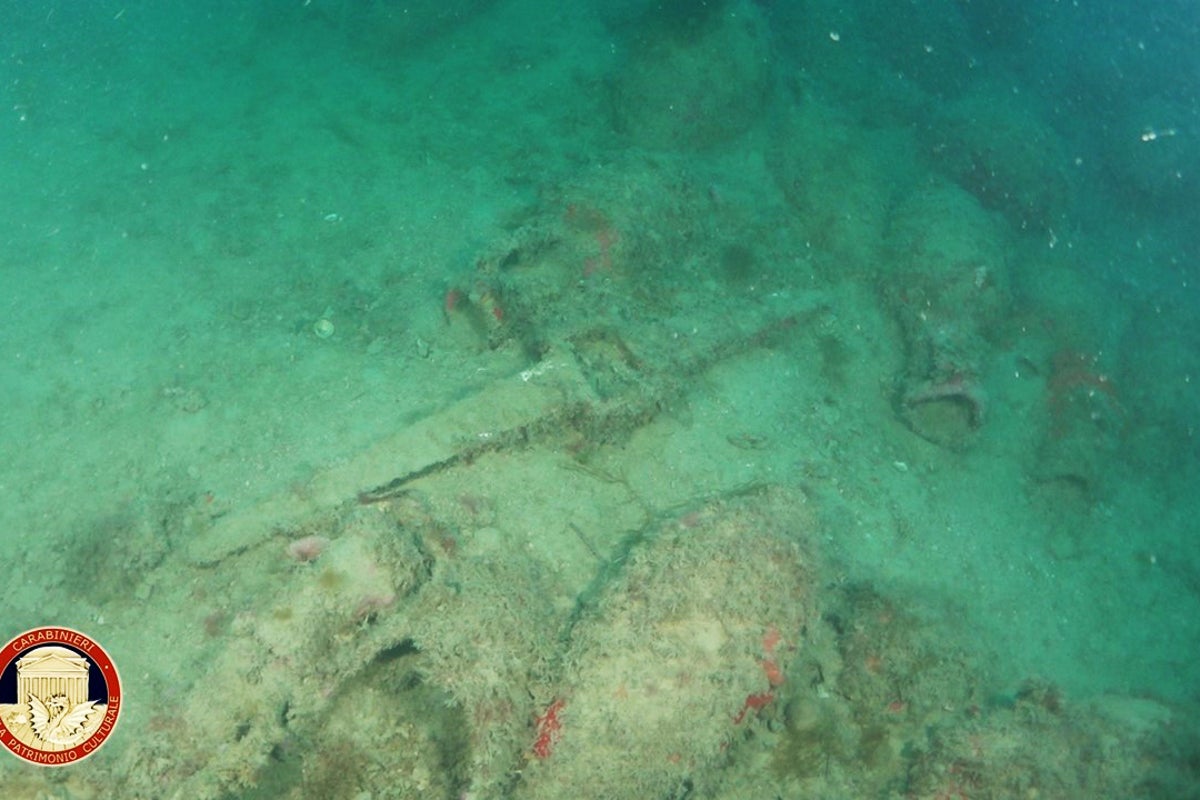
A routine marine survey turned into the historical find of a decade when local divers spotted an unusual shape resting on the Mediterranean floor. It wasn't a rock. It was a 2,100-year-old Roman merchant vessel sitting roughly 46 meters down, packed tightly with about 500 perfectly preserved ceramic jars.
Italy's culture ministry quickly labeled it one of the most vital underwater archaeology discoveries in recent years. But what does this sunken cargo actually tell us about the ancient world? Let's break it down.
The Reality of Ancient Marine Trade
We tend to romanticize maritime history. We think of grand fleets and epic naval battles. The truth is much more mundane, driven entirely by commerce, logistics, and a massive thirst for vintage alcohol.
This newly examined vessel measures roughly 21 meters long and 6 meters wide. Resting near the coast of Mazara del Vallo in Sicily, the ship was hauling a massive load of Dressel 1A amphorae. These tall, slender, two-handled ceramic containers were the heavy-duty shipping crates of antiquity.
Fisherman and free-diver Giacomo De Mola described the moment he approached the site on his Instagram account, noting that visibility wasn't great before his heart completely stopped at the sight of the vast expanse of jars. Being among the first humans to lay eyes on that cargo in twenty centuries puts the scale of Mediterranean maritime traffic into sharp perspective.
Why Dressel 1A Jars Matter So Much
You might wonder why a bunch of broken or intact clay pots gets historians so excited. Amphorae aren't just trash at the bottom of the sea. They are high-value data logs.
- Traceable Origins: The clay composition matches specific manufacturing hubs, telling us precisely where the production took place.
- Standardized Shipping: The geometry of Dressel 1A containers allowed cargo holds to pack tightly, maximizing profit per voyage.
- Economic Indicators: High volumes of wine transport point directly to periods of heavy commercial stability and high purchasing power across the republic.
The Romans didn't just drink wine; they engineered an entire globalized economy around it. Sicily served as a primary agricultural engine, feeding the mainland and fueling the expansion of Roman influence across the Mediterranean basin.
The Continuing Mysteries of the Sicilian Seabed
This isn't an isolated incident. The waters surrounding Sicily remain a goldmine for underwater exploration because the island sat at the absolute center of ancient shipping lanes.
Back in 2021, a similar second-century BC vessel carrying massive amounts of wine containers was discovered near Isola delle Femmine. Every time one of these ships surfaces in archaeological reports, it challenges our assumptions about ancient shipbuilding capacities and open-water navigation limits.
The Carabinieri Art Squad and local marine superintendency units are currently mapping out protection zones to secure the Mazara del Vallo site. Over the coming months, scientific documentation will determine the exact destination this doomed ship was trying to reach before it sank beneath the waves.
Stop treating ancient history as a static textbook chapter. It's sitting right down there in the dark, waiting for someone to look closer.
Ancient Roman ship laden with wine jars discovered off Sicily
This video provides underwater footage of a similar ancient Roman shipwreck discovered off the coast of Sicily, illustrating how these wine-laden vessels look on the seabed.
http://googleusercontent.com/youtube_content/1