Twenty people died overnight when a six-storey apartment building in Gaza City's Tal al-Hawa area came down. Five of those killed were children. The structure had already taken severe hits from prior military operations in 2024 and early 2025, leaving deep structural scars that ultimately proved fatal.
When you strip away the politics and look at the boots-on-the-ground reality, this disaster highlights a desperate mathematical failure. There simply aren't enough tents, homes, or safe spaces left standing.
Let us look at what actually happened, why people keep moving back into ruined structures, and what humanitarian officials are saying about the escalating crisis.
The Night the Tal al-Hawa Building Crumbled
The collapse happened without warning in the middle of the night. The building, featuring four separate apartments on each of its six floors, crashed down onto neighboring homes and improvised tent encampments.
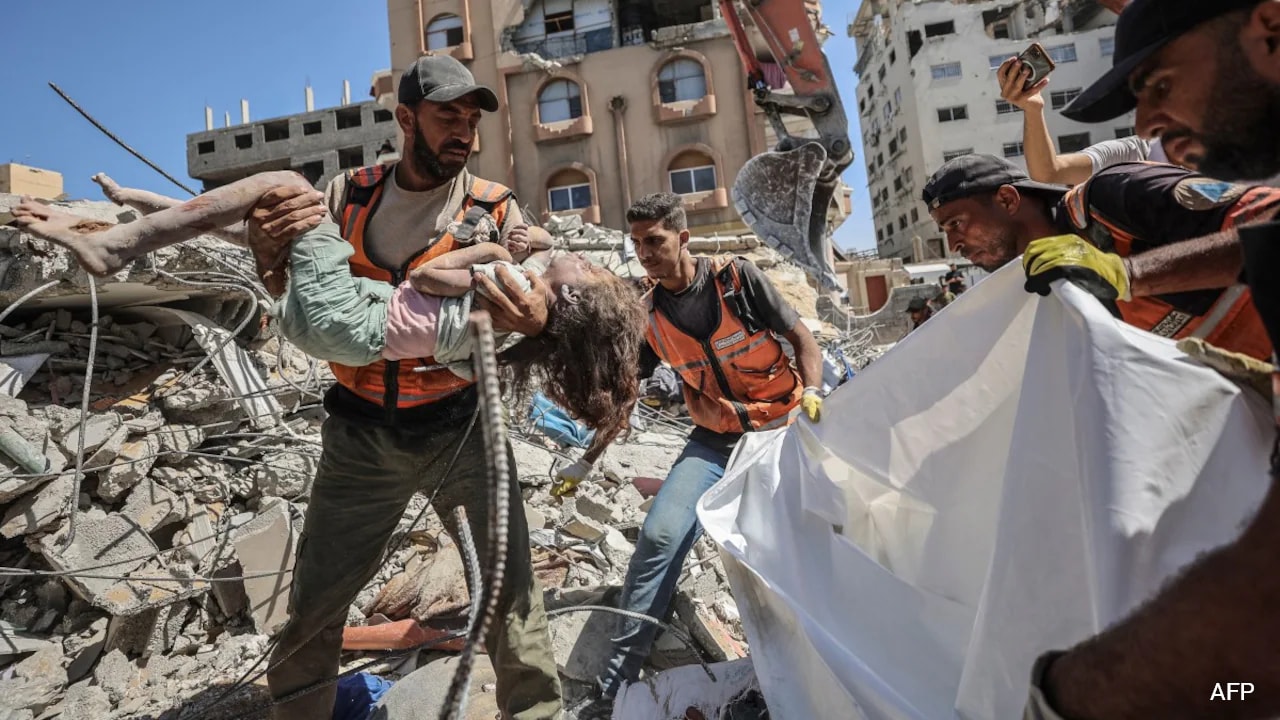
Rescue workers from the local civil defence agency rushed to the scene. They found an immense mountain of shattered concrete.
Excavators bearing Egyptian flags worked alongside human volunteers to comb through the wreckage. Workers wrapped bodies in white plastic body bags as grief-stricken residents looked on.
Civil defence spokesman Mahmoud Basal stated that the site took multiple direct hits over the past two years. Warnings had gone out telling people to stay away. But families facing total exposure to the elements ignored the warnings because alternatives did not exist.
"With neither tents nor homes available, they are living in cracked, damaged buildings despite the risk of collapse," Basal explained to reporters on the ground.
The Impossible Choice Between Exposure and Collapse
If you have never lived through a total infrastructure collapse, it is easy to judge from afar. You might ask why anyone would willingly sleep inside a cracked, heavily bombed concrete shell.
The answer is simple desperation.
The United Nations estimates that the vast majority of structures across the Gaza Strip have sustained varying degrees of damage or total destruction during the ongoing war. Over 73,700 people have died in the military campaign since the October 7, 2023, attacks led by Hamas, which killed more than 1,200 people according to Israeli official figures.
Hundreds of thousands of residents are now displaced. Tents are scarce. Building supplies are heavily restricted at border crossings because authorities view heavy machinery and certain reconstruction materials as items with potential military utility.
So what do you do when winter weather hits or summer heat bears down and you have zero shelter? You take a calculated risk. You move into a damaged building because a shaky roof feels better than sleeping directly on open dirt.
The Scope of the Danger
This single disaster in Tal al-Hawa is not an isolated incident. Gaza's civil defence agency has identified roughly 2,000 other buildings across the territory that currently sit on the verge of structural failure.
Ramiz Alakbarov, the UN humanitarian coordinator for the occupied Palestinian territories, expressed deep dismay over the incident. He noted that the catastrophe underscores the severe dangers families face every single day just trying to find a roof over their heads.
Rescue operations remain painfully slow. Teams lack basic heavy equipment. Heavy machinery required to lift massive slabs of concrete safely is banned or severely restricted from entering the strip. Rescuers often have to rely on basic hand tools and sheer physical effort to dig through tonnes of rubble while dozens of people remain unaccounted for.
Looking Ahead at the Reconstruction Crisis
The road forward remains complicated. A US-brokered ceasefire declared in October 2025 has allowed some additional aid trickling through checkpoints, but restrictions on construction gear keep comprehensive rebuilding efforts completely stalled.
Local authorities continue to place direct blame on ongoing military policies and international administrative delays. Meanwhile, ordinary families keep searching for any patch of concrete or canvas that can keep them safe for one more night.
If you are following humanitarian aid efforts or tracking regional developments, keep a close eye on border restrictions regarding structural engineering equipment. Until heavy machinery is allowed in to either demolish dangerous ruins or properly shore them up, tragedies like the one in Tal al-Hawa will keep happening.