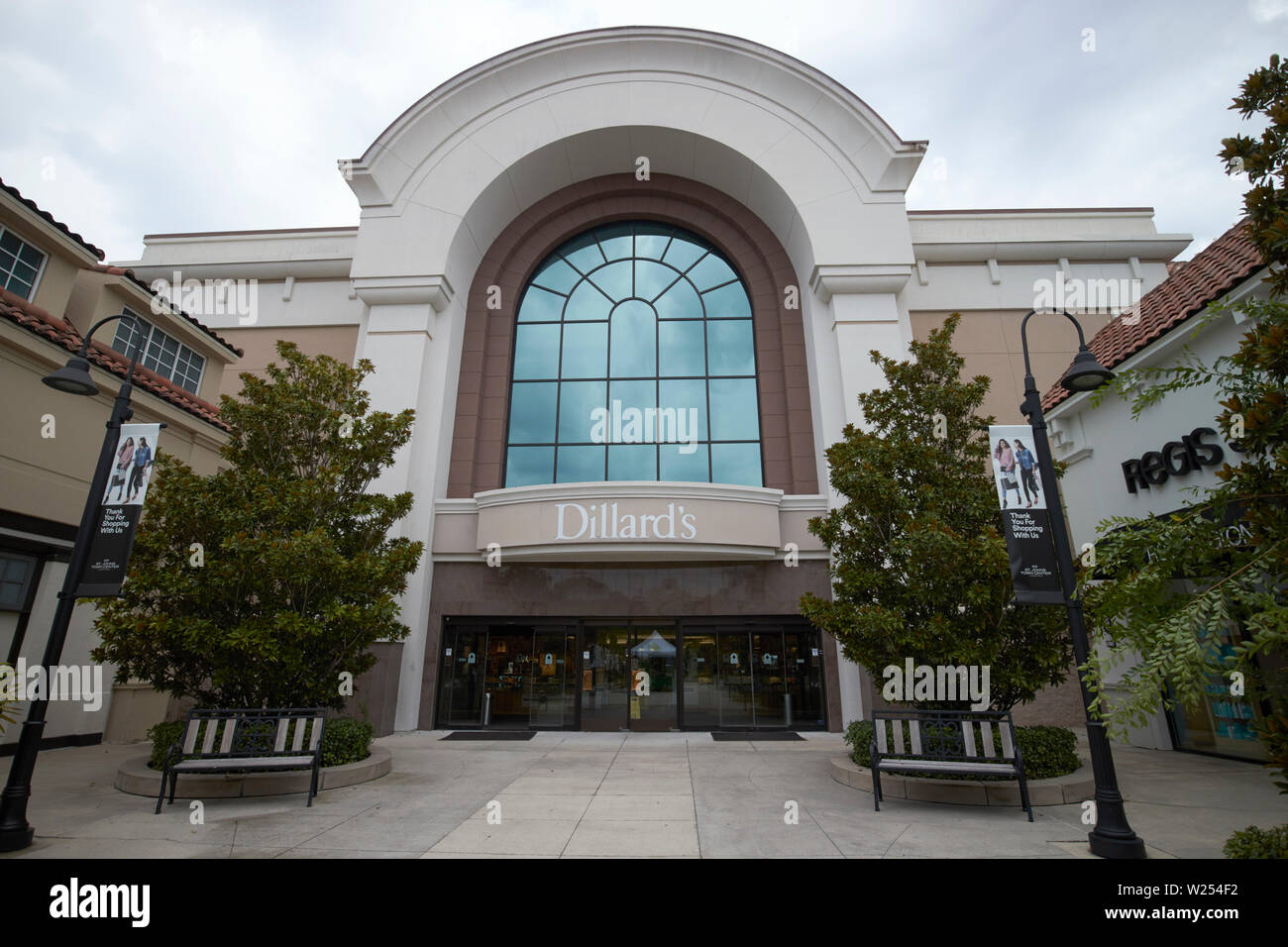
The modern obituary for the American department store has been written so many times it’s practically a template. You know the narrative. Massive, echoing halls of perfume and polyester are supposedly being devoured by the convenience of one-click shipping and the curated allure of boutique storefronts. We’re told that the suburban anchor is a relic of a pre-digital psyche, a sprawling dinosaur waiting for the asteroid. Yet, if you walk through the doors of Dillard's Store In Naples Florida, the math of that extinction theory starts to fall apart. This isn’t a story about a brand clinging to life through nostalgia or aggressive discounting. Instead, it’s a case study in how high-end geography and a refusal to modernize in the way Silicon Valley demands have created a fortress of profitability. Most people look at a traditional anchor tenant and see a liability. They're wrong. In the specific ecosystem of Southwest Florida, these institutions aren't just surviving; they're functioning as the silent, indispensable stabilizers of the local luxury economy.
The Counter-Intuitive Strength of Dillard's Store In Naples Florida
The assumption that physical retail is dying ignores the reality of wealth density. Naples isn’t a typical American town; it’s a global concentration of capital where the sensory experience of shopping remains a social requirement rather than a chore. Critics often point to the rise of e-commerce as the final nail in the coffin for large-scale retailers, but they overlook the friction inherent in luxury digital returns. When you’re purchasing high-thread-count linens or precision-tailored evening wear, the digital interface is a barrier, not a bridge. The presence of a physical anchor in the Coastland Center provides a level of immediate gratification and tactile verification that an algorithm can’t replicate. This specific location doesn't fight against the internet. It exists in a parallel dimension where the customer's time is worth more than the slight savings of an online coupon.
We often hear that the mall is a graveyard, but that’s a simplification based on the struggles of mid-tier markets in the Rust Belt. In the sun-drenched corridors of Neapolitan commerce, the physical store acts as a cooling tower for the local economy. It draws a specific demographic that views the act of browsing as a leisure activity akin to golf or boating. By maintaining a massive physical footprint, the brand secures a dominant share of the local "look and feel" market. You don't go there because you need a shirt; you go there because you need to know exactly how that specific fabric reacts to the Florida humidity before you commit to it. The brand's success here isn't a fluke. It's a calculated bet on the persistence of the physical world in a city that values appearances above almost everything else.
The Architecture of Brand Loyalty and Inventory Control
If you look at the balance sheets of competitors who’ve faltered, you’ll see a recurring theme of over-expansion and a desperate pivot to "lifestyle" branding that nobody asked for. This institution took a different path. It leaned into the traditionalism that its core customer base craves. While other retailers tried to turn their floor space into tech hubs or coffee bars, this entity remained focused on the actual product. I’ve watched as other giants stripped away their inventory depth to save on carrying costs, only to find their shelves looking like a picked-over clearance rack. This location maintains a density of options that feels almost defiant. It’s an intentional strategy. If you give a customer thirty options instead of three, you aren’t just selling a product; you’re providing an experience of abundance that justifies the drive.
Inventory management in a place like Naples requires a surgical understanding of the local calendar. The "season" isn’t just a busy period; it’s a fundamental shift in the city’s DNA. A store that doesn't calibrate its stock to the specific demands of the winter resident is doomed. Experts in retail logistics often talk about "just-in-time" delivery, but in this high-end niche, "always-in-stock" is the more effective mantra. When a gala is announced or a charity luncheon is scheduled, the demand for specific, high-end attire peaks instantly. The ability to meet that demand on the spot is a competitive advantage that no shipping warehouse in Kentucky can match. It’s about being the reliable infrastructure for the city’s social life.
Dismantling the Myth of the Digital Takeover
Skeptics will tell you that the younger generation will never step foot in a department store. They’ll argue that as the wealth transfers from Boomers to Millennials, the brick-and-mortar model will finally collapse. This view is short-sighted because it assumes that consumer behavior is static and tied to age rather than wealth. As people accumulate assets, their time becomes their most precious commodity. The "convenience" of online shopping quickly turns into a logistical nightmare of cardboard boxes, return labels, and the uncertainty of fit. For the affluent professional or the retiree in a high-end zip code, walking into a well-curated environment where a human being assists with the selection is the ultimate time-saver.
The data back this up. High-income earners are increasingly returning to physical stores for "considered purchases"—those items that cost enough to warrant a second thought. The Dillard's Store In Naples Florida thrives because it targets this specific behavior. It doesn't try to compete with the bargain-basement prices of mass-market websites. Instead, it offers a curated reliability. There's a psychological comfort in knowing that a physical building exists where you can take a problem to be solved. If a seam rips or a size is wrong, you don't send an email to a bot. You walk back through the glass doors. That accountability is a luxury feature in itself, and it’s one that the digital-first crowd is starting to rediscover as the novelty of the "unboxing" video fades into the reality of poor quality and environmental waste.
The Quiet Power of Conservative Capital Management
One of the least discussed aspects of this retailer’s staying power is its approach to real estate and debt. While many of its peers were being gutted by private equity firms or strangled by high-interest loans, the Dillard family maintained a famously conservative grip on their finances. They own a significant portion of their real estate. This means they aren't at the mercy of rising rents that have forced other brands out of prime locations. In a city where real estate prices have ascended to the stratosphere, owning the land under your feet is the ultimate defensive play. It allows the store to weather economic downturns that would wipe out a business burdened by massive lease obligations.
This financial autonomy translates directly into the customer experience. Because they aren't desperate to meet the next quarterly interest payment, they don't have to engage in the "race to the bottom" on pricing. They can afford to maintain the aesthetic standards of the store, ensuring that the lighting is right, the floors are clean, and the staff isn't stretched to a breaking point. When you walk through the aisles, you aren't sensing the frantic energy of a business on the brink. You're sensing the stability of an owner-operated legacy. It's a subtle difference, but the Naples shopper is highly attuned to these cues. They want to shop in an environment that reflects their own perceived stability and success.
Why the Human Element Remains the Ultimate Luxury
In the push for automation, we've forgotten that retail is a service industry. The most sophisticated AI can't tell you if a specific shade of blue makes you look washed out under the Florida sun. It can't offer a genuine compliment that builds a bridge of trust between a brand and a buyer. The sales associates in this specific market are often career professionals who know their regulars by name. They understand the local social hierarchy and the specific dress codes of the various clubs and gated communities. This localized knowledge is a proprietary data set that no tech company can scrape from the web.
This human connection is the "moat" that protects the business. You can find a dress anywhere. You can't find a consultant who remembers what you wore to the Conservancy gala last year and ensures you don't show up in something too similar this year. That level of hyper-local service turns a transaction into a relationship. It transforms the department store from a mere vendor into a community pillar. While the rest of the world is trying to remove the human from the loop to save on labor costs, the most successful high-end retailers are doing the exact opposite. They're doubling down on the one thing that can't be digitized: the feeling of being seen and understood by another person.
The resilience of the department store in wealthy enclaves isn't a sign of a market that’s lagging behind the times. It’s a sign of a market that has already seen the limitations of the digital world and chose to keep the best parts of the physical one. The Coastland Center anchor isn't a ghost of the past; it’s a blueprint for a future where quality, presence, and personal service are the only metrics that truly matter. We've spent a decade believing that the future of commerce is a screen, but the sustained health of this Florida outpost suggests that the future might actually look a lot like the past, just with better air conditioning.
The survival of such a massive physical presence in an era of digital dominance proves that when a brand aligns itself with the specific cultural and financial rhythms of its location, it becomes nearly impossible to dislodge. Most observers look at the footprint of a traditional department store and see an inefficient use of space. They see thousands of square feet that could be partitioned into smaller, higher-rent units. But they miss the point of the anchor's gravity. Without the scale, you lose the sense of occasion. Without the inventory, you lose the sense of possibility. And without the physical location, you lose the only place left where the act of being a customer still feels like an event rather than a data point. The retail apocalypse hasn't arrived in Naples because the people there aren't looking for a way to shop faster; they’re looking for a reason to shop better.
Ultimately, the persistent success of this institution isn't about resisting change but about identifying which things are too valuable to change. We're living through a Great Simplification where every interaction is being boiled down to its most efficient, soulless form. Against that backdrop, a sprawling store filled with real people and tangible goods feels less like a relic and more like a sanctuary. It turns out that in an world of pixels and shipping delays, the most radical thing a business can do is simply show up, open the doors, and offer you a chair while you decide which version of yourself you want to be today.
The department store didn't die; it just moved to where it was actually appreciated.