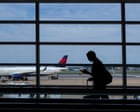
If you expected airline tickets to get cheaper because oil prices are finally cooling off, I have bad news. Delta Air Lines just dropped its second-quarter earnings report for 2026, and the takeaway is clear. You are going to keep paying premium prices for your seats.
Airlines love to blame high ticket prices on expensive jet fuel. It makes sense on paper. Fuel is traditionally one of the largest volatile expenses an airline handles. When crude oil spiked earlier this year, reaching terrifying peaks, airlines quickly hiked fares to protect their bottom lines. But now that those fuel pressures are starting to ease, the expected price cuts are nowhere to be found.
Delta is making an absolute killing right now. The Atlanta-based carrier posted a massive $17.67 billion in adjusted revenue for the quarter. That is a 14% jump compared to last year. They beat Wall Street expectations with an adjusted earnings per share of $1.56. They did all of this while absorbing the highest quarterly fuel bill in their corporate history, paying an average of $3.93 per gallon.
The industry secret is out. Airlines have realized that you are willing to pay more. They have no incentive to lower their prices.
The Shocking Shift in How Airlines Make Money
For decades, the economy cabin was the lifeblood of commercial aviation. The strategy was simple. Pack as many people into the back of the plane as humanly possible, sell cheap tickets, and make up the difference in volume. That era is officially dead.
During this past quarter, something historic happened at Delta. Revenue from premium tickets, like Delta One, First Class, and Comfort Plus, hit $6.92 billion. Main cabin revenue brought in $6.85 billion. Let that sink in for a moment. Premium seat revenue actually overtook economy seat revenue.
This is not a statistical fluke. It is a fundamental shift in passenger behavior. Travelers are actively choosing to skip the basic experience. They are paying hundreds, sometimes thousands of dollars extra for a bit of legroom, early boarding, and a free drink.
Because wealthy leisure travelers and corporate accounts are eagerly buying up these expensive seats, Delta does not need to drop prices to fill planes. They barely increased their flying capacity this quarter, growing it by a meager 1%. Yet, their revenue shot up by double digits. When you can make more money flying fewer people in more expensive seats, lowering airfare prices becomes bad business.
How Fuel Costs Became the Ultimate Pricing Shield
Airlines managed to pass the pain of inflation straight to your wallet. Delta recovered roughly 60% of its massive fuel cost increases directly through fare hikes over the spring and summer.
The underlying mechanics of this are fascinating. In the second quarter, Delta spent $4.4 billion on fuel. That is a staggering 77% increase year over year. In any normal business environment, a cost shock of that magnitude would crush profit margins. Instead, Delta delivered $1.4 billion in adjusted pre-tax profit.
Now look at what is happening next quarter. Delta Chief Financial Officer Erik Snell expects all-in fuel prices to drop down to around $3.15 per gallon in the September quarter. That is a massive drop from the $3.93 they just paid.
In a perfectly competitive, consumer-friendly market, a drop in production costs means lower prices for the end user. Do not hold your breath. Delta management openly stated they expect fare gains to hold. They are predicting their third-quarter earnings per share to jump even higher, targeting a range of $2.00 to $2.50. Instead of giving you a discount, they are pocketing the cheaper fuel prices to rebuild their profit margins.
Credit Cards and Cargo are Keeping Fares High
If you think Delta is just an airline, you are missing the bigger picture. They are essentially a loyalty and marketing company that happens to operate airplanes.
Look at their partnership with American Express. During the second quarter alone, Delta brought in $2.4 billion from American Express remuneration. That is a 16% increase from the prior year. People are swiping their credit cards at record rates to earn SkyMiles, and American Express is paying Delta handsomely for those points.
On top of that, their cargo revenue surged by 39% this quarter. Their maintenance, repair, and overhaul business grew by 32%.
When an airline has billions of dollars flowing in from credit card companies, cargo shipping, and premium lounge access, they become insulated from the typical economic pressures that used to force fare wars. They do not need to drop the price of a flight from New York to London to attract customers. The ecosystem is self-sustaining.
Why Demand is Refusing to Break
Economic pundits have been predicting a consumer spending slowdown for a long time. They argue that high interest rates and persistent inflation will eventually force people to stop traveling.
Delta's data proves those experts wrong. Domestic unit revenue grew 12% year over year. International revenue rose 8%, heavily driven by travel to Latin America. People are prioritizing experiences over buying physical goods. Vacationing has transitioned from a luxury item to a non-negotiable line item in the household budget.
Since flights remain packed despite the high prices, airlines see zero reason to blink. They have successfully retrained the public to accept $400 domestic economy tickets as the new baseline.
Real Ways to Beat the Flight Price Squeeze
Knowing that Delta and its competitors are keeping prices high means you have to change how you book travel. You cannot rely on old tricks anymore. Buying tickets on a Tuesday at midnight is a myth. Waiting for a sudden fare drop will only leave you stranded.
First, stop paying cash for premium upgrades at checkout. The airline algorithm knows you want that extra legroom, and it is pricing those seats dynamically based on the massive demand Delta highlighted in their earnings call. If you want to fly premium, book it directly using miles during flash sales, or stick to the main cabin and use your status to angle for complimentary upgrades.
Second, look at the capacity numbers. Delta only grew capacity by 1%. When supply is tight, prices stay high. Look for routes where legacy carriers are actively fighting low-cost competitors for market share. If Delta is the only major carrier dominating a specific hub, like Atlanta, Minneapolis, or Salt Lake City, you are going to pay a premium. Consider driving to an alternative airport or booking a connecting flight through a competitor hub to force a lower fare.
Third, extract maximum value from your loyalty cards. Since American Express paid Delta $2.4 billion last quarter, it means the credit card market is flooded with points. Use those points for partner airline bookings. Often, booking a Delta-operated flight through a partner airline program like Air France-KLM Flying Blue or Virgin Atlantic Flying Club requires significantly fewer miles than booking directly through Delta SkyMiles.
Airlines have figured out how to decoupled ticket prices from the price of oil. They have built an environment where premium buyers keep profits high, credit card partnerships keep cash flowing, and limited capacity keeps seats scarce. The high prices are here to stay. Adjust your travel strategy accordingly.