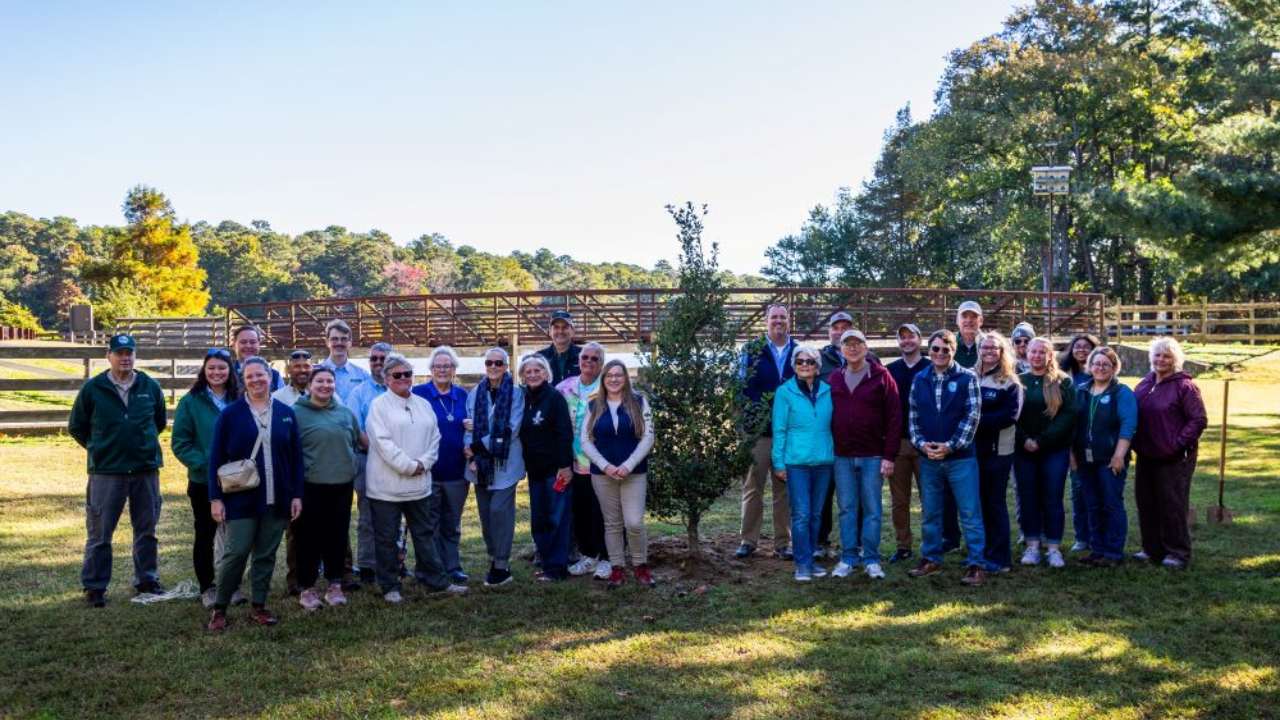
Seventy-five years ago, Delaware launched its state park system with just three small properties. Today, that footprint spans 17 parks, 22 nature preserves, and over 27,000 acres of protected land. To celebrate this diamond jubilee, park officials didn't just throw a party or cut a ribbon. They planted a tree. Specifically, they planted the 75,000th tree of a rigorous five-year initiative, hitting a milestone that proves environmental targets can actually be met when local communities roll up their sleeves.
The final tree went into the ground at Trap Pond State Park, featuring an American holly designated as a historic Liberty Tree. But behind the symbolic photo-ops and anniversary speeches lies a gritty, multi-year logistical push across seventeen distinct properties. If you think large-scale government conservation is all red tape and missed deadlines, Delaware's latest woodland achievement offers a different story. If you enjoyed this post, you might want to check out: this related article.
How Delaware Hit the 75,000-Tree Mark
Setting a goal to add 75,000 trees across a park network in five years sounds good on paper, but execution is where most public programs fail. The Delaware Department of Natural Resources and Environmental Control mapped out a strategy tied directly to their 2021–2026 strategic plan. They didn't distribute the trees evenly. They put them where they were needed most.
Killens Pond State Park absorbed the heaviest volume, taking in nearly 29,900 trees. Trap Pond State Park followed close behind with roughly 29,200. White Clay Creek, Auburn Valley, and Bellevue handled the rest of the major totals, while dozens of smaller planting events filled in the gaps. For another perspective on this event, see the recent coverage from The New York Times.
Foresters didn't just dump saplings into the dirt and hope for the best. Crews used protective tree shelters to guard young plants against aggressive wildlife and erratic weather patterns. They deliberately selected native species like cherry, oak, persimmon, maple, sycamore, and pine alongside the state's signature American holly. This variety prevents the ecological traps associated with monoculture planting and strengthens the overall resilience of the forest canopy.
The Bigger Picture Behind TEDI
This park milestone doesn't sit in isolation. It acts as a stepping stone for an even larger statewide mandate known as "A Tree for Every Delawarean," or TEDI. While the 75,000 trees belong strictly to the state park system, the broader TEDI program aims for an aggressive target of one million new trees statewide by 2030.
State officials confirm that over half a million trees are already in the ground under the TEDI umbrella. This initiative operates as a collaborative engine, pulling resources from environmental stewardship funds, local "Friends" groups, corporate partners, and everyday volunteers.
You can trace the motivation back to practical climate realities. Trees aren't just decorative scenery. Planted strategically along waterways, they form riparian buffers that stabilize riverbanks, control soil erosion, and filter agricultural runoff before it hits local aquatic ecosystems. In a state vulnerable to coastal shifts and changing weather extremes, urban and community forestry functions as basic infrastructure.
What Comes Next for Delaware Parks
Reaching the five-year park target doesn't mean foresters are packing up their shovels. Just days after celebrating the official milestone at Trap Pond, crews scheduled another 88 trees for Fox Point State Park.
The real engine driving these ongoing numbers is public participation. Delaware opened up funding pipelines and registration trackers allowing private landowners, local schools, municipalities, and businesses to log their own plantings toward the million-tree objective.
If you want to understand how conservation projects succeed in 2026, look at Delaware's blueprint. It combines state funding with volunteer labor, pairs a symbolic anniversary with concrete ecological metrics, and refuses to stop just because a headline goal has been checked off the list. Get outside, plant something native in your own yard, and help push that total closer to the 2030 finish line.