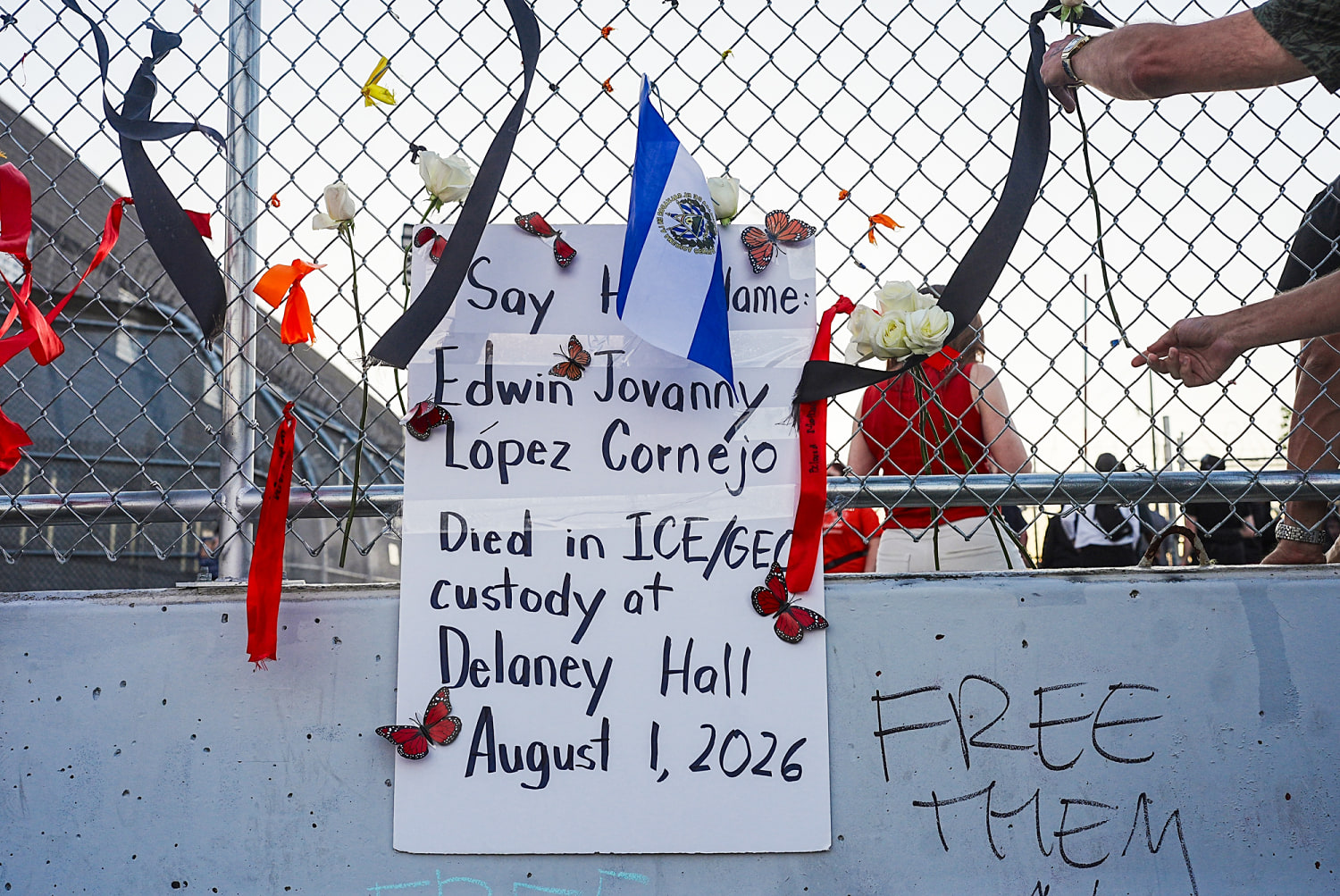
A forty-one-year-old father went into federal custody on a routine immigration hold and left in a body bag. Edwin Lopez-Cornejo died at University Hospital in Newark after experiencing a medical emergency inside Delaney Hall, a private immigration detention facility in New Jersey. His family and local leaders aren't buying the official statements from Immigration and Customs Enforcement. They are pointing straight at institutional neglect.
When someone dies behind locked doors, transparency becomes the core battleground. Federal agencies issue standard press releases about prompt responses and proper medical care. Families and advocates push back with grim details of chronic illness, missed treatments, and unanswered phone calls. This clash exposes deep operational fractures inside the private prison system handling immigration enforcement today.
What Happened at Delaney Hall
Edwin Lopez-Cornejo was arrested by ICE in Plainfield, New Jersey, on June 18. He spent roughly six weeks locked inside Delaney Hall, a thousand-bed facility operated by the private contractor GEO Group. On a Saturday, a medical emergency triggered a transfer to Newark's University Hospital, where medical personnel pronounced him dead.
The official cause of death remains pending further examination. ICE maintains that staff and on-site medical professionals followed protocols immediately. They claim Lopez-Cornejo received proper evaluations during his short stay.
His family tells a vastly different story. María Cornejo, his mother, shared that her son called her just a day before he died. He complained that parts of his face and right hand had gone numb after a brief visit to the facility's medical unit. He had underlying health conditions, including diabetes and high blood pressure. According to his relatives, the vital medication he needed to manage these conditions was withheld or delayed during his weeks in detention.
The Mounting Pressure on Private Operators
Delaney Hall has been a lightning rod for controversy since it opened. This latest fatality marks the second death at the Newark facility in a short span. It also pushes the national tally of deaths in ICE custody to twenty-two for the year.
Elected officials and civil rights advocates quickly seized on the tragedy to demand immediate structural changes. Newark Mayor Ras Baraka called the death a heartbreaking reminder of absent oversight. U.S. Senators Cory Booker and Andy Kim, alongside Representative Bonnie Watson Coleman, renewed urgent calls to shut down the facility permanently.
"Delaney Hall is a stain on our country. Its continued use is a daily reminder of the cruelty of our immigration and criminal justice systems." — U.S. Rep. Bonnie Watson Coleman
State officials have previously clashed with GEO Group over health inspections and operational transparency. New Jersey's attorney general pursued legal paths to halt operations until independent state health checks could occur. Private operators insist they comply with federal guidelines. Critics argue that profit motives compromise basic safety standards for people held inside.
Why This Case Matters Right Now
Immigration detention oversight relies heavily on internal reporting mechanisms. When an in-custody death happens, accountability usually moves at a crawl. Lawmakers have demanded specific internal records:
- The exact timeline of when Lopez-Cornejo reported feeling ill.
- Logs proving when medical assistance was requested and dispatched.
- Complete documentation of prescribed medications administered during his six-week stay.
- Incident reports detailing staff response times inside Delaney Hall.
Without independent verification, trust in the system erodes completely. Families are left grieving a sudden loss without clear answers about why a treatable medical crisis turned fatal.
If you are following developments around immigrant detention rights or local facility accountability, start by tracking public disclosures from civil rights organizations like the ACLU of New Jersey. Push for open records legislation that forces private detention contractors to answer directly to local health authorities. Transparency is the only baseline that prevents tragedies from repeating behind closed doors.