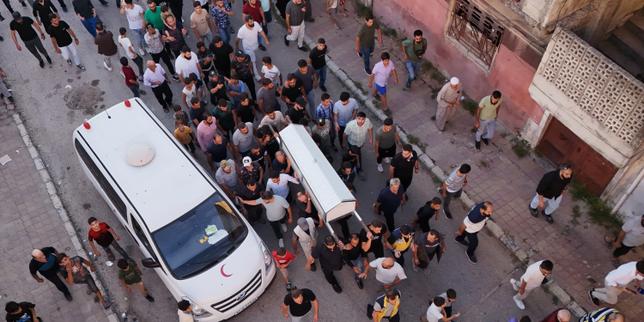
The death of Mohammad Ghamira isn't just a local tragedy. It’s a wake-up call for a nation struggling to redefine itself after the collapse of the Assad regime. Ghamira, a 29-year-old former White Helmets volunteer and father of two, died on Sunday, August 16, 2026, after being held at a police station in Latakia. He had a medical condition, hemophilia, which his family explicitly warned police about before he was beaten.
He didn't just die from an "allegation of theft." He died from systemic negligence and the persistent, shadow-like survival of brutal interrogation methods that supposedly vanished with the old guard.
The Myth of a Clean Break
Many expected that when the regime fell in December 2024, the torture chambers would close for good. They didn't. While there’s no evidence of a centralized, state-mandated torture machine like the one that defined the Assad years, the culture of violence remains embedded in the security apparatus.
Think about the structure. You change the head of the government, but you keep the same police officers, the same local station chiefs, and the same lack of oversight. That’s how you get people like Ghamira beaten to death over a petty theft accusation. The machinery of state violence is fragmented, but it’s still dangerous.
Why This Case is a Litmus Test
Ghamira’s death has triggered protests in Aleppo and calls for accountability in Damascus. People are carrying signs that say, “Do not repeat the same oppression that we revolted against.” They aren't just angry about one man; they’re terrified that the cycle is starting over.
If the interim government ignores this, they lose their legitimacy. It’s that simple.
What Actually Needs to Happen
If you’re following this closely, don’t look for grand speeches. Look for these three things:
- Independent Investigations: The interior ministry says seven personnel are under detention for questioning. That’s a start. But is it transparent? The public needs to see the results.
- Medical Protocol Enforcement: Ghamira’s uncle warned the police about his hemophilia. If detainees’ basic medical statuses are ignored, it’s proof that human rights protocols exist only on paper.
- Institutional Reform: You can’t just train police to be "kinder." You need radical oversight that connects local stations to a central, independent judiciary that actually holds officers accountable when they step out of line.
The Reality of Detention in 2026
Rights groups like Syrians for Truth and Justice have documented 14 cases of torture or suspicious deaths in custody between June 2025 and June 2026. This isn't ancient history. It’s happening right now.
It’s easy to look at the fall of a dictatorship and think the job is done. The reality is far messier. Transitioning from a police state to a functioning democracy takes decades of dismantling the very people who were trained to view citizens as enemies.
We’re seeing a shift from "systemic, state-ordered torture" to "widespread, unchecked individual abuse." Neither is acceptable. Both destroy the trust required to build a new Syria.
If you want to understand the trajectory of the country, stop looking at the top-tier politics in Damascus. Look at the local police stations. Look at how they handle minor accusations. Look at whether families are treated with respect or dismissed with violence.
Ghamira’s story is a warning. The revolution won’t be finished until the fear of walking into a police station disappears. Until then, the cycle of abuse isn't a ghost of the past—it’s a present-day reality.
Demand transparency. Support the groups documenting these violations. Watch the progress of the current investigation in Latakia. Silence is exactly what those holding the sticks are counting on.