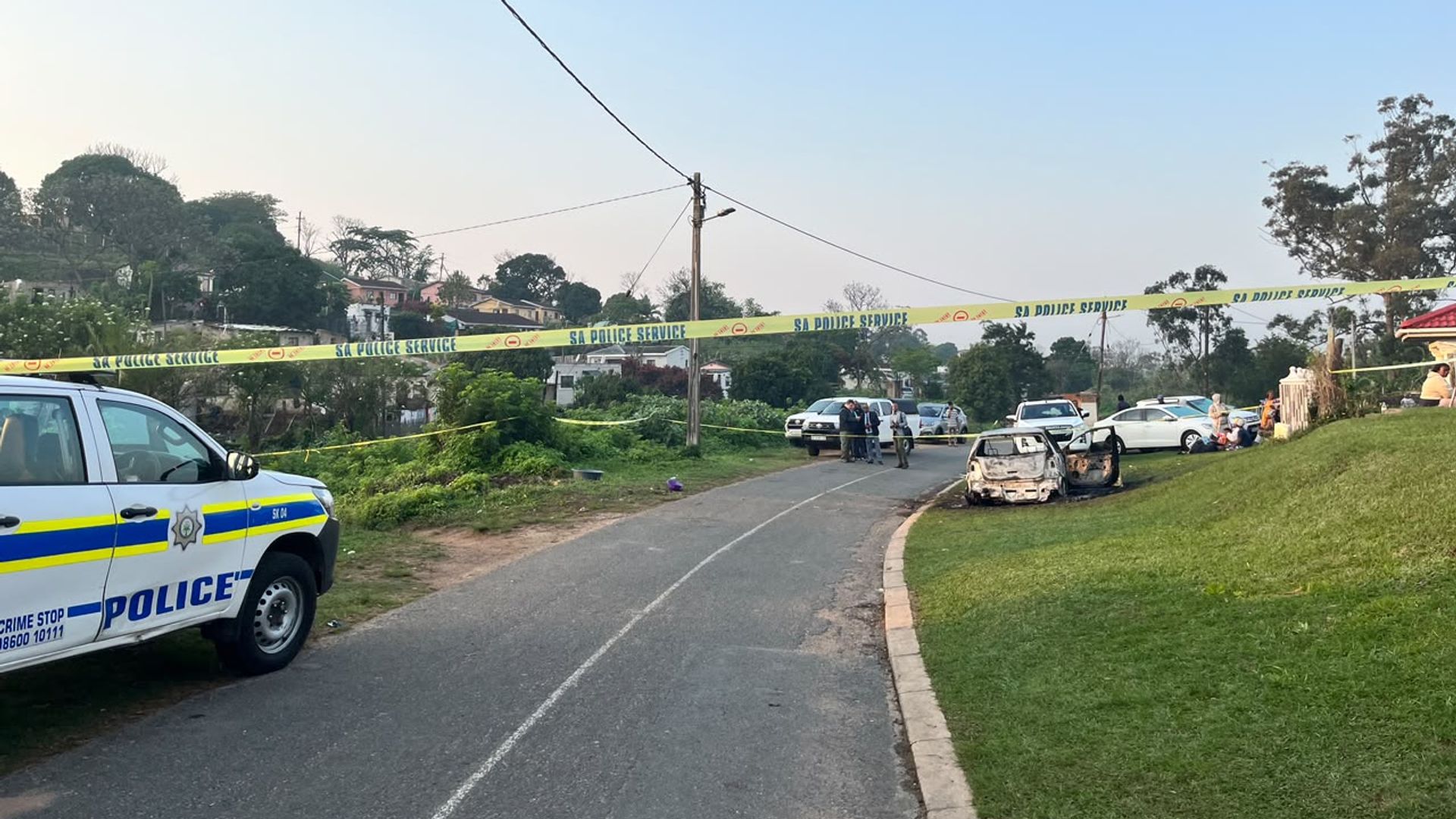
Eleven people are dead. Three armed gunmen stormed a crowded house party in the KwaMakhutha township, roughly 19 miles south of Durban, and opened fire with ruthless speed.
It was a Tuesday night. Fourteen people—thirteen men and one woman who was believed to be pregnant—had gathered inside a residential home. Ten victims died on the scene. Another victim succumbed to their injuries after being rushed to the hospital, while three others survived with wounds. The attackers didn't just leave carnage behind; reports from the scene indicate a white vehicle belonging to one of the victims was set ablaze during the assault.
Right now, the South African Police Service is hunting for the three suspects. No arrests have been made. Officials are pointing toward a potential feud between rival factions, noting that several individuals inside the house were already known to law enforcement regarding separate criminal investigations. But looking at this tragedy purely as an isolated gang vendetta misses the larger, uncomfortable reality.
The Pattern of Mass Violence No One Can Fix
South Africa has a massive gun violence problem, and it's getting worse. This isn't an anomaly. It's part of a brutal sequence of mass shootings rattling communities across the nation. Back in June, a similar multi-assailant attack left 12 people dead in a poor neighborhood in Johannesburg.
People ask why these incidents keep happening with such alarming frequency. The answer involves a toxic mix of overwhelmed police resources, illegal firearm proliferation, and deeply entrenched localized criminal economies. When governance fails and local gangs act as the law, a house party turns into an execution zone in seconds.
Local security experts, including researchers from organizations like the Institute for Security Studies, have repeatedly warned that the country's murder rate remains shockingly high by global standards. Yet, tangible preventative shifts on the ground remain agonizingly slow. Police statements routinely cite "rival groupings" and ongoing investigations, but communities are left wondering how heavily armed men can walk up to a residential property, slaughter nearly a dozen people, and vanish into the night without immediate apprehension.
The Broader Climate of Fear
This latest massacre doesn't happen in a vacuum. It lands on top of a wave of intense public outrage and fear. Just recently, the nation has been gripped by horror over the discovery of nine women's bodies on the outskirts of Johannesburg over a two-month span, sparking fears of a serial killer and igniting nationwide protests.
Violence against women and rampant violent crime are tearing social fabrics apart. When a pregnant woman is among the dead in a targeted mass shooting, it shatters any illusion that ordinary spaces offer safety.
What Happens Next
Right now, a massive manhunt is underway in KwaZulu-Natal. Families are planning funerals. Investigators are digging through criminal dossiers to piece together the exact motive behind the KwaMakhutha bloodshed.
If you're following this situation, watch for updates directly from the South African Police Service regarding suspect descriptions or arrests. Expect intense political pressure on local law enforcement to deliver results as public frustration mounts over systemic safety failures. Stay tuned to verified local and international journalism outlets for verified updates on the manhunt.