You can't just list a US Senator on your itinerary and expect nobody to check.
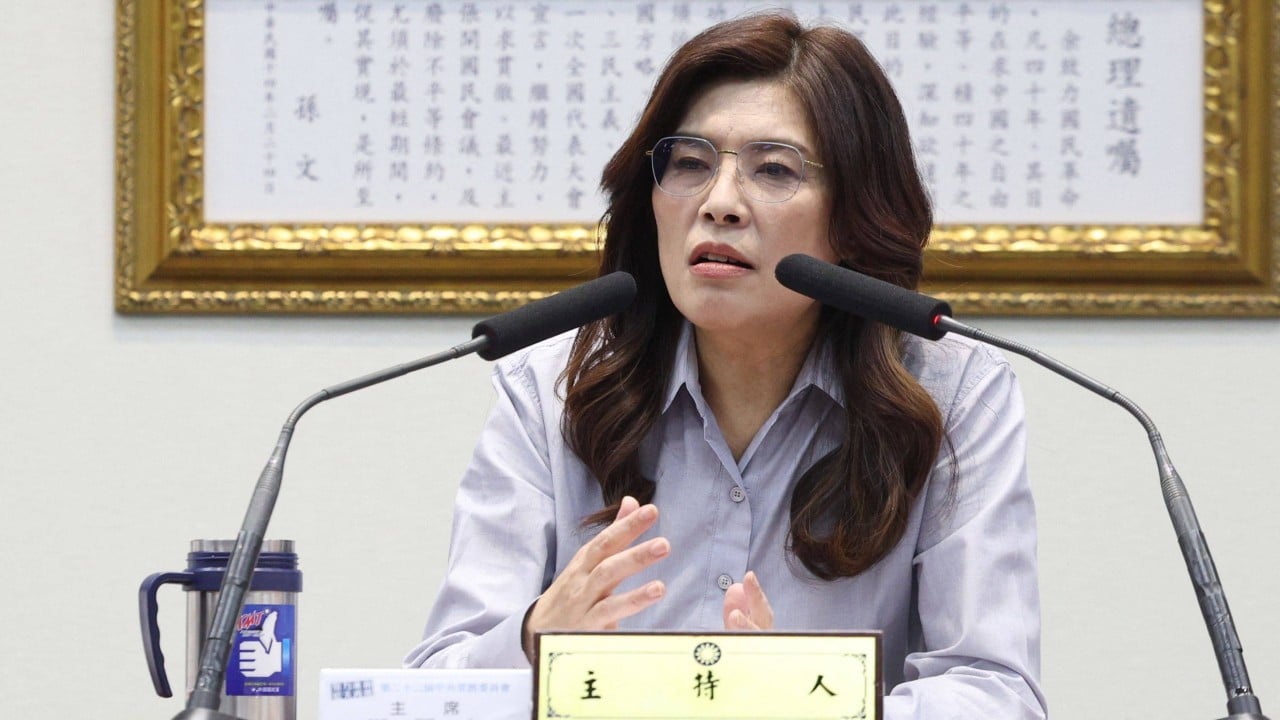
Taiwanese opposition leader Cheng Li-wun learned this the hard way after her high-profile Washington tour. The Kuomintang (KMT) chairwoman claimed she sat down with US Senator Steve Daines, a heavy-hitting Trump ally from Montana, to talk arms deals and nuclear energy.
Except she didn't.
Daines actually got stuck in a committee meeting and skipped the sit-down entirely. Cheng didn't meet the senator; she met his staff. While the KMT tried to spin the Washington trip as a diplomatic triumph, the reality on Capitol Hill was a chilly, calculated shrug. This wasn't just a scheduling glitch. It points to a much deeper, structural trust deficit between Washington and Taiwan's oldest political party.
The Elevator Encounter Strategy Backfires
When you're trying to prove to voters back home that Washington loves you, optics are everything. Cheng's team pushed out a list of ten members of Congress she supposedly huddled with.
Local Taiwanese media quickly started digging into the details. Taiwanese-American entrepreneur Ming Chiang dropped a bombshell, noting that Daines explicitly told him at a banquet that the meeting with Cheng never happened.
It gets worse. Reports surfaced from outlets like Taiwan's FTV News that the KMT delegation's list of "meetings" included people they simply ran into randomly in Capitol Hill elevators.
Politicians skip meetings when votes go late. It happens. But when you're the head of a major political party on a crucial foreign policy tour, getting dumped on staff sends a loud message about your priority status. House Foreign Affairs Committee Chairman Brian Mast met with her but told reporters he didn't have specific expectations, bluntly stating, "I take intelligence from anywhere I can get." That is hardly a ringing endorsement.
The Naive Peacemaker Pitch
Washington insiders aren't just cold on Cheng because of scheduling quirks. They fundamentally don't buy her political narrative.
Cheng has been pitching herself as a pragmatic peacemaker capable of institutionalizing peace with Beijing. She met with Chinese President Xi Jinping in April, and American officials wanted clarity on what exactly went down in that room. Representative Young Kim's office openly stated they wanted to press Cheng on the substance of her Beijing talks.
Scholars at the Hoover Institution at Stanford University, where Cheng stopped before hitting DC, walked away unimpressed. Kharis Templeman, who leads Hoover's Project on Taiwan in the Indo-Pacific, described her closed-door session as a rigid, "one-way street" where Cheng ignored feedback and simply repeated predetermined talking points.
The prevailing view among DC China-watchers? Her confidence that Taiwan can negotiate a separate peace with Beijing without suffering Hong Kong's fate is idealistic at best, and dangerously naive at worst.
The Armed Deterrence Problem
The real friction comes down to hard cash and military hardware. You can't lobby Washington for support while your party back home actively trims the sails of Taiwan's defense budget.
Cheng claims the KMT isn't anti-American or anti-defense, framing their skepticism of domestic defense spending as a fight for fiscal discipline and anti-corruption. But US lawmakers see a party using its legislative power to hold up critical defense funds. Senator Dan Sullivan previously went so far as to accuse the KMT of short-changing defense to "kowtow" to the Chinese Communist Party, warning that they are "playing with fire."
When Cheng showed up in Washington trying to talk energy policy and nuclear power, American lawmakers pushed right back on defense spending. They want to see a clear, unshakeable commitment to self-defense and deterrence. Grandstanding about fiscal discipline doesn't work when Beijing is dialing up the military pressure.
A Tale of Two KMT Visits
If you want to see what actual Washington access looks like, look at Han Kuo-yu.
The KMT Speaker of the Legislative Yuan led a cross-party delegation to DC at the exact same time. The difference in reception was night and day. Han secured an individual meeting with House Speaker Mike Johnson. He stood in front of a reception packed with over 30 representatives, including former Speaker Nancy Pelosi.
Han's visit worked because it was tri-partisan and focused on institutional ties. Cheng's solo tour felt like a self-serving momentum builder for internal party politics, and Washington smelled it from a mile away.
What This Means Moving Forward
The KMT has a massive branding problem in the United States, and padding meeting logs with staff sit-downs won't fix it. If the party wants to be taken seriously as a governing alternative in Taiwan, it needs to drop the talking points and address Washington's core anxieties.
- Align the Defense Rhetoric: The party must stop treating defense spending as a domestic political football. If you tell US lawmakers you support deterrence, your legislative voting record back in Taipei needs to match.
- Ditch the One-Way Monologues: Think tanks and policy officials in DC expect a dialogue. Showing up with a script and refusing to engage on tough questions about Beijing's actual intentions signals that you aren't ready for prime-time diplomacy.
- Build Real Institutional Trust: Photo-ops with staff assistants don't move the needle. The KMT needs consistent, low-profile policy engagement that proves they can be trusted partners on regional security, regardless of who occupies the White House or the Legislative Yuan.