The illusion of a peaceful Middle East shipping corridor has shattered again.
If you thought the brief diplomatic pause in the Persian Gulf would last, you were wrong. The fragile ceasefire between Washington and Tehran is officially dead, and the global energy market is already feeling the burn. You might also find this connected coverage useful: The Southern Libyan Rebellion That Could Topple The Haftar Dynasty.
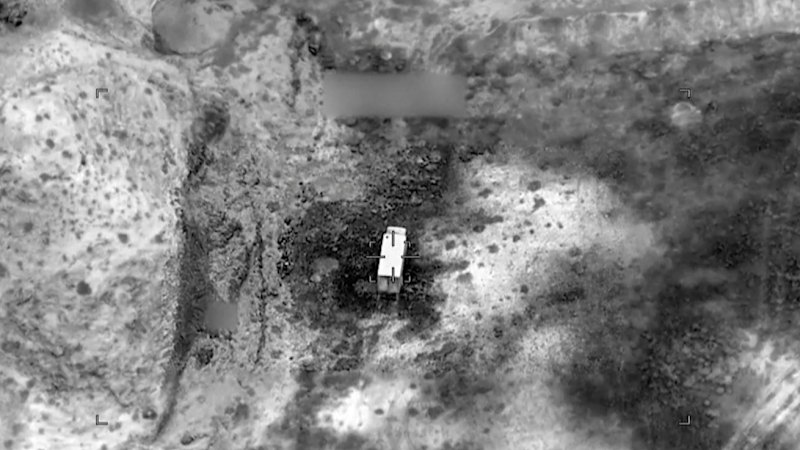
Within twenty-four hours of reinstating its hardline naval blockade on Iranian ports, the US military's Central Command (CENTCOM) turned away two compliant commercial vessels and dramatically disabled a third. The Curacao-flagged oil tanker, MT Belma, ignored repeated warnings while sailing toward Iran's Kharg Island export terminal. The response from the US navy was swift and violent. A US aircraft fired Hellfire missiles directly into the tanker's smokestack, leaving the ship disabled and dead in international waters.
This isn't just a minor skirmish. It's an aggressive escalation that threatens to choke off a fifth of the world's oil supply. As discussed in latest articles by The New York Times, the effects are widespread.
What Just Happened in the Strait of Hormuz
The maritime confrontation on Wednesday marks the first time the US has physically disabled a commercial vessel since President Donald Trump ordered the blockade's return.
According to official military statements, the MT Belma was unladen and heading straight for Iran's primary oil hub when it was intercepted. While two other merchant ships complied with military orders and altered their courses, the Belma chose to test American resolve. It lost that bet.
Strait of Hormuz Action (First 24 Hours of Renewed Blockade):
- Compliant ships redirected: 2
- Non-compliant ships disabled: 1 (MT Belma)
- Weapon used: Hellfire missiles into the smokestack
- Status: Transits to Iranian ports completely halted
The military action didn't stop at sea. Alongside the naval enforcement, US forces launched massive waves of airstrikes against Iranian military installations on land. Heavy explosions rocked southern Iranian port cities like Bandar Abbas, Chabahar, and Ahvaz. Local reports even indicated that a stray projectile landed near a hospital in Ahvaz, forcing panic-stricken evacuations.
This isn't a new strategy, but rather a return to a brutal status quo. During the initial phase of the blockade earlier this year, CENTCOM redirected 142 commercial vessels and disabled nine.
Why the Temporary Truce Collapsed
To understand why we're back on the brink of a wider war, we have to look at the failed diplomacy of the past few months.
Back in June, the US and Iran signed an interim memorandum of understanding. The deal lifted the initial US blockade on Iranian ports in exchange for a 60-day window to negotiate a lasting agreement on Iran’s nuclear program and regional maritime security.
But the talks quickly stalled.
Instead of negotiating in good faith, both sides used the pause to reposition. Hardliners in Iran grew increasingly anxious about losing their leverage as oil exports continued under temporary arrangements. By early July, the truce began to fray. A series of shadow-war attacks on commercial shipping—including Iranian strikes on two Emirati supertankers—forced Washington's hand.
Now, the diplomatic window has slammed shut.
Shippers are Rejecting the US Navy Transit Scheme
For decades, commercial ships relied on a safe, UN-established transit zone down the center of the Strait of Hormuz. That safety net is gone.
Since the broader conflict erupted on February 28, the Islamic Revolutionary Guard Corps (IRGC) has heavily mined those traditional lanes. In response, the US military set up an alternative, guided transit scheme on the Omani side of the strait, using aerial drones, water drones, and helicopter escorts to guide tankers through.
While that program successfully moved tens of millions of barrels of oil, shipping companies are now quietly opting out.
The route has simply become too dangerous. In the last week alone, five major vessels—including three crude supertankers, an LNG carrier, and a container ship—have been attacked in Omani waters despite the US security umbrella. Maritime security firms confirm that major shipping lines are deciding the risk of losing a multi-million-dollar hull isn't worth the reward, no matter how many military drones are watching over them.
The Political High Stakes of Gas Prices
There is a massive political undercurrent driving this military strategy. With the critical US midterm elections looming in November, the White House is desperate to keep global energy prices stable.
But blockading a major oil producer while trying to keep pump prices low is an incredibly difficult tightrope act.
Iran's leadership knows exactly where the pressure points are. Following the reinstatement of the blockade, the IRGC issued a blunt warning: energy exports from the Persian Gulf will be "for everyone or for no one." If Iran cannot sell its oil due to the US blockade, they intend to make sure no other Gulf nation can either.
Even within the US administration, there's deep division on how to handle this. Vice President JD Vance recently aired his frustrations, criticizing Washington hawks for deliberately tanking diplomatic channels. Vance argued that a faction of political actors has actively worked to undermine negotiations, leaving the US with no choice but to rely on risky military escalation to keep the shipping lanes open.
Action Plan for Maritime and Energy Operators
If you operate in the maritime logistics, insurance, or energy trading spaces, you cannot afford to wait and see how this conflict plays out. The situation is highly volatile. You must take immediate, practical steps to protect your assets and supply chains.
1. Re-evaluate Hull and Machinery Insurance Clauses
Standard war risk premiums are no longer sufficient for vessels transiting the Gulf of Oman or the Persian Gulf.
- Immediately consult with your underwriters to confirm coverage limits under the renewed blockade.
- Anticipate sudden, steep hikes in War Risk Additional Premiums (WRAPs) for any transit approaching the Strait of Hormuz.
2. Implement Divergent Routing Strategies
Do not rely on the US-guided transit lanes as a guarantee of safety.
- If you have active shipments scheduled, evaluate alternative sourcing options that bypass the Middle East entirely, such as West African or US Gulf Coast crude.
- For bulk shipments that must move, consider utilizing the Cape of Good Hope route despite the increased transit times and fuel costs. The extra ten days at sea is far cheaper than a disabled vessel.
3. Establish Strict Protocols for Military Compliance
The MT Belma incident proves that CENTCOM is not bluffing. If your vessel is approached or hailed by US or coalition warships:
- Instruct your masters to comply immediately and fully with all redirection orders.
- Under no circumstances should a commercial vessel attempt to test the boundaries of the blockaded zones around Iranian ports.
The confrontation in the Strait of Hormuz has moved past posturing. With ships now actively being disabled by missile fire and shipping lines abandoning military-escort programs, the shipping corridor remains a highly dangerous gamble. Prepare your supply chains for prolonged disruption.