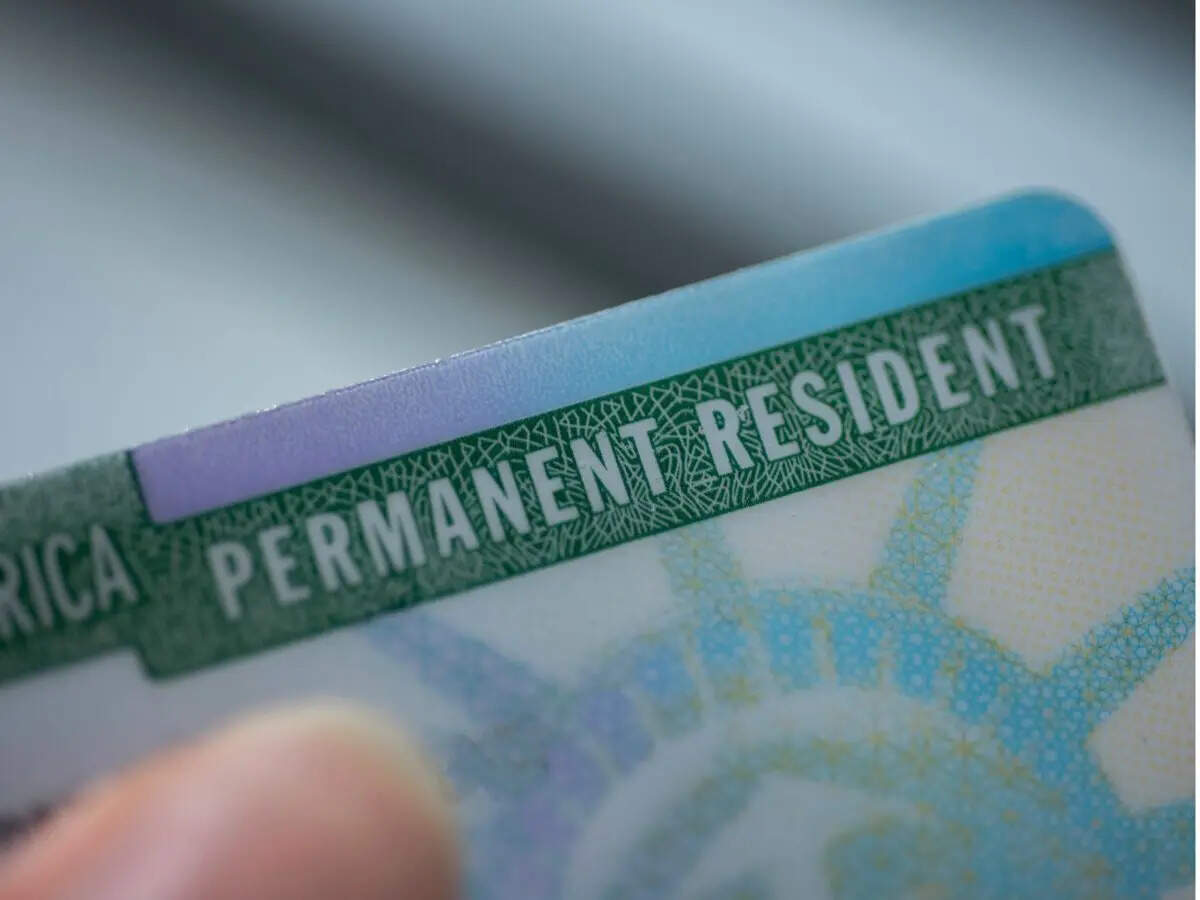
Your green card does not give you a bulletproof right to come back home to the United States.
If you think permanent residency means you are safe from being turned away at the airport, you are working off old, dangerous assumptions. A major decision handed down by the Supreme Court on June 23, 2026, just stripped away a key shield that protected permanent residents who face legal trouble.
In a 6-3 decision in the case Blanche v. Lau, the court ruled that border officials do not need high-level proof or ironclad evidence to strip returning green card holders of their default protections. If you have an open criminal charge, an old arrest, or a pending case, simply crossing the border back into the US can trigger a process that ends in your deportation.
This is not a theoretical law school debate. It changes the risk calculation for millions of lawful permanent residents who travel abroad.
Why Your Absolute Right to Reenter the US Is a Fantasy
Most permanent residents believe that traveling outside the country is a routine matter of showing a passport and a plastic card. For decades, that was mostly true. Under standard immigration law, a returning green card holder is treated as if they never left. You are considered already admitted. The door is open, and you just walk through.
But Congress carved out specific exceptions to this rule. The immigration statute says the government can treat a returning resident as an applicant seeking admission—essentially treating you like a first-time visa applicant at the border—if you have committed certain offenses.
The legal battleground in Blanche v. Lau was over two words: "has committed."
Does the government need to prove you actually did the crime before they strip away your rights at the airport? Or can they just point to an unproven accusation or a pending charge to upend your status?
The conservative majority, led by Justice Clarence Thomas, answered clearly. Border officers do not need clear and convincing evidence that you committed a crime to reclassify you at the port of entry. They can act on a raw accusation or a pending charge. They can take your green card, put you on temporary immigration parole, and let the criminal system play out later.
The Story of Muk Choi Lau and the Trademark Counterfeit Charges
To understand how dangerous this is, look at what happened to the man at the center of the case. Muk Choi Lau is a Chinese citizen who earned his green card back in 2007. He built a life in the United States.
In May 2012, authorities in New Jersey hit Lau with state charges for third-degree trademark counterfeiting. He was accused of selling roughly $300,000 worth of counterfeit goods. At that point, he was just accused. He had not gone to trial. He had not pleaded guilty. He was legally innocent until proven guilty.
A month later, Lau took a brief trip to China and flew back into John F. Kennedy International Airport in New York.
When he handed his green card to the Customs and Border Protection officer, the officer flagged the pending New Jersey charge. Instead of welcoming Lau home as an already admitted resident, the officer confiscated his green card. The government placed him on immigration parole, a temporary legal status that allows you to physically enter the country to face your criminal case but does not count as a formal admission.
A year later, in 2013, Lau pleaded guilty to the counterfeiting charge and received two years of probation. No jail time. In a state criminal court, that looks like a manageable outcome.
But in the world of immigration law, it was a time bomb.
In 2014, the Department of Homeland Security used that conviction to launch formal removal proceedings against Lau. They claimed his trademark offense was a crime involving moral turpitude, an elastic legal term that covers a massive range of offenses involving fraud, theft, or base behavior. Because he was classified as someone seeking admission at the airport, the government had an incredibly easy path to target him for deportation.
The Massive Difference Between Deportability and Inadmissibility
This technical distinction sounds like bureaucratic hair-splitting, but it determines whether you get to stay in the United States or get forced onto a flight out of the country.
The immigration system handles legal residents along two completely separate tracks.
If you are inside the country and treated as already admitted, the government must prove you are deportable. The burden of proof rests entirely on the government's shoulders. More importantly, long-term residents enjoy significant timing protections. If you commit a single crime involving moral turpitude, the government can generally only deport you if you committed that crime within five years of your original admission to the United States.
Lau got his green card in 2007. The alleged crime happened in 2012. That is five years and several months later. If Lau had never left the country, that five-year window would have shielded him from being deported for a single moral turpitude offense.
By leaving the country and returning, everything flipped.
Because the border officer reclassified him as seeking admission, Lau was placed on the inadmissibility track. Under this track, the rules are brutal. The five-year safety window completely vanishes. A single conviction for a crime involving moral turpitude makes you inadmissible at any point in your life, whether you have had your green card for six years or sixty years.
Even worse, the burden of proof shifts. On the inadmissibility track, it is up to the immigrant to prove they deserve to be allowed into the United States, rather than the government proving they should be kicked out.
The Two-Step Trap Blessed by the Supreme Court
Lau fought his deportation for years. He won a major victory at the Second Circuit Court of Appeals, which ruled that border officers cannot just look at an unproven charge sheet and decide to strip someone of their permanent resident status. The appeals court said the government needed clear and convincing evidence of the crime at the exact moment the person stands at the airport gate.
The Supreme Court just dismantled that protection entirely.
Justice Thomas explained that the process is a two-step framework. At step one, which happens right at the border, the government only needs a valid reason to believe you committed a qualifying offense to treat you as an applicant for admission. They do not need a final conviction in hand. They do not need to meet a high evidentiary standard on the spot.
At step two, which takes place later during a formal immigration hearing, the government must produce the final conviction or admission to prove you are actually removable.
The court ruled that Lau's eventual 2013 guilty plea retroactively validated the border officer's 2012 decision to treat him as an applicant for admission. The fact that the officer had no real proof of guilt at the airport did not matter. The charge existed, the conviction followed, and the trap snapped shut.
Why Justice Jackson Warns of an Immigration Limbo
The three liberal justices strongly dissented from this view. Writing for the minority, Justice Ketanji Brown Jackson warned that the court has handed immigration authorities a massive blank check.
Think about the real-world chaos this creates. Under this ruling, a border officer can look at a pending charge, seize a green card, and cast a permanent resident into an immigration limbo based on an allegation that might turn out to be completely false.
What happens if a green card holder is falsely accused of a crime, travels abroad, gets placed on parole at the border, and is later completely acquitted at trial?
They have still spent months or even years stripped of their stable permanent residency status. They have been forced into a secondary legal track, exposed to potential immigration detention, and saddled with immense legal fees, all because of an unproven accusation that a border officer decided to weaponize. Justice Jackson pointed out that the majority's logic lets the government shoot first and ask questions later, using a later conviction to justify an original border decision made with zero real proof.
The Hidden Offenses That Can Trigger a Border Flag
Many permanent residents assume this only applies to violent felons or major drug traffickers. That is a dangerous mistake. The term "crime involving moral turpitude" is notoriously vague and covers dozens of minor state offenses that people often resolve with simple plea deals.
A retail shoplifting charge can be a crime involving moral turpitude. Writing a bad check can count. Simple fraud, certain minor assault charges, or misdemeanor property theft can quickly drag you into this category.
It is not just active, pending charges that create risk. If you have an old conviction from ten years ago that you thought was fully resolved because you completed probation, that record is still visible to Customs and Border Protection.
The moment you hand over your passport at an airport terminal, that old offense can be used to argue that you committed a disqualifying crime in the past, pushing you off the safe deportability track and onto the ruthless inadmissibility track.
State law protections like expungements or sealed records do not save you here. Federal immigration law does not care if a state judge wiped your criminal record clean or dismissed the charges after you finished a diversion program. If the underlying admission of guilt or the factual basis of the crime is visible in federal databases, immigration authorities can use it against you.
Crucial Travel Safeguards for Green Card Holders
If you hold a green card and have any history with the criminal justice system, you must adjust how you handle international travel immediately. The era of assuming your plastic card guarantees entry is officially over.
You need to take concrete, preventative steps before you book a flight or step foot outside the United States.
- Get a complete copy of your criminal record. Obtain certified disposition records for every single arrest, charge, or citation you have ever received, even if the case was thrown out or happened decades ago.
- Do not travel with open legal matters. If you are currently facing a misdemeanor, a felony, or even an investigation, do not leave the country. A pending charge is now an explicit green light for border officers to revoke your admitted status.
- Analyze your old plea agreements. If you took a deal years ago to avoid jail time, have an immigration expert analyze whether that specific offense fits the federal definition of a crime involving moral turpitude or an aggravated felony.
- Understand your rights at the port of entry. If you are pulled into secondary inspection, remember that border officers can hold your physical card and place you on parole, but they cannot instantly deport you without giving you access to an immigration court hearing.
- Avoid signing Form I-407 under pressure. If an immigration officer pressures you to sign paperwork giving up your permanent residency voluntarily, realize that you have the right to refuse and ask for a hearing before a judge.
The Supreme Court has made it clear that the executive branch has immense discretion at the border. The protections you think you have are far thinner than you realize. If you have any legal blemishes on your record, treat international travel as a high-risk gamble that requires professional legal vetting before every single trip.