Hong Kong has plenty of world-class medical researchers, but it has always had one gaping vulnerability. The city's small population of 7.4 million makes recruiting large, diverse cohorts for clinical trials incredibly slow. Across the border, Mainland China has millions of patients but faces different regulatory hurdles. This division has historically forced global pharmaceutical companies to look elsewhere, delaying lifesaving therapies for patients in Asia.
That structural bottleneck just cracked open. On July 15, 2026, the Chinese University of Hong Kong (CUHK), the People’s Government of Nansha District in Guangzhou, and Guangzhou First People’s Hospital signed a deal to launch the Greater Bay Area Clinical Trial Centre (Guangzhou Nansha).
This is not just another cross-border ribbon-cutting event. It is a highly practical operational bridge that connects Hong Kong’s research quality with the massive clinical volume of mainland China. It is the first center of its kind, and it changes the math for drug development in the region.
Inside the Nansha Agreement
The deal establishes a physical and regulatory base inside the Guangzhou First People's Hospital Nansha Hospital. This is a strategic choice. Nansha sits at the geographic center of the Guangdong-Hong Kong-Macao Greater Bay Area (GBA), making it an easy transit point for both researchers and patients.
The center will focus on conducting trials for pharmaceuticals and medical devices that meet both mainland Chinese regulations and international standards. Under this framework, CUHK brings its trial design expertise, international credibility, and academic oversight. The Nansha government provides policy support, while the Guangzhou First People's Hospital offers a national-grade clinical trial platform and direct access to their patient base.
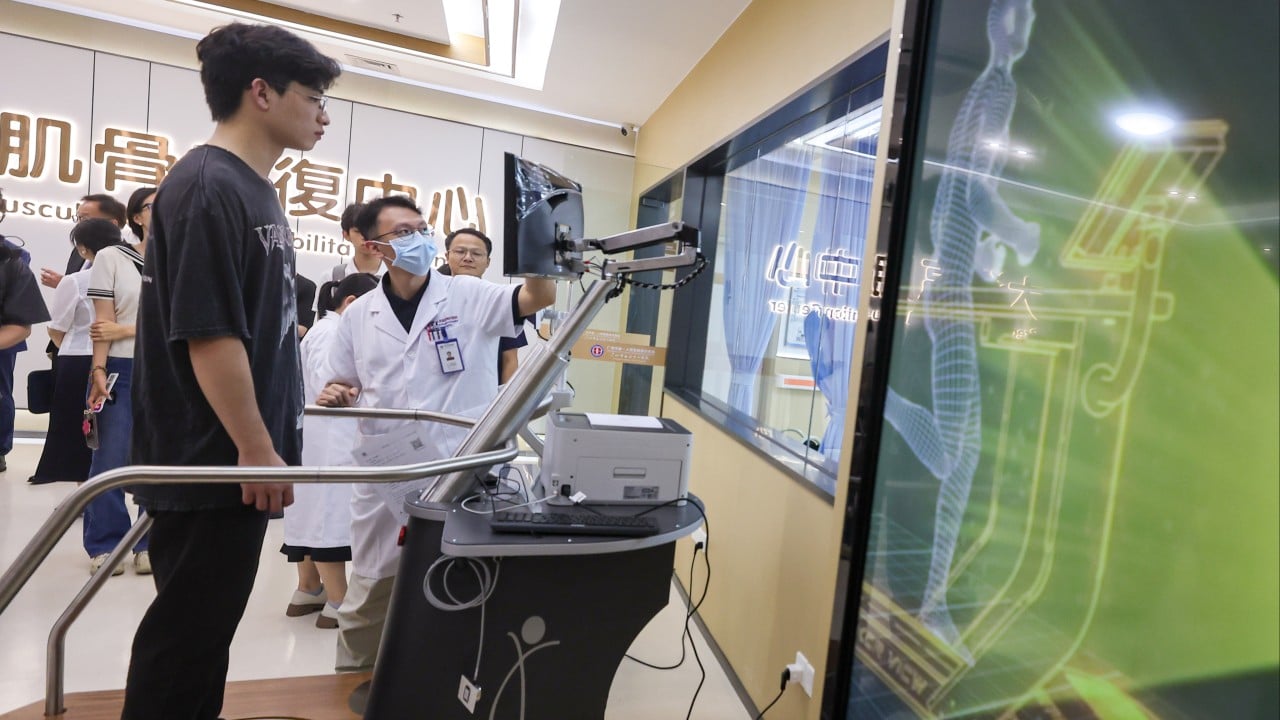
To show they mean business, the partners also launched a joint musculoskeletal rehabilitation center right away, proving this is an active clinical space rather than just a theoretical project.
The First Two Flagship Studies
The center is not waiting around to begin operations. They have already designated two very different, highly ambitious projects as their first-batch studies. These trials highlight the dual focus of the center: software-driven diagnostics and biological therapies.
AI Powered Scoliosis Screening
The first project is the external validation of an AI algorithm developed by CUHK. The technology screens for adolescent idiopathic scoliosis (AIS), a spinal deformity that affects millions of teenagers.
Traditionally, screening requires frequent X-rays, exposing young, developing bodies to repeated radiation. The CUHK team developed a portable, radiation-free 3D surface topography system. It takes simple optical images of a patient's back, and the AI automatically calculates spinal deformities and deformities of the back surface.
While the technology works in controlled university labs, it needs real-world testing. The Nansha center will run a massive validation study in local clinics to prove the AI works reliably across different populations and clinical settings. If it succeeds, it gives schools and local clinics a cheap, safe, and highly scalable tool to catch spinal issues early, before children require invasive surgeries.
Stem Cell Therapy for Knee Osteoarthritis
The second flagship study is a Phase I clinical trial using allogeneic mesenchymal stem cells (MSCs) to treat knee osteoarthritis. Osteoarthritis is a degenerative joint disease that plagues older adults, causing chronic pain and physical limitations.
This study is a big step into regenerative medicine. Researchers will inject donor-derived MSCs directly into the diseased knee joints of patients. The goal is to see if these stem cells can successfully quiet joint inflammation, alleviate chronic pain, and help repair the damaged cartilage.
Phase I trials are all about safety and dosage. Running this in Nansha gives CUHK researchers access to a larger pool of suitable candidates who meet the strict criteria for early-phase biological testing.
Connecting Nansha to the 1+ Drug Approval Pipeline
To understand why this Nansha center is a big deal, you have to look at the broader regulatory shifts happening in Hong Kong.
Historically, registering a new drug in Hong Kong was a long process. Pharmaceutical companies had to show approvals from two recognized overseas drug regulatory authorities (like the US FDA or Europe's EMA) before Hong Kong would allow it on the market. This meant local patients had to wait months, sometimes years, for life-saving cancer or rare-disease therapies that were already approved in the West.
To fix this, Hong Kong introduced the "1+" drug approval mechanism in November 2023. Initially targeted at rare and life-threatening diseases, the policy was expanded in November 2024 to cover all new drugs, including vaccines and advanced therapy products.
Under the "1+" rule, a drug company only needs approval from one major overseas regulator, provided they can back it up with local clinical data and secure the endorsement of local experts.
Now, look at the timeline. On March 31, 2026, Hong Kong's Department of Health started the phased rollout of its "primary evaluation" scheme. By the end of 2026, the government will establish the Hong Kong Centre for Medical Products Regulation (CMPR), which will progressively build a fully independent drug review authority aimed for completion by 2030.
2023 (Nov): "1+" mechanism launches for rare and life-threatening diseases
    │
2024 (Nov): "1+" extended to all new chemical/biological entities and vaccines
    │
2026 (Mar): "Primary evaluation" scheme begins phased rollout
    │
2026 (Jul): CUHK launches the GBA Clinical Trial Centre in Nansha
    │
2026 (Dec): Scheduled establishment of the HK Centre for Medical Products Regulation
    │
2030: Target year for HK to fully assess and approve new drugs independently
This is where the new Nansha center comes in. To register a drug under the "1+" scheme or the upcoming independent review board, companies need local clinical data. But Hong Kong's small population makes gathering that data difficult.
The Nansha center solves this problem. It allows researchers to run trials on a massive GBA population of over 87 million people, generating the exact clinical data needed to clear Hong Kong's "1+" registration hurdles. It turns Nansha into a data-generating engine that feeds directly into Hong Kong's fast-tracked drug registration system.
The Operational Reality Check
This sounds great on paper, but executing cross-border clinical trials in real life is incredibly difficult. Historically, three massive barriers have blocked this kind of integration.
- Data Security and Privacy: Mainland China has strict laws regarding the export of genetic and personal medical data. Transferring patient records across the border to Hong Kong researchers requires navigating complex regulatory approvals.
- Biological Specimen Transfer: Moving blood samples, tissue biopsies, and stem cells across a customs border is a logistical nightmare. In the past, custom clearance delays could ruin temperature-sensitive samples.
- Standards Alignment: Hong Kong trials follow international Good Clinical Practice (GCP) standards, which are highly respected by Western pharmaceutical companies. The mainland has its own National Medical Products Administration (NMPA) standards. Making sure trials in Nansha meet both criteria is a tough balancing act.
The Nansha center's success depends on how well the Nansha District Government can clear these administrative roadblocks. Nansha is designated as a national-level demonstration zone, which gives it the unique authority to pilot special policies. If they can establish clear, fast-track channels for data and specimen transfer, this center will be a blueprint for future medical integration.
What This Means for Patients and the Industry
If you're a patient in the region, this is excellent news. Faster trials mean faster approvals. Instead of waiting for a drug to navigate multiple global regulatory bodies, you might get access to cutting-edge clinical trials right in your backyard. It democratizes access to experimental oncology therapies and regenerative medicine.
For global pharmaceutical companies, this makes the Greater Bay Area a far more attractive R&D destination. They can now design a trial that utilizes Hong Kong’s highly trusted clinical infrastructure while drawing from the massive patient volumes of the mainland. It dramatically shortens recruitment timelines and cuts down overall development costs.
Ultimately, the launch of the Nansha Clinical Trial Centre is a clear signal. The artificial regulatory walls between Hong Kong and the mainland are coming down, and the region is positioning itself to become a global healthcare powerhouse.
If you are a biotech startup or a medical device manufacturer, now is the time to look closely at Nansha. The regulatory pathways are changing, and those who adapt first will have a massive head start.