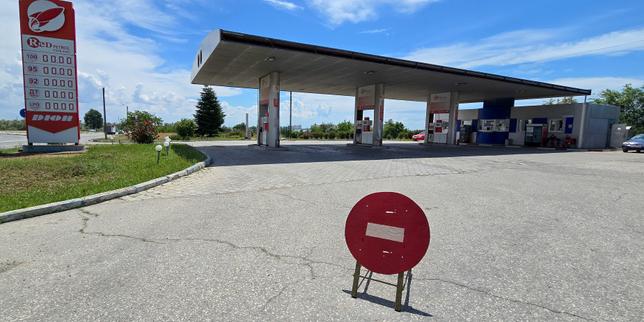
The lines at Crimean gas stations are gone. Not because the tanks are full, but because civilians can't buy a single drop anymore. On June 21, 2026, the Kremlin-appointed governor Sergey Aksyonov announced a total suspension of fuel sales to individuals and private businesses across the occupied peninsula. Starting at 9 a.m., cash, cards, and even prepay coupons became useless. If you aren't driving an official state vehicle or a security transport, you are officially stranded.
This isn't a temporary glitch. It's the stark reality of a coordinated long-range air campaign that has systematically choked Russia's military logistics.
The Squeeze That Stranded an Island
Ukraine is executing a deliberate strategy to isolate Crimea, effectively turning the peninsula into an island by severing its supply lines. Overnight strikes on June 21 hit fuel transit terminals, oil depots, and port infrastructure on both sides of the Kerch Strait. A massive barrage of over 200 drones targeted energy networks and transport hubs. It caused power grid failures, halted ferry traffic, and shut down the main bridge connecting Crimea to Russia for over nine hours.
The immediate result is absolute paralysis for ordinary people. Before this total ban, local authorities tried to mask the shortage. They rationed fuel to 20 liters per car using prepaid vouchers. Drivers queued for hours, and a black market emerged where speculators sold gas at double the market price. Now, even those desperate workarounds are dead. Fuel is reserved strictly for government agencies and the military.
Why Choking Energy Infrastructure Works
Military experts have long debated the impact of deep-strike drone warfare. Some argued that hitting refineries merely causes temporary economic irritation. The situation unfolding in Crimea proves otherwise.
When you eliminate an adversary's ability to store and transport fuel locally, you force impossible choices. Do you prioritize the tanks on the frontline, or the civilian infrastructure that keeps the economy moving? The Kremlin chose the military. By cutting off civilians completely, Moscow is acknowledging that its logistical buffer has vanished.
The numbers paint a bleak picture for Russia's broader energy sector. Since the start of the year, Ukraine has launched dozens of successful strikes targeting oil refineries, export hubs, and pipelines deep inside Russian territory. Industry data indicates that roughly a third of Russia's domestic oil refining capacity has been knocked offline or disrupted this year. Even though Russia is one of the world's largest oil producers, it has been forced to ban fuel exports and ration supplies in major domestic hubs like Moscow and St. Petersburg.
The Illusion of Safety is Broken
For years, Moscow promoted Crimea as a heavily fortified fortress and a premier summer vacation destination. The current energy crisis hits right at the start of the holiday season, totally wrecking the local tourism industry. Trapped tourists are calling emergency hotlines because they lack the fuel to drive home.
This creates a massive psychological shift. Russian civilians are feeling the direct friction of a war that was previously confined to state media broadcasts. When you can't fill your tank to go to work or escape a conflict zone, the narrative of absolute control completely falls apart.
What Happens Next
If you are tracking the broader geopolitical shifts of this conflict, look at how supply chains adapt over the next few weeks. Watch these specific indicators to see how deep the crisis goes.
- Black Market Expansion: Monitor social media networks for illegal fuel smuggling operations across the Kerch bridge. Drivers are legally allowed to bring 100 liters of fuel in canisters from mainland Russia, which will trigger heavy speculation.
- Military Mobility Drag: Watch for a slowdown in Russian mechanized movements in southern Ukraine. If civilian bans don't fix the shortage, military operations will suffer next.
- Railroad Reliance: Track Russian military reliance on the rail networks through occupied southeastern Ukraine. Since drone strikes have disabled ferry and bridge routes, trains are now the primary logistical lifeline.
The total freeze on civilian fuel sales in Crimea isn't just an inconvenience for locals. It's proof that targeting deep logistical vulnerabilities alters the mechanics of the conflict without fighting block by block. Expect the restrictions to tighten further as long-range strikes continue to hit the remaining storage hubs.