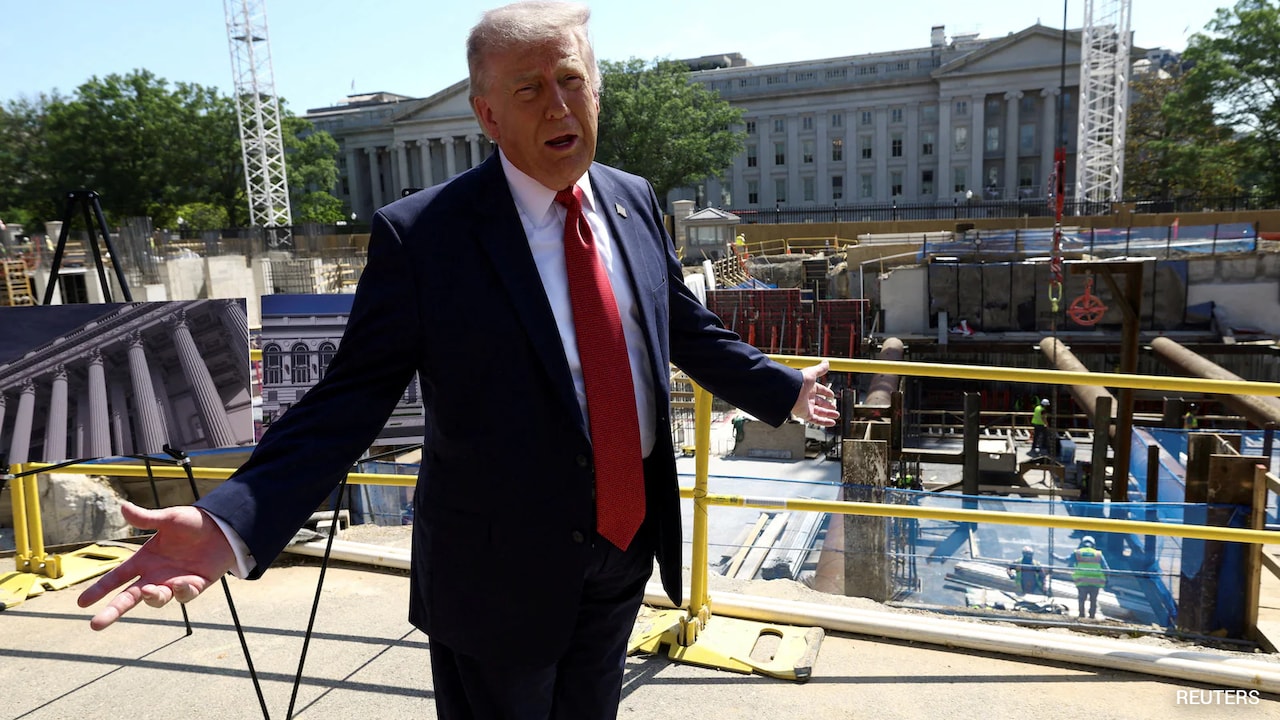
You cannot just tear down a historic wing of the White House and build a massive entertainment space because you want one. At least, that is what a federal appeals court just made crystal clear.
A federal appeals court dealt a major blow to Donald Trump's administration by upholding a preliminary injunction that stops above-ground construction on his pet $400 million White House ballroom project. The ruling from the U.S. Court of Appeals for the District of Columbia Circuit forces a hard stop on a controversial plan that already saw the historic East Wing demolished. Building on this topic, you can also read: Why Iran's Supreme Leader Mojtaba Khamenei Remains Hidden From Public View.
If you are wondering how a president can get this far into a massive architectural overhaul only to hit a brick wall of litigation, you have to look at the fierce battle over executive overreach, historic preservation, and constitutional limits.
The Core Legal Battle Over Presidential Power
The entire dispute boils down to a fundamental question. Does a president possess the unilateral authority to completely reshape the People's House without asking Congress for permission? Experts at The New York Times have provided expertise on this matter.
The Trump administration argued no legislative approval was necessary. Their reasoning centered on private funding. Because the price tag—which ballooned from initial estimates to a staggering $400 million—was allegedly covered by private donors and not direct taxpayer appropriations, the White House claimed the judiciary had no business interfering. Justice Department lawyers also tossed national security arguments into the ring, claiming the old East Wing layout left officials vulnerable and that the new 90,000-square-foot facility would provide better protection.
The courts weren't buying it.
In a 2-1 decision, the appellate panel upheld the injunction secured by the National Trust for Historic Preservation. The majority opinion landed hard on constitutional boundaries, noting that deciding whether to construct a massive ballroom is a job reserved strictly for lawmakers, not executive self-help.
As the court bluntly noted, no existing federal statute comes close to granting a president the blank-check authority to execute a project of this magnitude without congressional sign-off.
Why the East Wing Demolition Sparked Outrage
Historic preservationists didn't sue just because they dislike modern architecture. They sued because the administration bypassed every standard review process by tearing down the East Wing.
For months, critics watched in disbelief as heavy machinery rolled onto the historic grounds. The East Wing, a fixture of the complex since the mid-20th century, vanished to make room for a sprawling structure intended to host large state dinners and formal events.
Trump has fiercely defended the rising costs and grand scale of the project. In social media posts, he insisted the expanded footprint and higher quality make it a magnificent addition that will serve future presidents well. Yet, lawyers for the National Trust pointed out a simple truth throughout the legal proceedings: the administration simply wanted to avoid going through Congress.
What Happens Next to the White House Site
The federal appeals court gave the administration a 14-day window to take the fight to the U.S. Supreme Court. Expect the White House to file an emergency appeal immediately.
It is worth noting what the court order actually blocks and permits. The injunction halts above-ground construction of the grand ballroom itself. However, lower court rulings overseen by U.S. District Judge Richard Leon previously carved out exceptions for subterranean work. That means underground construction—such as reinforced security bunkers, utility upgrades, and defense installations—can technically proceed while the legal chess match plays out.
The physical landscape of 1600 Pennsylvania Avenue remains half-transformed and legally paralyzed. If the Supreme Court declines to intervene or sides with the lower courts, the administration faces a humiliating choice. They will either have to halt the project permanently or finally submit detailed plans to Capitol Hill, turning an executive pet project into an ugly legislative brawl.


