When you step under a barbell loaded with hundreds of kilograms, you surrender your physical safety to the people standing behind you. You trust the spotters. You assume they are there to catch the weight if your legs buckle. But what happens when that trust shatters?
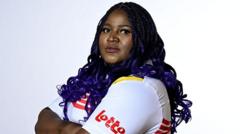
Sonita Muluh knows the answer to that question now. The Cameroon-born Belgian powerlifting champion faced a nightmare scenario during competition when a volunteer assistant interfered with her squat attempt, a violation that spiraled from a suspicious video clip into a full-scale international police investigation.
If you think elite strength sports are purely about raw numbers and physical training, you're missing the human element. The recent controversy at the International Powerlifting Federation event in Lithuania exposes deep vulnerabilities in how international sports bodies vet their safety crews.
What Actually Happened on the Platform
During the championship event, Muluh attempted a massive 334.5 kg squat. Video footage later revealed that a volunteer assistant named Ernestas Kusinas placed his knee under the barbell during her descent, effectively sabotaging the lift.
At first, people excused it as human error. Spotting is exhausting work. Volunteers stand on platforms for hours, managing heavy iron while battling fatigue. Mistakes happen.
Then came the digital fallout. Kusinas posted a comment on Instagram stating, “I am racist, and I did it intentionally.”
While Kusinas later tried to walk back his statement—claiming to Reuters that the comment was sarcastic mockery directed at online trolls and that he was simply exhausted—the damage was done. The Lithuanian Powerlifting Federation acted swiftly, issuing a permanent ban against the assistant and handing the case over local police. The International Powerlifting Federation (IPF) issued statements condemning discrimination, while Lithuanian authorities opened a formal investigation carrying a potential prison sentence of up to two years.
The Danger of Ignoring Safeguards in Strength Sports
Athletes like Muluh spend years sacrificing their bodies to reach the world championship stage. To have that robbed by someone whose job is to protect you is infuriating.
Kristof De Coninck, Muluh's partner, pointed out the obvious danger: interference at that weight isn't just unfair; it's physically perilous. A sudden, unannounced bump or interference from a spotter can snap a spine or tear a tendon.
We need to talk about how volunteers are vetted. Major international competitions rely heavily on local organizing committees to staff platforms. Sometimes, vetting consists of little more than a pulse and a willingness to show up early. That's not enough anymore.
How Powerlifting Must Fix Its Vetting Process
If the IPF and national federations want athletes to feel safe, they need an overhaul of event protocols.
- Independent Background Checks: Local organizing committees must screen volunteers rigorously, checking social media histories for hate speech and extremist views before letting them anywhere near a competition platform.
- Professionalizing Safety Crews: Relying entirely on untrained or minimally vetted volunteers for world-class championships invites chaos. Elite platforms need certified officials who understand the gravity of the role.
- Accountability and Immediate Redress: When interference occurs, independent panels must review incidents instantly, rather than waiting for social media confessions to trigger action.
Muluh is a world champion. She earned her titles through brutal discipline. She shouldn't have to look over her shoulder wondering if the safety crew wants her to fail.
Trust takes years to build and seconds to break. Powerlifting has a lot of rebuilding to do.