Air raid sirens don't stop for former prime ministers.
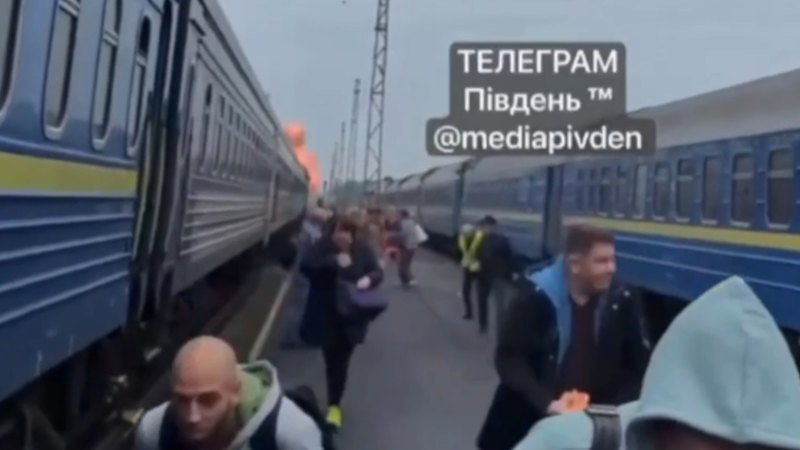
A Russian drone slammed into a locomotive at the Yahodyn railway station in western Ukraine, just two kilometres from the Polish border. Minutes earlier, a special diplomatic train carrying former UK Prime Minister Boris Johnson, former Swedish Prime Minister Carl Bildt, and British national security adviser Jonathan Powell had rolled past the exact same spot. Former CIA Director David Petraeus was sitting on a separate train at the station when the strike hit.
No one died. But the timing was terrifyingly close.
Ukraine's state railway operator, Ukrzaliznytsia, didn't mince words afterward. They stated it was highly probable that the Russian attack targeted the high-profile diplomatic transport. Because of real-time threat adjustments and shifting schedules, Johnson's train had departed ahead of schedule. That small scheduling shift likely prevented a catastrophic international incident on the doorstep of the European Union and NATO.
What Actually Happened at Yahodyn Station
The high-ranking delegation had just wrapped up attendance at the annual Yalta European Strategy conference in Kyiv. Leaders, security analysts, and international business figures packed into the capital for the summit, relying on Ukraine's resilient rail network to slip back across the border into Poland.
Then the airspace lit up.
Moscow launched a massive wave of long-distance drone strikes across Ukraine, firing hundreds of aerial vehicles in one of the heaviest barrages seen in months. Near the border crossing of Yahodyn-Dorohusk, a jet-propelled Russian drone zeroed in on the railway infrastructure.
Carl Bildt posted updates from his own evacuation on social media, noting that his train received urgent warning orders to prepare for immediate clearing. Passengers were rushed off the rolling stock as air defense protocols kicked into overdrive. The drone struck a stationary locomotive, tearing into the engine block but missing the diplomats by a matter of minutes and miles.
The Dangerous Escalation on NATO's Doorstep
Moscow regularly claims its long-range strikes focus exclusively on military assets, supply lines, or foreign weapon shipments. Yet hitting a civilian border railway station while Western statesmen and intelligence veterans transit through creates a different kind of pressure.
Ukrainian Foreign Minister Andrii Sybiha called the attack a direct knock on the doors of the European Union and NATO. Polish Prime Minister Donald Tusk immediately convened emergency security meetings in Warsaw. Tusk made it clear that Russian escalation is no longer a distant frontline problem—it's creeping directly up to the border posts of member states.
Boris Johnson voiced his frustration online, pointing out the brutal reality of what regular Ukrainian railway workers face daily. Over 1,700 employees of Ukrzaliznytsia have lost their lives since the full-scale invasion began, keeping vital civilian and diplomatic corridors open under constant fire. Johnson demanded that western allies stop dragging their feet and supply the necessary air defense interceptors to shut down the skies.
Why This Near Miss Matters for the Future of the War
We are looking at a fundamental shift in how the edges of this conflict are managed. For years, western leaders could cycle in and out of Kyiv via sleeper trains with a reasonable degree of safety, treating the rail line as an unwritten humanitarian corridor.
That bubble has burst.
When a strike lands two kilometres from Poland—a NATO member state—the margin for error disappears. Intelligence chiefs like Petraeus, who noted the clear intent to terrorize civilians and intimidate foreign visitors, understand that Russia is testing the threshold of western deterrence.
Expect security protocols for international figures visiting Ukraine to change overnight. The days of predictable diplomatic travel timetables are gone, replaced by frantic schedule shuffles, sudden air-raid alerts, and an escalating race for high-density air defense coverage along the western frontier.
The tracks at Yahodyn are being repaired, but the geopolitical fallout of Sunday's strike will linger long past the cleanup.


:max_bytes(150000):strip_icc()/81ykqnhzdRL._RI_-5bd5d37dc9e77c00518f09d4.jpg)