Exposed rotors terrify people around city streets. Rightfully so.
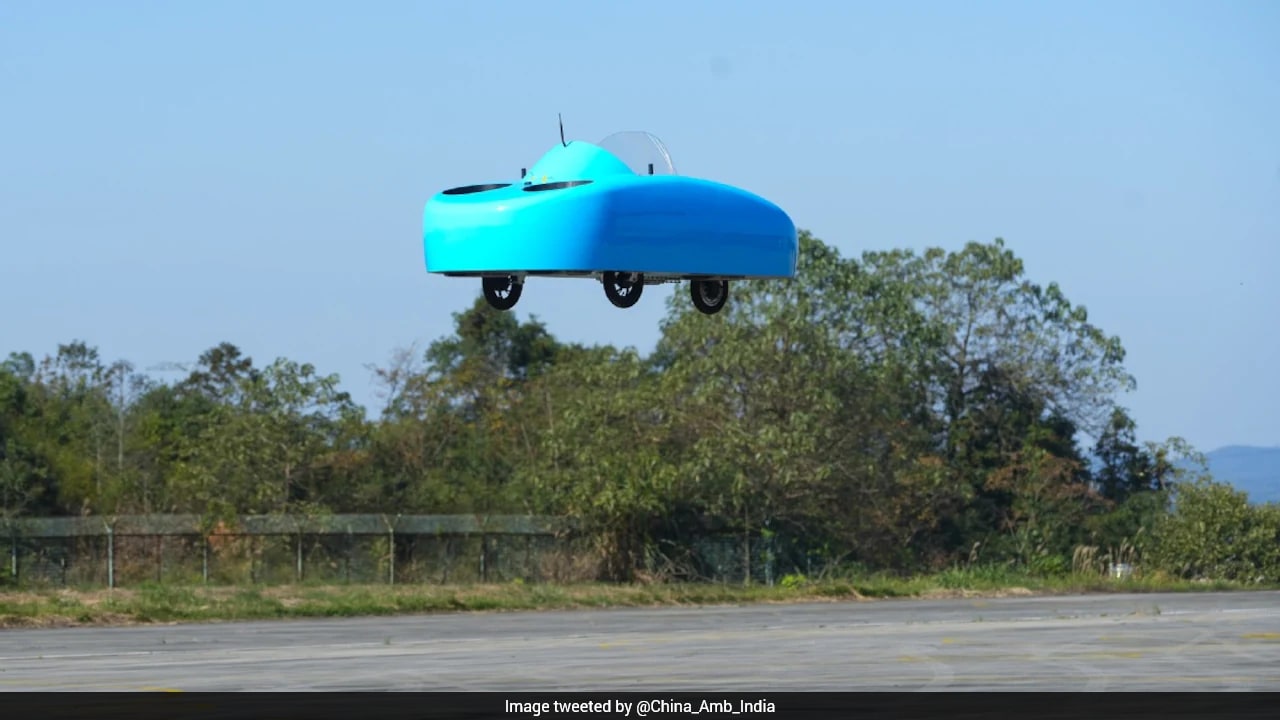
A single-seat flying car prototype in China just completed its maiden vertical takeoff and landing flight without wings and without spinning blades out in the open. Filmed in Changsha, Hunan province, and shared on X by Chinese Ambassador to India Xu Feihong in November 2026, the footage shows a compact vehicle lifting smoothly off pavement, hovering in place, shifting mid-air, and touching back down cleanly.
That matters way more than another flashy sci-fi clip. Most flying car concepts look like oversized drones or stubby airplanes trying to squeeze into tight urban blocks. This one ditches exposed propellers for a multi-stage thrust-vectoring ducted-fan propulsion system, hiding the blades inside ducts while promising road-to-air versatility.
Why China's Wingless Flying Car Matters Right Now
Let's be honest. We've seen dozens of "flying car" announcements over the past decade that turned out to be heavy multi-rotors with tiny batteries, deafening noise profiles, or zero practical path onto a public street. Watching a prototype actually lift off without a runway in Changsha doesn't mean your morning commute is fixed tomorrow, though. It does show how engineers are attacking the biggest physical headaches of low-altitude flight.
According to technical director Yang Yang, the aircraft is the world's first piloted vehicle using this multi-stage thrust-vectoring ducted-fan setup. Instead of tilting whole rotors or relying on wings for lift at takeoff, thrust vectoring directs airflow to generate lift and steer altitude while enclosed ducts shield the spinning blades.
Look at the reported numbers for this single-seat testbed:
- Maximum takeoff weight sits at 280 kg, with payload capacity up to 120 kg.
- Top flight speed reaches 150 kmph, paired with a reported range of 300 km.
- Designed ceiling hits 3,000 metres, while normal operations sit closer to 100 metres.
- Transition to road driving lets it move on ground after landing.
Pay close attention to that 100-metre typical operating altitude. Flying at three thousand metres sounds dramatic in a press release, yet low-altitude airspace around 100 metres is where urban buildings, power lines, wind shear, and emergency responders actually operate. That's where safety margins make or break a program.
Ducted Fans vs Exposed Rotors in Tight Spaces
If you've ever stood near a heavy multi-rotor drone or a small helicopter on a windy pad, you know the two problems nobody loves talking about. Noise is brutal. Exposed blades are unforgiving.
Housing blades inside ducts helps solve both issues in theory, and in practice during low-altitude work. An enclosed duct protects bystanders and nearby structures from spinning tips when a vehicle operates near rooftops, trees, or tight rescue zones. Yang also notes lower noise and reduced cruising energy consumption compared with conventional multi-rotor designs.
Still, engineering is always a trade-off. Ducted fans can add structural weight and duct friction losses, and thrust-vectoring mechanisms add mechanical complexity that has to be inspected and certified. A smooth hover on video proves basic flight stability and thrust control. It does not automatically prove long-term durability, icing resistance, or single-point failure recovery under stress.
A test flight video shows what the airframe can do on a good day. Real-world trust comes from thousands of hours of boring, unglamorous testing in bad weather and tight quarters.
👉 See also: arrow symbols to copy and paste
That's why I'm glad the project has moved past initial small-scale trials into pre-production testing after running checks in complex urban settings, simulated bad weather, and varied scenarios. Skip the hype for a second and ask what happens if a gust hits near a building or a sensor acts up during descent. Pre-production is where those rough edges get smoothed out—or exposed.
Emergency Rescue Before Rich Commuters
Here is the smartest move in the whole story: putting rescue work ahead of luxury personal flying.
When an earthquake cracks highways, floods wash out bridges, or landslides bury mountain roads, standard ambulances and fire trucks stall. Helicopters can help, sure, yet landing zones are often cluttered and tight. A vehicle that drives along intact roads and then lifts vertically into damaged areas solves a very real bottleneck.
Yang points to firefighting, emergency response, and disaster relief as primary early uses, alongside potential roles in last-mile deliveries and short-distance passenger trips. Even better, the team already has a finalized technical design for a larger future variant aimed at carrying up to 15 passengers.
Going from a 280 kg single-seater to a 15-passenger aircraft is a massive jump, though. Payload scales up, aerodynamic loads change, battery or power density demands climb, and passenger certification rules get much stricter. Treating disaster relief and specialized utility flights as the proving ground makes way more sense than promising mass-market suburban air taxis overnight.
What This Means If You Track or Work in Mobility
Whether you're an engineer, investor, urban planner, or just someone tired of gridlock, don't fall for two opposite traps. Don't dismiss every new prototype as vaporware, and don't treat a maiden hover as a finished product on sale next spring.
Watch the unsexy milestones next. Look for transparent details on payload-versus-range trade-offs when a human pilot and gear are onboard, transition smoothness between road driving and vertical flight, acoustic measurements at low altitude, and regulatory approvals for low-altitude corridors.
If you want to track this space seriously, start by reading primary coverage and official updates—like the NDTV report on China's wingless flying car—then compare every new claim against hard flight-hour milestones, safety redundancies, and real municipal rescue or low-altitude trials.