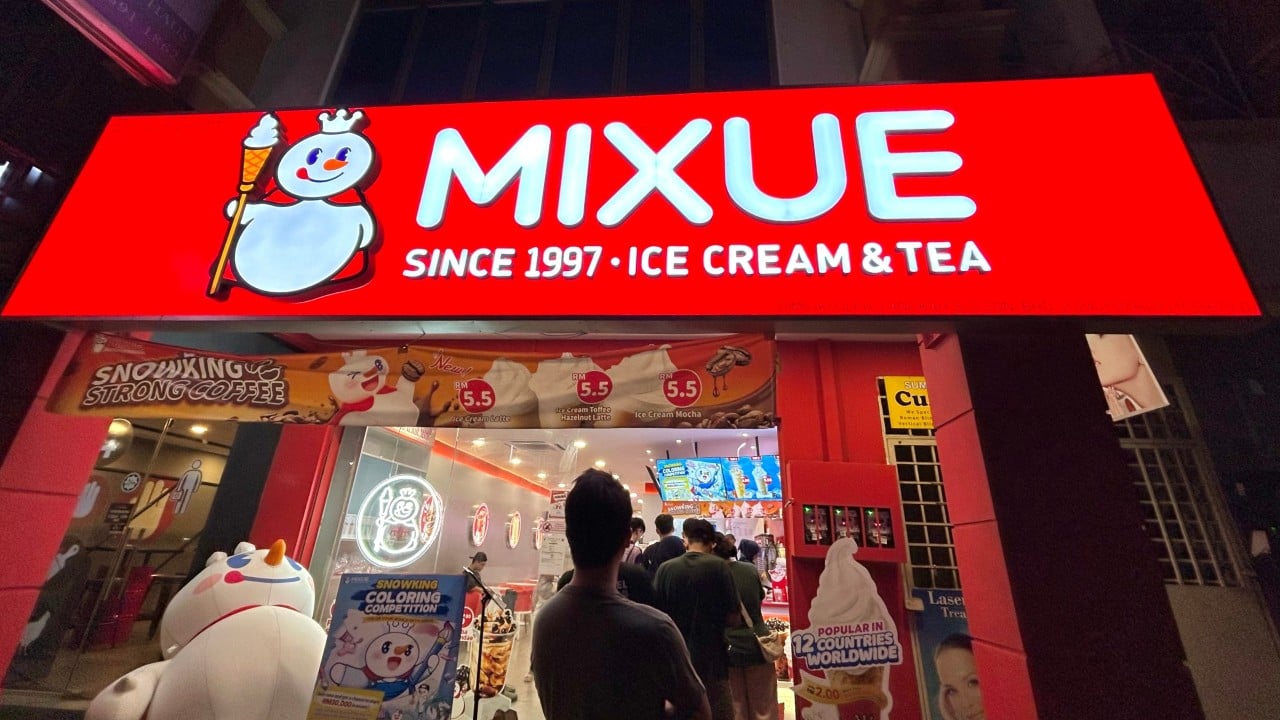
When Mixue opened its bright red storefront in Tokyo’s upscale Omotesando district, it felt like a bold declaration of war on the global beverage establishment. China's undisputed king of cheap treats, boasting nearly 60,000 locations globally—more than McDonald's or Starbucks—was officially coming for the rich world. Armed with a $1 fresh-squeezed lemonade and a viral mascot, the plan seemed obvious. Replicate the low-cost franchise machine that devoured China’s lower-tier cities, flood the streets of developed economies, and watch the established players panic.
It didn't happen that way.
Cracking high-income economies requires a lot more than just undercutting the local competition on price. Selling cheap ice cream cones and milk tea works beautifully when your domestic supply chain is hyper-optimized, your labor costs are rock-bottom, and your target demographic is obsessed with pure value for money. But when you transplant that exact blueprint into places like Japan, South Korea, or Western Europe, the math completely breaks down.
The reality of 2026 has caught up with the hyper-growth narrative. While Mixue’s parent company pulled off a massively successful listing on the Hong Kong Stock Exchange, its international footprint started showing deep structural cracks. Overseas store counts actually saw a net drop in recent periods, signaling that the global march has hit a formidable brick wall. The cheap price tag that makes these brands heroes at home turns into a financial trap when they try to cross over into wealthier borders.
The Supply Chain Illusion
To understand why these budget brands stumble abroad, you have to look at how they actually make money. Mixue isn't really a restaurant company. It's a massive, vertically integrated supply chain company disguised as a bubble tea chain.
When you look at their financial filings, the structure is eye-opening. Only about 2.4% of total revenue comes from actual franchise fees or royalties. The remaining 97.6% comes from selling raw ingredients, packaging materials, and smart dispensing machinery directly to the army of franchisees. The company manufactures over 60% of its own ingredients in massive centralized factories back in China, buying lemons and tea leaves in quantities that give them terrifying bargaining power over farmers.
This model requires pure, unadulterated velocity. At less than a dollar per item, you don't survive on luxury margins; you survive on moving millions of tons of product through thousands of turnstiles every single day.
This works brilliantly in China's third-tier and fourth-tier cities where real estate is cheap, regulations are friendly, and hundreds of millions of cost-conscious consumers want an affordable daily indulgence. The system is a closed loop built for a specific domestic environment.
The moment you pack up those ingredients and ship them across international borders into developed nations, the friction begins. You aren't just moving boxes of creamer and tapioca pearls anymore. You are dealing with strict international customs, prolonged quarantine checks, and complex agricultural import laws. When Mixue first tried entering the Japanese market, it took over eight months just to clear the administrative hurdles required to get their basic ingredients past port inspectors. That kind of lag kills the velocity that a low-margin empire depends on.
The Math Behind High Rent and High Wages
The biggest shock for Chinese value brands entering mature markets is the brutal reality of fixed operational expenses. In China, low labor costs and manageable suburban rents allow a franchise store to stay profitable even while selling drinks for pennies. In high-income cities, those numbers turn toxic.
Take Mixue’s high-profile entry into Hong Kong. The brand made waves by opening a prominent location at the Bank Centre Mall in Mong Kok, selling its signature fresh lemonade for a rock-bottom HK$9. On the surface, the long lines looked like a massive success. But industry tracking data revealed the real problem: the monthly commercial rent for that specific spot hovers around HK$200,000.
Let's do the basic math on that lease. To cover just the cost of rent alone—before buying a single lemon, paying a single employee, or turning on the lights—that store has to sell more than 22,000 cups of lemonade every single month. That is roughly 730 drinks every single day, just to hand the money over to the landlord.
Add the city's labor costs to the equation. Standard full-time beverage preparation staff in Hong Kong command monthly salaries ranging from HK$16,000 to HK$22,000, while part-time workers expect HK$50 to HK$60 an hour. When your core product sells for less than ten bucks local currency, your margins disappear into the payroll.
The brand cannot simply raise prices to match these costs because doing so destroys its entire identity. If a budget brand starts charging premium prices to cover premium rents, it suddenly finds itself competing directly with established local players who have spent decades perfecting their branding, customer experience, and menu innovation. It gets stuck in a retail no-man's-land: too expensive to be a budget miracle, but too basic to compete with premium cafes.
Shifting Focus From Velocity to Value
The challenges aren't just financial. They are deeply cultural. Consumers in developed markets behave differently than consumers in emerging economies, and assuming that cheap prices win everyone over is a dangerous mistake.
In mature markets like Japan or South Korea, the beverage sector is highly consolidated and deeply sophisticated. Consumers aren't just buying sugar and water; they are buying an in-store experience, a brand aesthetic, and a perceived level of status. Local convenience stores already dominate the ultra-low-cost tier, offering decent quality coffee and tea for a dollar or two at literally every corner.
For an outsider brand to win, it has to offer something distinct. But budget formulas are built entirely around extreme standardization. Mixue intentionally limits its menu to around 30 stock-keeping units. Keeping the selection tiny ensures that untrained franchise staff can pump out uniform drinks at high speeds, but it leaves zero room for local customization.
We are seeing this play out right now in places like Vietnam and Indonesia. Even though Southeast Asia was initially a massive growth engine for Chinese brands, local tastes are shifting rapidly. Consumers are becoming far more selective, demanding healthier options, better ingredients, and unique local flavors. Because the centralized supply chain in Henan dictates what goes into every cup, these brands struggle to adapt to sudden local trends. Local competitors are capitalizing on this rigidness, pivoting their menus in weeks while the giant tankers of Chinese corporate supply chains take months to turn around.
The Threat of Self-Cannibalization
When growth slows down in tough foreign territories, the temptation is to keep opening more stores to maintain the illusion of momentum. This is the classic franchise trap, and it is causing massive headaches for early investors.
Because Mixue makes its money by selling equipment and ingredients to franchisees rather than taking a cut of store profits, corporate headquarters has a natural incentive to open as many locations as humanly possible. In China, this created a dense network where stores practically sit on top of one another. For a while, the massive population base could absorb it. But even domestically, the signs of saturation are flashing red. While the brand added thousands of net locations recently, the absolute number of domestic franchise closures jumped by over 57% year-on-year.
When you apply that aggressive expansion mindset to limited, high-cost overseas markets, you get rapid self-cannibalization. Franchisees who invested their life savings into opening a shop suddenly find another branch opening up two blocks away, cutting their already razor-thin consumer base in half.
The pressure has forced an operational retreat. The net reduction of over 400 overseas locations in a single year shows that management has been forced to shift focus away from reckless expansion and toward saving their existing store network. Wall Street analysts took notice, with major financial institutions like UBS downgrading the brand's equity outlook based on expectations of contracting same-store sales growth.
How Chinese Brands Must Pivot to Survive Abroad
If cheap prices and rapid expansion won't cut it, how do budget giants actually survive long-term in mature global economies? They have to fundamentally rewrite their international strategy from scratch.
Ditch the One Size Fits All Pricing
You can't sell a product for the exact same price in Tokyo that you do in a rural Chinese village. Brands must implement tier-based international pricing that reflects local economic realities. The goal shouldn't be to offer the cheapest drink in the world; it should be to offer the best value within that specific market's context.
Build Local Logistics Hubs Early
Relying entirely on shipping raw materials from a single domestic mega-factory destroys agility. To win in regions like Europe or the Americas, brands need to co-invest in regional processing plants and distribution hubs. This cuts down customs delays, stabilizes procurement costs, and allows for the integration of fresh, local ingredients that match regional health trends.
Empower Regional Management teams
Corporate headquarters in China needs to hand over the keys to local operators who understand the cultural nuances of their respective markets. If a store in Seoul needs to launch a trendy seasonal beverage to compete with a sudden local craze, they shouldn't have to wait for corporate approval from thousands of miles away.
Focus on Store Quality Over Total Count
Instead of trying to put a store on every corner, the international playbook needs to prioritize high-performing flagship locations in high-traffic, mid-rent areas. The focus must shift toward optimizing single-store profitability and protecting the financial health of early franchise partners. If the first wave of international franchisees goes broke, the global expansion story ends permanently.