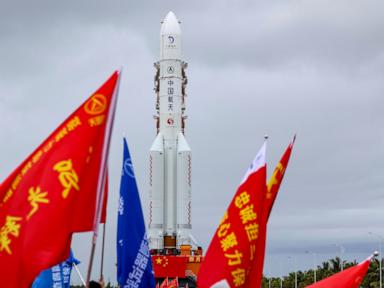
Space agencies hate admitting defeat before ignition, but Beijing just did something smart. China officially pumped the brakes on the Chang’e-7 lunar south pole mission, pulling the massive spacecraft back from the pad just days before liftoff.
If you've been tracking the modern space race, you know this isn't just a minor schedule slip. The Chang'e-7 mission was supposed to be the crown jewel of China’s robotic lunar exploration, targeting the treacherous, permanently shadowed craters of the moon’s south pole to hunt for water ice. Instead, officials announced it won't fly during this year's window at all.
Why the sudden halt? Let's look past the corporate PR and break down what actually happened at the Wenchang Space Launch Site.
What Went Wrong at Wenchang
Details from the China Manned Space Agency are sparse, but the official line points to a failure to meet strict "launch conditions" following a comprehensive evaluation. They're preaching absolute safety and reliability, which translates to a serious technical red flag.
When a rocket-and-probe combo like the Long March 5 and the Chang'e-7 stack gets rolled all the way back from the pad into the assembly building, you know it's not a minor sensor glitch. Teams don't reverse months of buildup for nothing.
Weather likely played a heavy supporting role. Observers tracking operations on Hainan Island noted the looming threat of regional tropical weather disturbances, which routinely wreak havoc on delicate fueling windows and telemetry tracking for heavy-lift cryogenic boosters. Add a tight celestial window—where landing sites near places like Shackleton Crater require pinpoint orbital synchronization—and you have zero margin for error.
The Stakes of the Lunar South Pole
Everybody wants the south pole. It's the most coveted real estate in the solar system right now because of trapped water ice deposits. Water means rocket fuel. Water means life support for future crewed bases.
The Chang'e-7 package was designed to do heavy lifting. We're talking about an orbiter, a lander, a rover, and even a small flying probe meant to hop into dark craters where sunlight never touches. It's an aggressive engineering suite. Following the historic success of Chang’e-6, which actually brought back far-side lunar soil, confidence was sky-high.
Maybe too high.
Space exploration punishes arrogance. Rushing a complex multi-vehicle stack into a shrinking orbital window to beat a geopolitical rival is a great way to turn a billion-dollar probe into expensive space shrapnel.
What This Means for the Global Space Race
The United States and China are locked in a high-stakes sprint to put boots on the lunar surface. NASA is dealing with its own schedule pressures and technical hurdles, while China has maintained an almost mechanical cadence of successful lunar flights over the last decade.
This delay breaks that streak. It proves that even highly centralized, heavily funded state programs hit walls.
Will we see Chang'e-7 fly next year? Almost certainly. The hardware exists, the science goals remain vital, and Beijing's long-term roadmap for a lunar research station hasn't changed. But it's a humbling reminder that leaving Earth is still astonishingly difficult.
Keep an eye on how quickly they manage to diagnose the root cause during the rollback. If it's a simple valve or software issue, expect a re-attempt relatively early. If it's a structural or propulsion flaw with the heavy-lift vehicle, the timeline pushes out significantly. For now, the moon's south pole keeps its secrets just a little longer.


