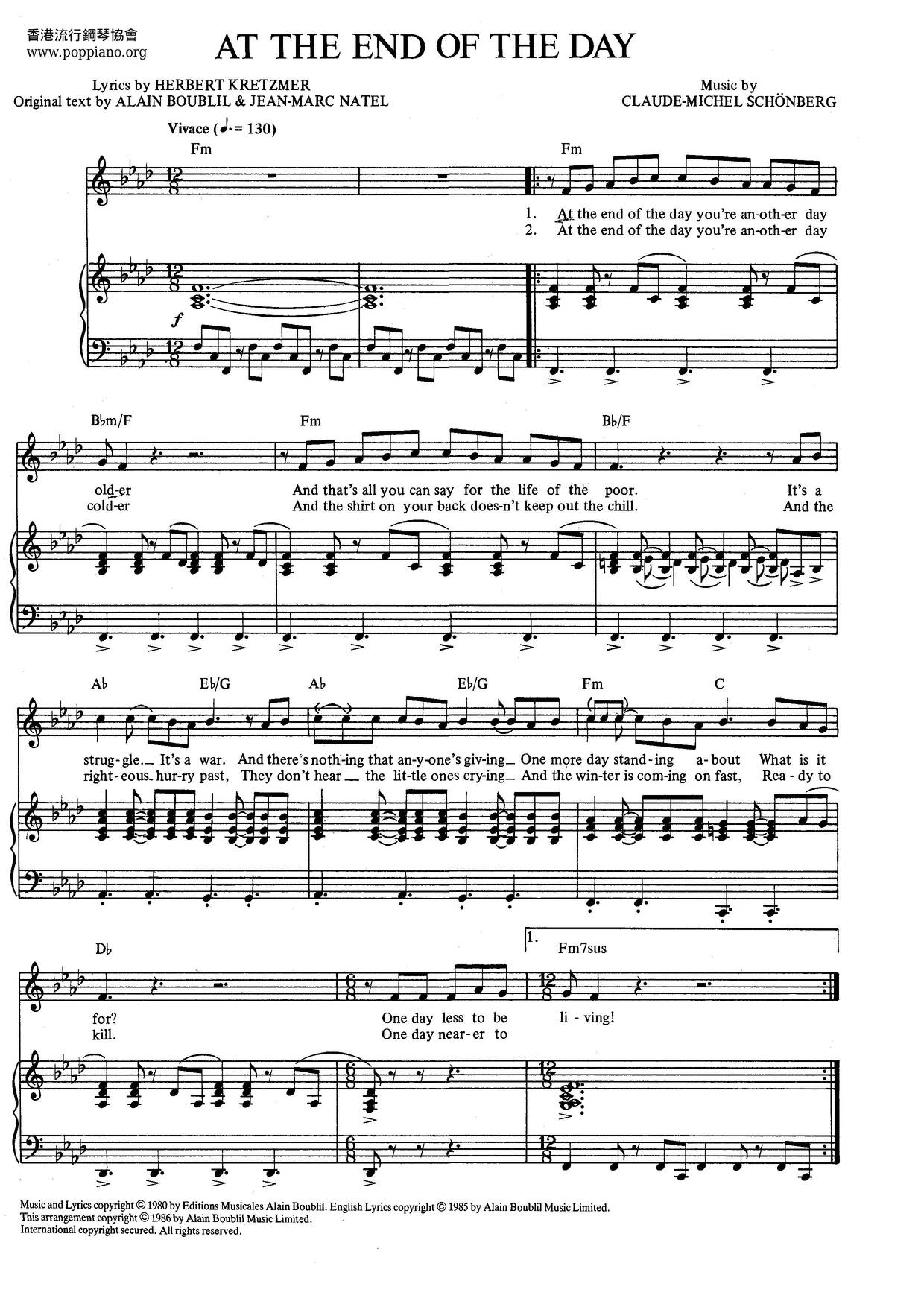
The global market for musical theater memorabilia saw a marked increase in digital downloads and physical sales for Castle on the Cloud Sheet Music during the first quarter of 2026. This trend aligns with the 40th anniversary celebrations of "Les Misérables," which originally premiered in London’s West End in 1985. Data from music publishing analysts at Hal Leonard indicates that interest in individual song scores from the production has risen by 22% year-over-year.
The song, performed by the character Young Cosette, remains a staple for vocal pedagogy and youth theater auditions worldwide. Educators often select this specific arrangement because its vocal range and thematic content are appropriate for elementary-age performers. According to a report by the National Association for Music Education, the simplicity of the melody provides a foundational tool for teaching breath control and narrative expression to beginning students.
Accessibility of Castle on the Cloud Sheet Music in Digital Archives
The transition from physical folios to digital distribution has changed how performers access theatrical scores. Retailers such as Musicnotes and Sheet Music Plus reported that the specific arrangement for "Castle on the Cloud" reached its highest download volume since 2012. This peak coincides with the release of a new televised documentary detailing the history of the Cameron Mackintosh production.
Digital licensing agreements allow schools and independent vocal coaches to purchase the notation legally for immediate use. Cameron Mackintosh Ltd maintains strict control over these intellectual property rights to ensure the integrity of the original Claude-Michel Schönberg composition. This oversight prevents the proliferation of inaccurate, fan-made transcriptions that often circulate on unregulated forums.
Professional accompanists note that digital versions frequently include features for transposition, allowing the music to fit various vocal ranges. Marcus Thorne, a rehearsal pianist for several touring productions, said that the ability to change keys instantly has made the digital score more versatile than traditional paper booklets. He noted that while the original key of A major remains the standard, younger students often require lower settings to avoid vocal strain.
Technical Specifications for Vocal Students
The arrangement typically features a 2/4 time signature and a moderate tempo, making it technically accessible for novice readers. Experts at the Royal Academy of Music state that the rhythmic patterns, largely consisting of eighth notes and quarter notes, help students master basic subdivisions. The melodic leaps are relatively small, focusing on the middle register to prevent premature use of the head voice.
Vocal coaches emphasize the importance of the piano accompaniment in supporting the singer's pitch. The left-hand patterns in the notation often mirror the vocal line or provide a steady harmonic pulse. This structural support is a primary reason why the piece is frequently included in the Grade One and Grade Two syllabi of various international music examination boards.
Archival Preservation of Theatrical Scores
Museums and libraries have also turned their attention to the preservation of the original 1980s manuscripts. The British Library holds several early drafts of the "Les Misérables" score, which show the evolution of the song's melody. Curators have noted that the handwritten notes by Schönberg and lyricist Alain Boublil offer a glimpse into the creative process behind the musical's global success.
The preservation efforts extend to the diverse translations of the work, which has been performed in over 20 languages. Each translation requires a slightly modified vocal score to account for the syllabic differences between languages such as French, English, and Japanese. Archivists track these variations to maintain a comprehensive history of how the theatrical work adapted to different cultural contexts over four decades.
Economic Impact of Sheet Music Licensing
The licensing of musical theater scores represents a significant revenue stream for rights holders and publishing houses. Industry data suggests that the broader category of "Golden Age" and "Modern Classic" scores accounts for nearly 40% of the revenue in the educational music sector. While contemporary hits like "Hamilton" or "Wicked" dominate current sales, the longevity of older works provides a stable financial baseline.
The Music Publishers Association recently highlighted the impact of unauthorized sharing on these revenue streams. They found that for every legal copy of popular theatrical notation sold, approximately three unlicensed versions are downloaded from peer-to-peer sites. This loss of income affects the ability of publishers to invest in new arrangements or high-quality digital engraving for older catalogs.
Critics of the current licensing model argue that the cost of legal scores remains a barrier for low-income students. Sarah Jenkins, a music advocate for urban school districts, said that a single copy of the notation can cost upwards of five dollars, which becomes prohibitive for large classrooms. She suggested that publishers should offer more flexible, subscription-based models for public educational institutions to ensure equitable access.
Controversies Over Simplified Arrangements
A point of contention among professional musicians involves the proliferation of "Easy Piano" or "Big Note" versions of theatrical songs. Some educators believe these simplified scores strip away the harmonic complexity that makes the original compositions significant. They argue that students who learn from these versions may struggle when they eventually encounter the full professional score in a theatrical setting.
Defenders of the simplified versions point to the necessity of engagement. They argue that if a piece is too difficult, a beginner may lose interest in music entirely. The goal of these arrangements is to provide a sense of accomplishment by allowing a novice to play a recognizable melody early in their studies. This debate continues to shape how publishing houses curate their beginner-level catalogs.
The technical differences between a "Vocal Selection" and a "Full Vocal Score" also cause confusion for buyers. A vocal selection usually provides the melody line doubled in the piano part, whereas a full score contains the exact instrumentation used in the pit orchestra. Amateur performers often purchase the simpler selection, only to find it does not meet the requirements for professional auditions or orchestral rehearsals.
Future Developments in Interactive Notation
The next phase for the Castle on the Cloud Sheet Music involves the integration of artificial intelligence and interactive playback. Several startups are developing software that listens to a student's performance and provides real-time feedback on pitch and rhythm. These programs use the underlying digital score to map the student's progress and identify areas that need more practice.
This technology also allows for "virtual accompanists" that adjust their tempo to match the singer. While traditional metronomes are rigid, these AI-driven tools mimic the flexibility of a human pianist. Industry analysts predict that this interactive element will become a standard feature in digital music purchases by the end of the decade.
Publishers are currently negotiating how to price these enhanced digital products. There is a question of whether these features should be sold as a one-time upgrade or a recurring service. As the technology matures, the relationship between the static page and the performing artist will continue to evolve, though the demand for the core melodic and harmonic information remains unchanged.
The theatrical community is now looking toward the upcoming 2027 international tour of "Les Misérables" to see how it might influence future sales. Production teams have hinted at minor orchestrational updates that could result in the release of new official scores. Whether these changes will be reflected in the widely available educational versions remains a subject of discussion among publishers and collectors alike.