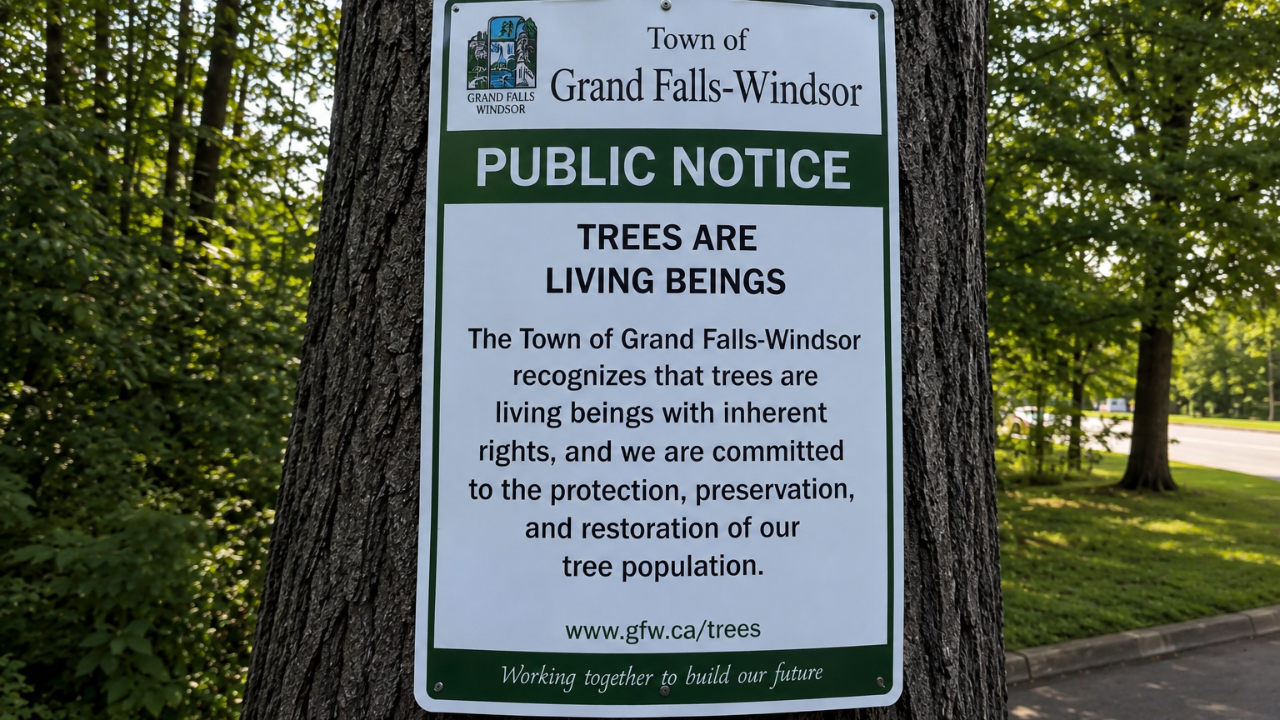
When a municipal council votes on local bylaws, they are usually dealing with sewer systems, property taxes, or parking tickets. But a small municipality in Canada just upended that entire blueprint. The town of Terrasse-Vaudreuil, sitting just west of Montreal, officially passed a resolution declaring that trees are no longer just pieces of property. They are recognized as living beings with their own distinct rights.
This isn't a headline from a science fiction novel. It happened on June 9, 2026. The town council voted unanimously to sign onto the Universal Declaration of the Rights of the Tree. Under this new framework, the local environment isn't just something to be managed. The local trees officially have a right to life, to natural growth, to integrity, and to regeneration.
If your first reaction is to roll your eyes and assume this is purely symbolic eco-politics, you aren't alone. Critics are already calling it a feel-good measure with zero legal teeth. But if you look closely at what is happening on the ground, this tiny town of 2,000 residents might be ahead of a massive shift in how we treat local ecosystems.
The real story behind the tree rights declaration
The push did not start in a government office. It started with a movie. A local screening of the documentary film "Des arbres et des arts" by Quebec filmmaker André Desrochers completely shifted public opinion in the community. The film highlights how trees interact, breathe, and use intricate underground root systems to communicate and share resources.
Mayor Michel Bourdeau noted that the film changed how residents viewed the canopy around them. He stated that a tree breathes, lives, and takes in water just like a human being while protecting us from extreme weather. The community realized they were treating these complex organisms like simple street furniture.
By partnering with the International Observatory of Nature Rights, Terrasse-Vaudreuil became the first municipality in Canada to adopt this specific declaration. The text forces human communities to act in solidarity with the plant life around them, treating them as a common good essential for survival.
Symbolism vs local enforcement
Let's talk about the practical reality. What happens when a developer wants to cut down a tree to build a house?
In many cities, a developer simply pays a minor fine or a permit fee, cuts the tree down, and moves on. The cost of destroying the canopy is treated as a business expense. Terrasse-Vaudreuil is trying to change that equation. Mayor Bourdeau stated that the town is actively reviewing its existing rules and municipal bylaws. The goal is to ensure that any tree removed must be fully protected or immediately replaced.
There is a catch here that skeptics point out. Terrasse-Vaudreuil has virtually no vacant land left to develop. It is a mature, wooded community where people already value a rural lifestyle. Passing a law like this is significantly easier when you aren't actively trying to build massive new subdivisions or high-rise complexes.
Even so, the policy changes have teeth. The town is shifting from an ownership model to an ecosystem model. If you own a piece of land, you don't automatically own the absolute right to destroy the living systems on it without equal restoration.
The growing legal movement for nature rights
This Canadian town isn't acting in a vacuum. Legal personhood for nature is a rapidly accelerating global legal philosophy. It treats natural features the same way the legal system treats corporations. Corporations aren't humans, but they have legal standing, can own property, and can sue in court.
Legal experts argue that if a non-living corporate entity can have legal standing, actual living ecosystems should have it too.
We have seen this work successfully in other areas. In 2021, the Magpie River in Quebec was granted legal personhood by the local regional municipality and the Innu Council of Ekuanitshit. Across the globe, New Zealand gave legal personhood to the Whanganui River. Colombia did the same for the Amazon rainforest.
The major difference with the Terrasse-Vaudreuil declaration is the scale. Instead of protecting a massive, pristine river system, it focuses on the individual tree. It treats a single tree as an entire ecosystem that provides localized cooling, stormwater management, and bird habitats.
The science driving the policy
Politicians are finally catching up to decades of forest ecology research. Scientists like Suzanne Simard have proven that trees are not isolated plants competing blindly for sunlight. They are connected by vast underground fungal networks often called the wood wide web.
Through these networks, trees pass nutrients to struggling neighbors, warn each other of pest attacks, and balance the health of the entire forest. When you cut down a single old-growth tree, you aren't just removing one plant. You are tearing a hole in a highly complex social network.
Urban areas desperately need this infrastructure. A healthy urban canopy can lower city temperatures by several degrees, radically decrease stormwater runoff that floods local sewers, and filter fine particulate matter from the air.
Actionable steps for other local communities
If you want your own town or city to start treating trees as critical infrastructure rather than disposable property, you don't have to wait for a massive federal law. Change happens at the municipal level.
First, push for local tree canopy bylaws that mandate a strict one-to-one or two-to-one replacement ratio. If a mature tree is removed for safety or infrastructure, the developer must plant equivalent native species that can replicate that canopy over time.
Second, support municipal initiatives that calculate the financial value of natural infrastructure. When a city views a tree canopy as a multi-million dollar asset that prevents flooding and reduces air pollution, the political will to protect it shifts instantly.
Terrasse-Vaudreuil proved that a small community can set a massive precedent. It starts by changing the language in local council chambers from resource management to basic ecological rights.