Can Canada actually become the reliable energy supplier the world desperately needs right now?
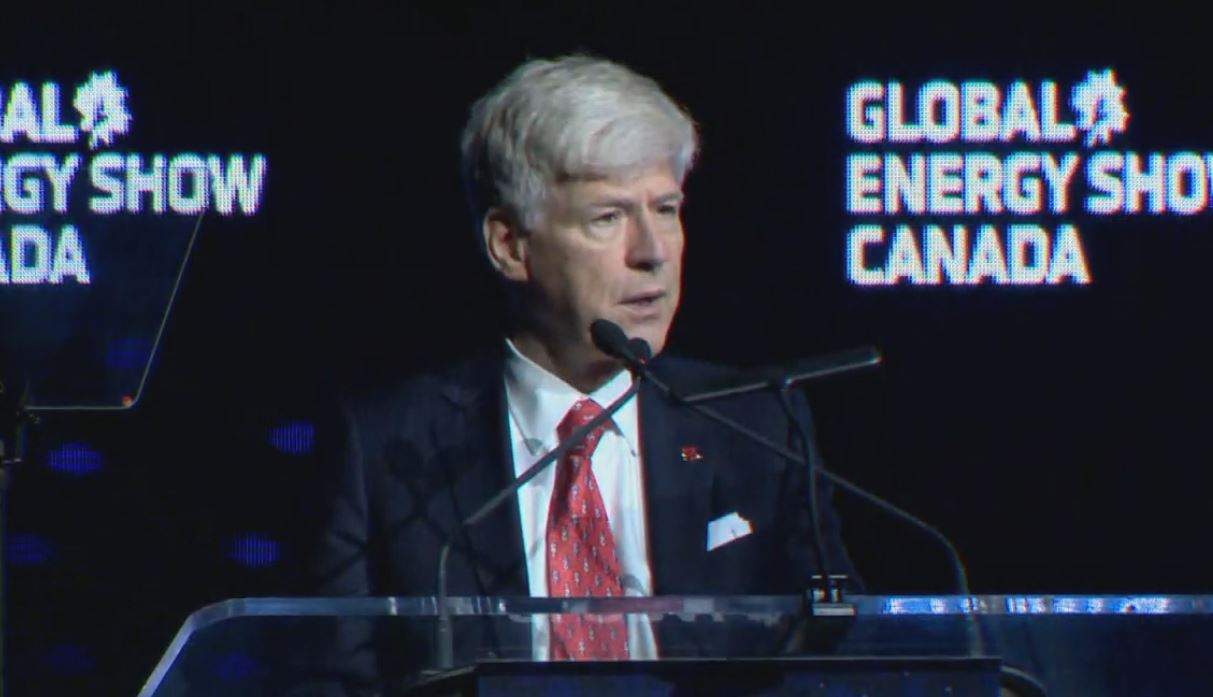
Federal Energy and Natural Resources Minister Tim Hodgson thinks so. Speaking at the opening of the Global Energy Show in Calgary, Hodgson claimed that Canada is "rising to the moment" in a volatile global market. It is a comforting thought. Middle East instability is rattling supply chains, and international buyers are looking for safe options.
But talk is cheap. If you look past the standard political messaging, Canada's path to becoming an energy powerhouse is messy, complicated, and blocked by internal fighting.
The three-day conference attracted 30,000 attendees to the BMO Centre, all looking for answers on energy security and infrastructure. What they got instead was a clear view of the deep divide between federal ambition and provincial reality.
The Conflict Between Federal Optimism and Provincial Realities
Hodgson used his keynote speech to pitch Canada as a stable alternative for global markets. He pointed to the country's resource wealth, regulatory frameworks, and clean energy investments as proof of progress.
But his optimistic tone ignores the massive friction happening just outside the convention hall doors.
Take the ongoing feud between Alberta and British Columbia. Alberta Premier Danielle Smith is pushing hard for a new bitumen pipeline to the northwest coast. She wants the Alberta government to file an official application to the federal major projects office by July 1.
The catch? The project does not have a single private-sector backer.
Worse, the B.C. government, represented at the show by Energy Minister Adrian Dix, is completely against it. This isn't just a minor disagreement. It is a fundamental conflict over how Canada moves its energy to the world. International investors notice when provinces cannot agree on basic infrastructure.
The conference even brought up uncomfortable talk about Alberta separation. While event organizers tried to downplay the issue, they admitted it is actively impacting investor sentiment. When a major oil-producing region openly debates its place in the federation, global capital gets nervous.
Why Moving Fast Matters More Than Resource Wealth
Canada has a bad reputation for building major infrastructure slowly. Global capital does not wait around for endless regulatory reviews and political bickering.
Look at how fast other countries move. The United States can approve and build export terminals while Canadian projects languish in courtrooms and committee meetings. Hodgson noted that "the world is not waiting for Canada." He is right.
If Canada wants to secure long-term contracts with buyers in Asia and Europe, it needs to solve its execution problem.
- Permitting delays: It takes years too long to get federal clearance for major resource projects.
- Lack of private capital: Major projects, like Smith's proposed West Coast pipeline, are struggling to find private investors because the political risk is too high.
- Interprovincial gridlock: Energy corridors cannot function when provinces act like competing countries.
The federal government wants to celebrate clean energy initiatives and new hydrogen corridors. But the global market still runs on oil and gas. If Canada cannot deliver its traditional resources efficiently, it will struggle to convince the world it can lead the transition to newer energy forms.
What Needs to Happen Next
Canada cannot afford to treat energy strategy as a marketing campaign. If the federal government wants to back up Hodgson's claims, it needs to shift from making announcements to building infrastructure.
Stop focusing on theoretical pipelines without buyers. The federal major projects office needs to streamline the permitting process for existing infrastructure upgrades.
Provinces must build a unified strategy for energy corridors. Alberta and B.C. need to find common ground on export access, or international buyers will simply sign long-term supply deals with American or Middle Eastern producers.
Fix the regulatory uncertainty that scares off private investors. Government backing can only go so far; if private capital refuses to touch Canadian energy infrastructure due to political risk, the superpower ambition is dead on arrival.