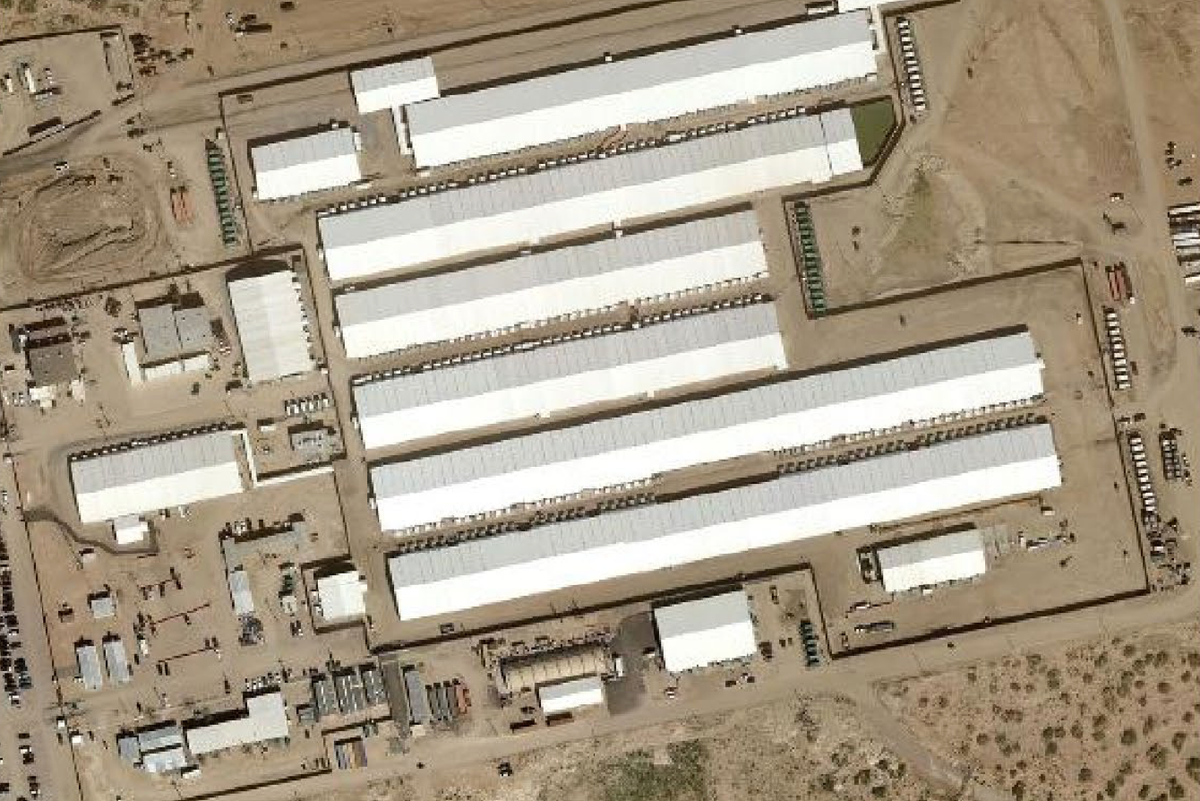
In the desert outside El Paso, Texas, lies a massive tent city holding thousands of people. Officially, it’s a federal immigration facility. In reality, it has quickly become a black hole of human rights abuses, violent retaliation, and lethal neglect. The joint report released on July 15, 2026, by Human Rights Watch and the American Civil Liberties Union reveals a stomach-turning look inside the Camp East Montana ICE detention camp. The details aren't just unsettling. They're horrific.
People inside are getting beaten for asking for medical help. They're locked in solitary confinement for complaining about rotten food. They are literally choking on dust because of poor tent construction, and some have died under deeply suspicious circumstances. If you think our immigration system has a baseline level of decency, Camp East Montana will shatter that illusion. You might also find this similar story interesting: Why Jay Clayton Is Already Failing The Press Freedom Test.
This isn't a case of bureaucratic oversight or minor funding shortages. The facility is a full-blown humanitarian disaster funded by billions of taxpayer dollars. Here is what is actually happening behind the barbed wire in El Paso.
The lethal cost of negligence at Camp East Montana ICE detention
People are dying. That's the starkest truth of this facility. Since Camp East Montana opened on the grounds of Fort Bliss in August 2025, at least three detainees have lost their lives. As reported in recent reports by USA Today, the implications are widespread.
The most disturbing case is that of Gerardo Lunas Campos, a 55-year-old Cuban migrant who died on January 3, 2026. Eyewitnesses recounted a scene that sounds like straight-up torture. Campos, who was being held in solitary confinement, begged guards for his medical inhaler. Instead of bringing medicine, guards tackled him.
Witnesses heard the physical strikes. They heard Campos screaming that he couldn't breathe. Then, silence.
The El Paso County Medical Examiner ruled his death a homicide. Shockingly, a federal oversight report revealed that critical evidence in his case was either missing or destroyed. Nobody has been criminally charged for his death. It is a sickening display of state-sanctioned violence with zero accountability.
Another detainee, Gerald Akari Angye from Cameroon, fled horrific torture in his home country only to face brutal beatings by guards in Texas. Angye was beaten so severely by Camp East Montana staff that he had to be hospitalized and placed in a wheelchair. His punishment for existing? Fifteen days in solitary confinement.
These aren't isolated incidents. The joint HRW and ACLU investigation found that roughly 90% of the detainees they interviewed had either been physically assaulted by staff or watched someone else get beaten.
Squalor disease and extreme environmental hazards
The physical environment of the camp is designed to break people down. Built as a temporary tent facility in the middle of the Chihuahuan Desert, the structures offer little protection from the elements.
When the desert wind kicks up, blinding dust storms tear through gaps in the tent walls. Detainees sleep and breathe in a constant haze of fine dirt. This causes severe respiratory problems, but getting medical care is nearly impossible.
The plumbing is a disaster. Housing units regularly flood with dirty toilet water and raw sewage. Bathrooms are routinely covered in feces, and for long stretches, guards deny detainees basic hygiene products like soap, hand sanitizer, or clean water to bathe.
This filth has predictable consequences. In early 2026, a massive measles outbreak tore through the camp, forcing ICE to shut down all visitor access for weeks.
The food is just as bad. Detainees report receiving frozen, spoiled, or moldy meals. Sometimes, they go up to 12 hours between meals. A lawsuit filed by civil rights groups highlights that for all three meals, detainees are often given nothing but two pieces of bread, a slice of cheap processed meat, a slice of cheese, and a cookie. People are losing extreme amounts of weight and suffering from severe blood sugar crashes.
The massive financial waste behind the abuse
You might think that running a bare-bones tent city in the desert is at least cheap for taxpayers. It isn't.
A scathing report from the Government Accountability Office (GAO) exposed the jaw-dropping financial mismanagement of this facility. The U.S. Army and ICE rushed the construction of the $1.3 billion camp. Because of this rush, the government signed a contract that forces taxpayers to pay the operational and meal costs for 5,000 detainees, even when the facility is mostly empty.
For instance, in early 2026, the facility held only around 1,600 people. Yet, the government paid for 5,000 meals three times a day. Millions of dollars are being thrown directly into the trash while the actual human beings inside starve on bologna sandwiches and contaminated water.
The GAO also found that ICE didn't even inspect the facility before moving people in. The camp opened without basic security cameras, outdoor recreation space, or private meeting rooms for attorneys. ICE completely ignored its own safety and operational policies, and the consequences have been devastating.
Systemic isolation and coerced deportations
The physical abuse is coupled with severe psychological pressure. Guards and administrators actively work to keep detainees isolated from the outside world.
Many detainees report being denied access to telephones to call their families or attorneys. When they are allowed outside their crowded tents, it is incredibly rare. Throughout 2025 and into 2026, many detainees were only allowed 15 minutes of outdoor recreation once every two weeks. Some went over a month without seeing the sun.
This extreme isolation is used as a weapon. Investigators found that guards and staff systematically pressure, threaten, and coerce detainees into signing deportation papers.
They are told they will face indefinite detention, physical violence, or immediate prosecution if they don't give up their legal asylum claims. In some instances, the tactics used by ICE are so extreme they meet the international definition of enforced disappearances.
Real steps to take right now
The Department of Homeland Security claims these allegations are "categorically false". They claim their detention centers have higher standards than domestic prisons. But the bodies, the lawsuits, the GAO audits, and the photographs tell a completely different story.
If you want to see this horror shut down, you have to bypass the bureaucratic deflection and target the decision-makers directly. Here is what needs to happen immediately.
- Demand Congressional Intervention: Representatives and Senators have the power to freeze funding for Camp East Montana. Call your representatives and demand they back the permanent closure of the Fort Bliss facility.
- Support Local Advocacy Groups: Organizations like the Texas Civil Rights Project, Las Americas Immigrant Advocacy Center, and Estrella del Paso are on the ground in El Paso fighting these abuses in court. They need funding and volunteer support to keep up the legal battle.
- Pressure the Department of Justice: The DOJ must launch an independent criminal investigation into the homicide of Gerardo Lunas Campos and the widespread physical abuse documented by human rights researchers.
We cannot allow a $1.3 billion desert torture chamber to operate in our name. The camp must be closed, the operators must be held accountable, and the survivors deserve immediate justice.