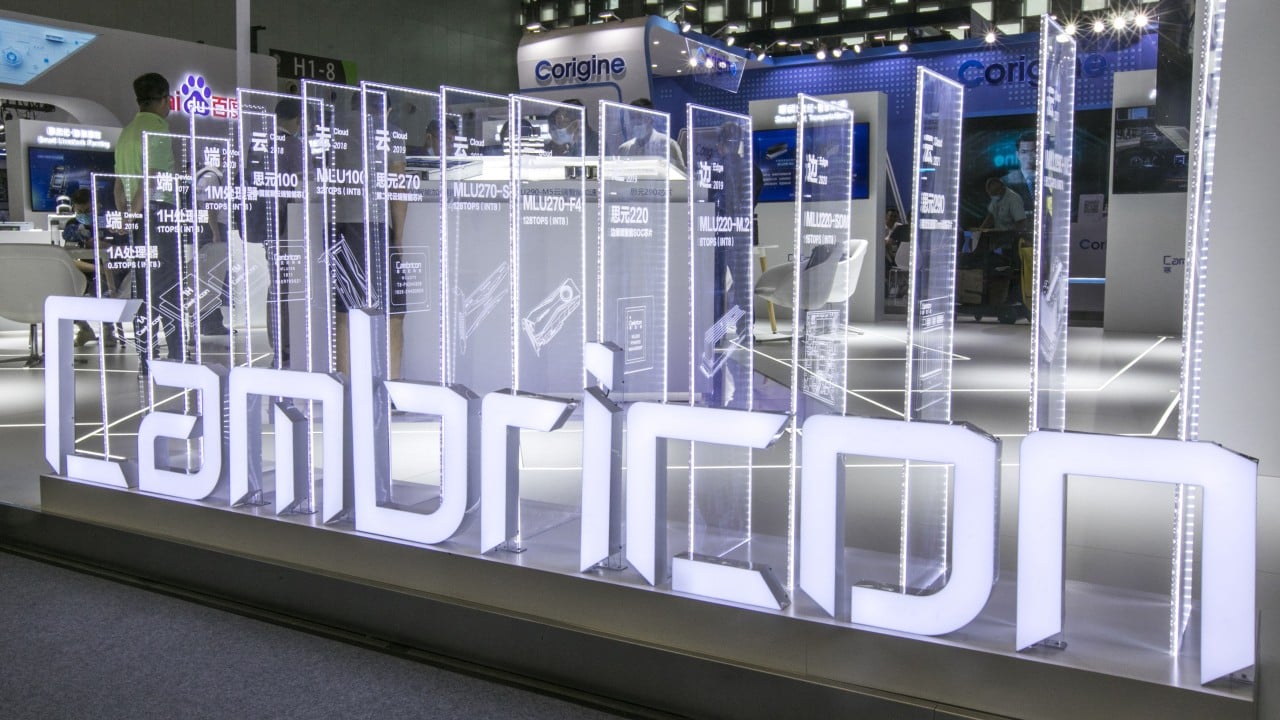
Money talks loudly in the semiconductor space, and right now, Beijing-backed chip design houses are screaming. Cambricon Technologies just dropped its latest financial numbers, posting a staggering 108 percent surge in first-half revenue to reach 6.00 billion yuan, up from 2.88 billion yuan during the same period last year. Net income simultaneously hit 2.31 billion yuan. If you think this is just standard corporate growth, you're missing the broader geopolitical shift happening underneath the silicon.
Domestic tech independence isn't a slogan anymore. It's a massive, multi-billion-dollar procurement wave reshaping hardware markets across Asia. Learn more on a similar subject: this related article.
The Reality Behind the Numbers
Look past the flashy headlines about doubling revenue. For years, critics wrote off domestic Chinese accelerator startups as cash-burning entities heavily reliant on state subsidies with little commercial viability. Cambricon completely flipped that narrative.
Net income jumping to 2.31 billion yuan from 1.04 billion yuan year-over-year proves that hardware monetization has finally caught up with theoretical design capabilities. Major enterprise buyers, cloud providers, and local internet giants are locking in long-term supply agreements for local accelerators. They don't have much of a choice. Stricter Washington export controls on high-end foreign graphics processing units left domestic server farms scrambling for local alternatives. Further journalism by Wired delves into comparable views on the subject.
When foreign alternatives get blocked, domestic demand flows directly into local suppliers. Cambricon captured that exact wave.
Manufacturing Pressures Few People Discuss
Running up massive revenue figures sounds great on an earnings call, but execution on the factory floor remains an uphill battle. Building advanced artificial intelligence accelerators locally comes with severe bottlenecks.
Most domestic high-end processor designs rely heavily on local foundry capacity, specifically advanced nodes at companies like Semiconductor Manufacturing International Corporation (SMIC). Yield rates for massive silicon dies running at tighter nodes are notoriously difficult to stabilize. Producing chips is one thing. Yielding functional, high-performance silicon at scale without bleeding margin is entirely different.
Supply chain constraints also extend to High Bandwidth Memory. Domestic memory packaging ecosystems are improving, but they still lag behind global giants like SK Hynix and Samsung. Anyone analyzing these earnings reports needs to keep a close eye on these supply constraints. A booming order book means nothing if you can't secure packaging components or raw foundry wafers to ship the final product.
What Happens Next for the Market
The market reaction tells its own story. Analysts hold overwhelmingly positive consensus views on the stock, reflecting intense confidence in domestic tech self-sufficiency. Yet, high expectations create zero room for error.
If you are tracking enterprise hardware procurement strategies, the shift is permanent. Chinese cloud operators and enterprise data centers are actively rewriting their software stacks to run natively on local architectures. Software adaptation takes time, but momentum is compounding.
Watch the enterprise adoption rates outside of tier-one tech giants next. The real test for domestic chip designers isn't whether they can supply top-tier internet companies with deep state backing. The real test is whether mid-market enterprises can deploy these processors cost-effectively without relying on foreign codebases.
Evaluate your hardware pipeline now. Diversify supply assumptions and stop treating domestic Asian silicon as a temporary workaround. It's becoming the primary operational reality for regional deployments.