Washington just handed New Delhi a 189-page headache, and honestly, the core accusation doesn't hold water.
On November 25, 2026, the Office of the United States Trade Representative proposed tariffs of up to 25 percent on Indian goods under Section 301, tying a lower 17 percent rate to a deal that satisfies U.S. demands. The stated trigger? Allegations that India's industrial policies—including Make in India, Atmanirbhar Bharat, and Production Linked Incentive schemes—create structural manufacturing overcapacity that harms American commerce.
India's Ministry of Commerce and Industry pushed back immediately. New Delhi flatly rejected the claim that any Indian sector suffers from structural excess capacity and pointed right back to ongoing Bilateral Trade Agreement talks.
If you export from India, supply U.S. retailers, or track global trade policy, this isn't just another headline. It's a leverage play dressed up as factory math. And if you look closely at the numbers buried inside the U.S. Trade Representative's own analysis, the overcapacity label looks pretty shaky.
Why the Overcapacity Claim Stumbles on India's Actual Numbers
Labeling India a factory glut machine is a stretch. A big one.
When trade hawks talk about structural excess capacity in Asia, they usually mean massive state-backed buildouts that flood global markets far beyond domestic demand. Look at India's real economy instead. According to the U.S. Trade Representative's own findings reported by The Indian Express, manufacturing has accounted for roughly 13.1 percent to 14.4 percent of India's GDP over the past five years, averaging about 13.5 percent.
That's respectable. It's even slightly ahead of the U.S. manufacturing share of GDP over recent years. Still, it's nowhere near the industrial weight of a country drowning the world in surplus goods.
Even more telling is India's broader trade balance. While India has run a growing bilateral goods trade surplus with the United States—reaching $57.3 billion in 2025 after $45.2 billion in 2024 and $42.5 billion in 2023—its overall global goods trade deficit hit roughly $309 billion in 2025. Think about that for a second. A country running a $309 billion global goods deficit isn't flooding the planet with excess manufactured output across the board. It's still importing huge volumes of machinery, components, energy, and intermediate goods to build out its own market.
Yes, New Delhi has ambitious targets. Raising manufacturing's share of GDP toward 25 percent under Make in India would require hundreds of billions of dollars in additional output over time. Ambition isn't the same thing as structural overcapacity today.
What the Proposed Tariffs Actually Target and Spare
Don't panic over the headline 25 percent number until you read the fine print. Trade proposals rarely hit evenly, and this one has sharp edges.
As Hindustan Times detailed following the U.S. announcement, the proposed duties are framed as up to 25 percent on Indian goods, net of existing Section 301 tariffs, with specific product exemptions. If India signs a reciprocal trade agreement that Washington deems responsive to its Section 301 findings, the proposed rate drops to 17 percent.
Here is where the real split happens. Two of India's biggest export pillars to the United States—generic pharmaceuticals and smartphones—get exemptions under the proposal. That matters enormously. If generic drugs and phones had been slapped with a sudden 25 percent penalty, supply chains and U.S. consumer prices would have felt the shock right away.
Instead, labor-intensive and contested sectors sit squarely in the crosshairs. Jewellery, apparel, shrimp, solar products, and medical devices face exposure, alongside sectors flagged in the review like steel and information and communications technology. Washington also called out India's labor rules, market access barriers, directed lending, and rising imports or investments from China.
One detail I always tell exporters to check twice is tariff stacking. Many Indian goods already face a 10 percent Section 301 tariff put in place in July 2026 following a separate forced-labor investigation. Because the new proposal is structured net of existing Section 301 duties, importers won't simply add 25 percent on top of 10 percent; rather, the higher applicable rate governs. Still, going from 10 percent to 17 percent or 25 percent eats straight into thin margins.
How India Compares With Rival Asian Exporters
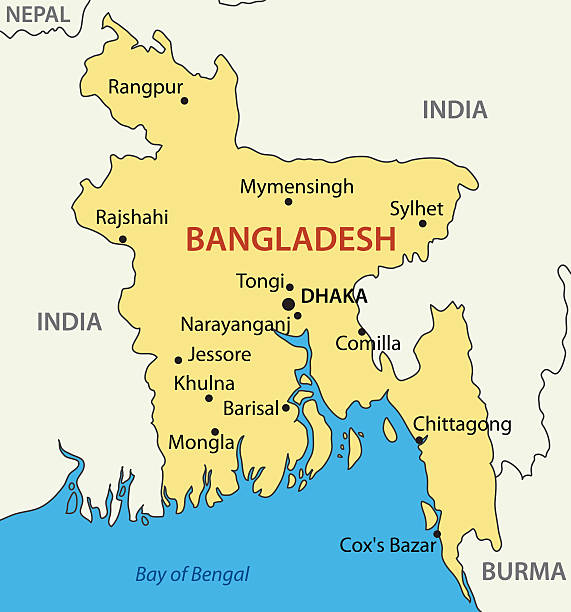
Trade strategy is always relative. You don't just compete against domestic U.S. producers; you compete against Vietnam, Bangladesh, Indonesia, Thailand, Cambodia, and China.
Based on Holland & Knight's analysis of the Section 301 actions across 14 economies, the proposed tariff ladder varies sharply by country and deal status. If India secures a deal that brings its rate down to 17 percent, that would actually sit below the 18 percent rates proposed for competitors like Bangladesh and Cambodia in apparel, or Indonesia and Thailand in seafood and solar, and below Vietnam's 20 percent deal rate (or up to 35 percent without a deal). China faces up to 20 percent net of existing Section 301 duties, or up to 40 percent depending on trade truce terms.
That's why New Delhi isn't walking away from the table. A 17 percent ceiling—or something negotiated even sharper—keeps India competitive against rivals if the bilateral deal lands. If talks stall and the 25 percent ceiling sticks while peers lock in lower rates, Indian exporters in textiles, gems and jewellery, and seafood will feel the squeeze fast.
Why New Delhi Is Betting on the Bilateral Trade Deal
From India's perspective, rejecting the overcapacity label is step one. Keeping the dispute inside trade negotiations is step two.
The Ministry of Commerce and Industry pointed directly to the India-U.S. Bilateral Trade Agreement track, referencing the framework announced on February 2, 2026 and the joint statement on February 7, 2026. Earlier in the year, discussions around an interim framework had floated an 18 percent reciprocal tariff benchmark, yet a final comprehensive agreement has remained elusive.
Why hasn't a deal closed yet? Because trade agreements get messy fast. Washington wants broader market access, fewer non-tariff hurdles, tighter scrutiny of Chinese supply-chain links, and policy shifts around industrial subsidies and labor. New Delhi wants to protect domestic farmers, small manufacturers, and strategic policy space while locking in predictable U.S. market access.
After the U.S. Supreme Court struck down earlier broad tariffs in February 2026, the Trump administration leaned harder into Section 301 investigations—first on forced labor in July, and now on manufacturing capacity in November. From a negotiator's chair in New Delhi, that looks less like an objective audit of Indian factories and more like pressure designed to extract concessions before a final deal is signed.
There's also a real risk for Washington if it pushes too hard. Pushing India into a corner doesn't automatically make New Delhi rewrite industrial policy overnight; it can slow trade talks, complicate diplomatic alignment, and prompt Indian exporters to hunt harder for buyers in Europe, the Middle East, Africa, and ASEAN.
Common Mistakes Businesses Make During Tariff Standoffs
Whenever tariff threats hit the front pages, I see companies make the exact same two mistakes.
First, they overreact to proposals before any duty actually takes effect. A Section 301 notice starts a formal process—it doesn't flip a switch at midnight. According to coverage of the announcement, written comments and requests to appear are due in early January 2027 (January 5, 2027), with public hearings at the U.S. International Trade Commission starting January 25, 2027. Nothing changes overnight before January. Locking in panicky price cuts or canceling long-term contracts based on a draft tariff schedule is basically lighting money on fire.
Second, businesses ignore customs classification and origin rules until a shipment gets stuck. Whether a product is exempt, covered by a Section 232 action, or subject to a Section 301 rate depends on exact tariff lines and rules of origin. Assuming your item is "in" or "out" because of a headline about pharma or electronics is a fast way to get hit with an unexpected bill at the port.
Practical Next Steps for Exporters, Importers, and Investors
You can't control trade negotiations in Washington or New Delhi, but you can prepare smartly over the next several weeks.
- Audit your exact HS codes against the USTR notice: Check whether your specific products appear on the exemptions annex or fall under exposed categories like apparel, jewellery, seafood, solar, or medical devices. Don't guess based on broad industry labels.
- Model 10 percent, 17 percent, and 25 percent landed-cost scenarios: Build three margin scenarios with your supply-chain team and buyers right now. Know where your product stays viable and where pricing breaks down.
- Prepare public comments ahead of the January 2027 deadlines: If your U.S. business or supply chain relies on Indian inputs or finished goods, coordinate with trade counsel or industry associations before the January 5, 2027 filing milestone and the January 25, 2027 hearings. Regulators actually read well-documented supply-chain impact filings.
- Diversify buyer and sourcing lanes quietly: Keep your U.S. relationships warm while testing secondary markets and dual-sourcing options so a single tariff shift doesn't shut down your quarter.
The tariff fight isn't over yet—it's just entering its loudest phase.