Don't let the peaceful June evenings fool you. If you've been sitting out on your patio lately enjoying the fresh Alberta air without swatting every three seconds, you might think we're completely in the clear. We're not.
The current Calgary mosquito season looks incredibly quiet on paper. Trap numbers are remarkably low across the city right now. But local experts warn that this peaceful stretch is just a temporary delay, a meteorological pause button that's about to pop right around the middle of July. What feels like a bug-free summer is actually a biological countdown.
Understanding how these pests operate in our specific climate makes it clear that the next few weeks will shift quickly. If you drop your guard now, your backyard will pay the price when the heat finally hits.
The Illusion of the Empty Traps
Step into the field with the City of Calgary's integrated pest management team, and you'll find some surprising data. Right now, technicians are pulling up traps that look shockingly empty compared to previous years.
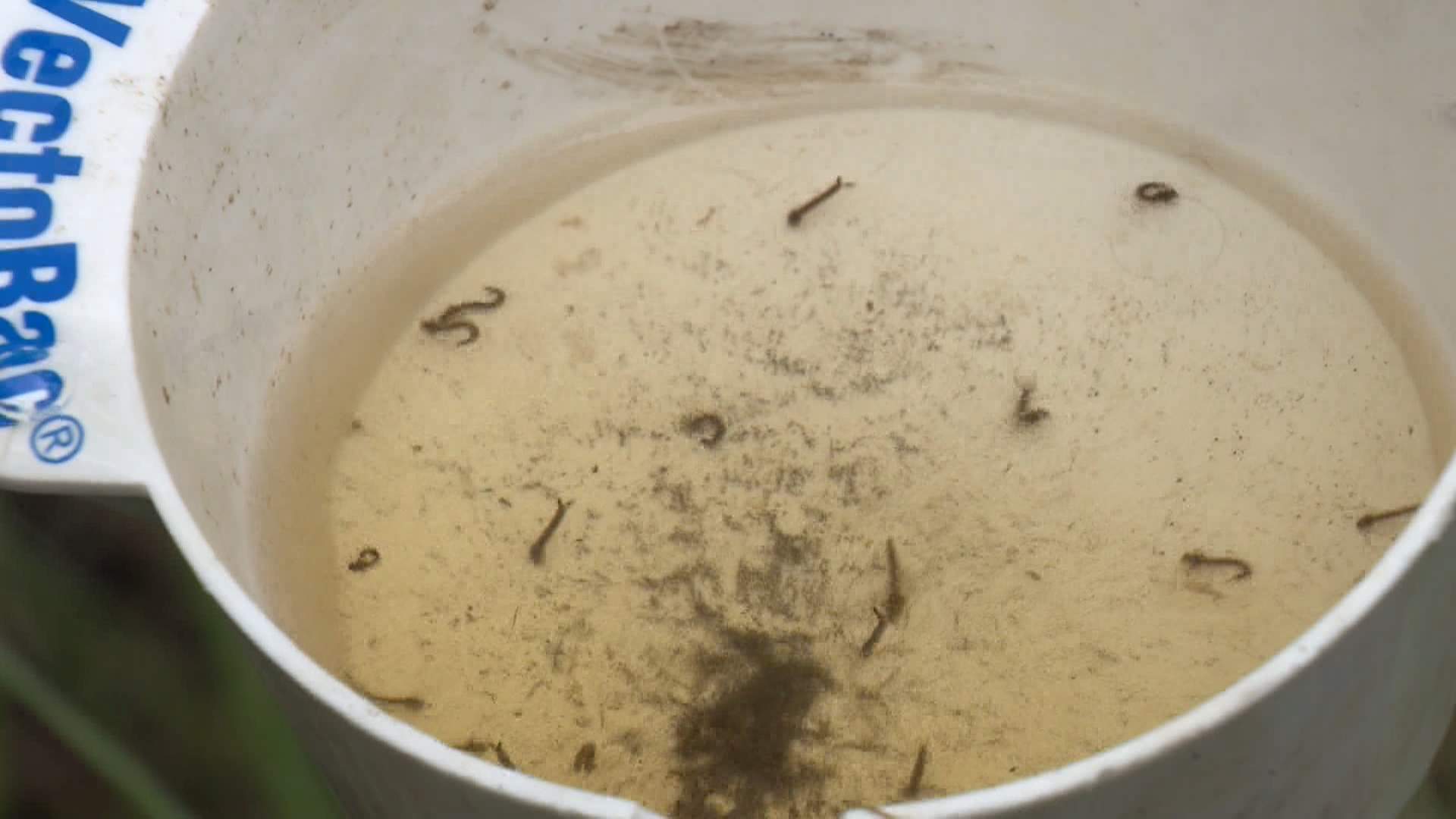
Alex Coker, an integrated pest management technician with the city, recently shared some hard data that reveals exactly what's happening beneath the surface. Normally, around this point in June, a standard monitoring trap would yield roughly 100 mosquito larvae and pupae. Right now? Technicians are averaging fewer than 50 per trap.
That sounds like a massive victory for local skin. It isn't.
The low count isn't because the bugs have mysteriously vanished from Southern Alberta. It's because our recent weather patterns have kept them in a state of suspended animation. We had a massive, drenching rainstorm at the very beginning of June that dumped roughly 50 millimetres of water across the city in just a matter of days. In normal circumstances, that amount of standing water triggers an absolute explosion of life.
But biology requires warmth. Ever since that heavy rainfall, Calgary has endured a remarkably cool, windy stretch of weather. The overnight low temperatures have stayed stubbornly low. Mosquitoes are cold-blooded creatures. When the thermometer drops, their metabolic rate plummets. The adult bugs don't want to fly, and the larvae sitting in the puddles develop at a absolute snail's pace.
Basically, the clock is ticking, but the gears are moving slowly. As soon as July brings its standard daytime highs, those billions of larvae sitting in temporary pools will mature all at once.
The Mid-July Peak and the Latency Effect
You need to understand the concept of the lifecycle lag. Mosquito eggs don't turn into biting adults overnight. There is a strict, predictable two-to-three-week lag between a major rainfall event and the moment you start getting chewed alive on your deck.
When you pair that natural latency with the unusually cold June we've experienced, the timeline compresses. Instead of a steady, manageable trickle of bugs emerging throughout the spring, we're looking at a condensed timeline. Experts like entomologist John Swann have pointed out that this type of weather pattern condenses the population growth. Instead of spring mosquitoes spacing themselves out over two months, they're going to hit the city all within a single four-week block.
It means the peak will feel intense. When the numbers spike in mid-July, it's going to feel like an overnight invasion, even though it's technically a completely typical seasonal volume.
The City of Calgary monitors these trends closely to deploy its defensive measures. The municipality operates both an aerial control program and a ground control program. When the numbers hit specific thresholds, teams apply a highly targeted bacterial product to stagnant water bodies. This biological control specifically targets mosquito larvae when they consume it, preventing them from turning into flying adults. It's regulated by the Federal Pest Management Regulatory Agency and doesn't harm the broader ecosystem, like the birds, fish, and dragonflies that rely on insects for food.
But the city can only treat public lands, ditches, and major seasonal pools. They can't come into your yard. That's where the real battle is won or lost.
The New Invasive Threat in Calgary Backyards
There's a specific reason to change how you manage your property this summer. It's a tiny, resilient creature called Culex pipiens, commonly known as the northern house mosquito.
This isn't your traditional Alberta prairie mosquito that breeds out in a muddy cow pasture ditch. This is an invasive container mosquito native to Africa, Asia, and Europe. It was first detected north of us in Edmonton back in 2018. It officially breached Calgary lines in 2022.
John Soghigian, an assistant professor of veterinary medicine at the University of Calgary, is actively researching this specific species because it changes the local risk profile. Culex pipiens is a primary carrier of West Nile Virus. While the virus historically hits a very small percentage of people with severe neurological symptoms, its presence requires much stricter monitoring.
This house mosquito has two traits that make it a massive pain for homeowners:
- It loves humans. It chooses to breed right next to residential structures rather than open wetlands.
- It overwinters in our homes. Unlike native species that rely on eggs surviving in frozen soil, adult Culex pipiens can find cracks in foundations, sheds, or unheated basements to sleep through the Calgary winter, emerging ready to go in the spring.
Soghigian's lab is currently using genetic testing and DNA sequencing to map out exactly how this species is moving through Alberta, tracking its invasion routes to see how it might alter the dynamics of West Nile Virus in our communities.
Your Backyard Is a Breeding Ground
Because Culex pipiens and several native species are container breeders, your ordinary yard maintenance directly impacts the neighborhood bug population. A single discarded bottle cap filled with rainwater can host dozens of larvae.
Walk your property line today and look for organic debris combined with standing water. That's the ultimate nursery for these pests.
Take a close look at your rain barrels. If you use them to collect water for your garden, you've built a five-star mosquito resort. You don't have to empty them, but you absolutely must seal them. Wrap the top securely with an incredibly fine mesh screen. The mesh needs to be tight enough to prevent an adult female from slipping through to lay her eggs on the water surface.
Check your flower pots. Empty the plastic saucers sitting underneath them after every rainfall.
Look at your bird baths and wheelbarrows. Tip them over if you aren't using them, or commit to completely replacing the water in your bird bath every two to three days to flush out any developing larvae before they reach the pupae stage.
Clean out your eavestroughs. Clogged gutters packed with wet, decaying leaf litter create an ideal, hidden ecosystem where thousands of mosquitoes can breed completely unnoticed right above your head.
Mow your lawn consistently. Adult mosquitoes don't like the direct, hot sun. During the heat of the day, they look for cool, shaded, humid areas to rest. Long, unkempt grass and overgrown shrub beds act as massive shade umbrellas for them. By keeping your lawn cut short and your garden beds tidy, you strip away their resting zones, forcing them out into the dry air where they struggle to survive.
Becoming a Citizen Scientist with Skeeter Seekers
If you want to help track the spread of invasive species like the northern house mosquito, you can actually participate directly in local research. The City of Calgary and the University of Calgary are running the Skeeter Seekers citizen-science project for its second consecutive year.
The program relies on regular Calgarians to collect data outside the city's standard trapping zones. Last summer, more than 200 residents stepped up, collecting over 250 individual mosquito specimens. This crowd-sourced data greatly expanded what local researchers know about which species are actively biting people in different quadrants of the city.
You can join the effort if you frequent any of these four major city parks:
- Inglewood Bird Sanctuary
- Bowness Park
- Prairie Winds Park
- Ralph Klein Park
When you visit these locations, look out for the project signs and tracking instructions. Researchers emphasize one very important rule for participants: don't let the bugs actually bite you. The goal is to safely trap and submit them, contributing to the growing database that keeps our city ahead of potential health risks.
Defensive Strategies That Work
When the mid-July spike arrives, personal protection is your last line of defense. Stop relying on social media myths or viral trends that promise magical results.
Stick to what is scientifically proven to work. Wear loose-fitting, long-sleeved shirts and long pants if you're spending extended time outdoors. Mosquitoes can easily bite through tight clothing like leggings or thin t-shirts, so creating a loose physical barrier is highly effective.
Apply a reliable repellent that contains DEET or Icaridin. These active ingredients work by confusing the insect's chemical receptors, making it incredibly difficult for them to locate your skin.
Time your outdoor activities wisely. The vast majority of local mosquito species are highly crepuscular, meaning they're most active during the twilight hours of dawn and dusk. If you can move your outdoor dining or backyard workouts away from these specific windows, you'll avoid the heaviest feeding frenzies entirely.
The low numbers we're seeing today won't last. The water is there, the larvae are waiting, and the July heat is on its way. Take fifteen minutes this weekend to clear out your yard, screen your rain barrels, and prepare for the shift. Don't say you weren't warned when mid-July arrives.