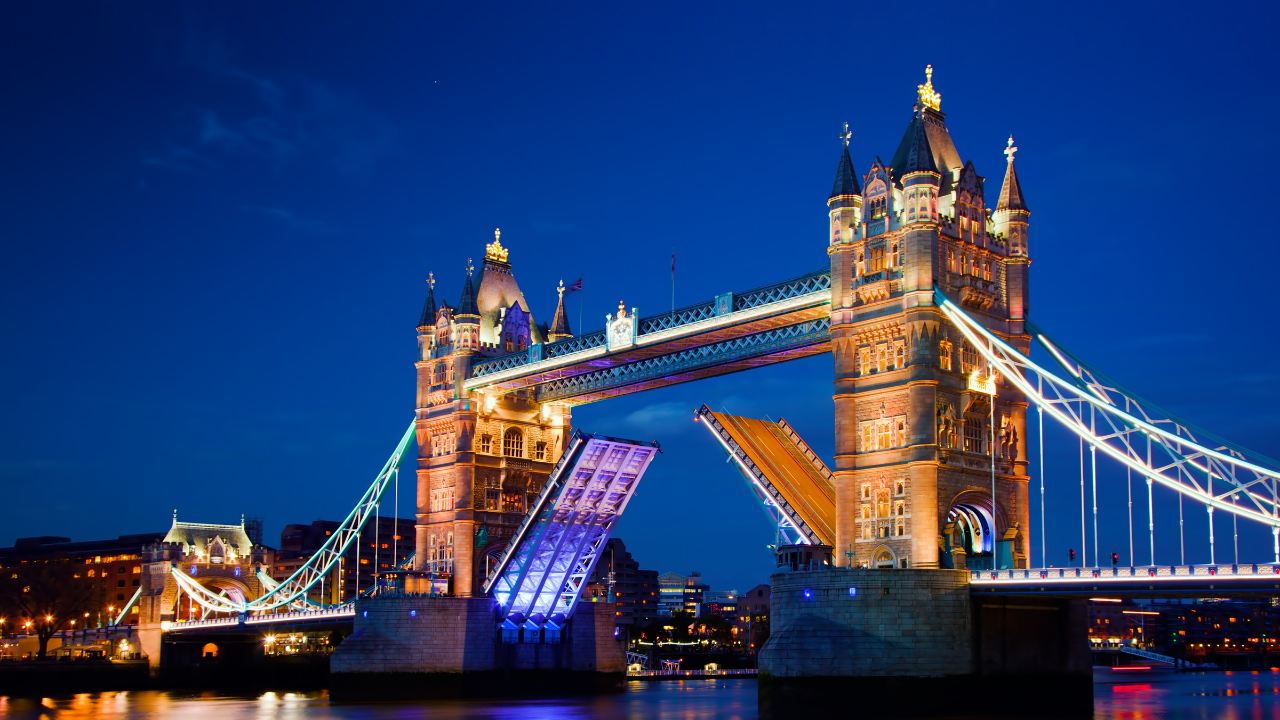
You have probably heard the nursery rhyme, but you likely didn't know the punchline actually happened. In 1968, the City of London sold its iconic river crossing to an eccentric American oil tycoon for $2.46 million.
People thought it was a joke. It wasn't. Workers painstakingly dismantled the entire structure stone by stone, slapped a precise four-number identification system on every single block, and shipped them halfway across the world to Lake Havasu City, Arizona. If you visit today, you can still spot those exact dismantling marks stamped into the original granite.
Let's look at why this bizarre transatlantic shipping feat happened, how engineers pulled it off without turning it into a pile of rubble, and why the whole story is crazier than fiction.
Why London Had to Get Rid of a Historic Crossing
John Rennie designed the stone masterpiece that opened across the River Thames in August 1831. It was an engineering marvel for its era, built with solid granite and supported by nearly 2,000 timber pilings. By the late 19th century, it was the busiest choke point in the British capital, moving thousands of pedestrians and horse-drawn carriages every single hour.
Then the twentieth century arrived with internal combustion engines.
The bridge was never built for bumper-to-bumper automobile traffic. Worse yet, the heavy structure was slowly sinking into the Thames riverbed at a rate of one inch every eight years. Patchwork repairs weren't cutting it anymore. City officials realized they needed a modern concrete-and-steel replacement, which left them with a massive 1,000-foot granite headache on their hands.
Instead of hauling the historic masonry to a scrap yard, city councillor Ivan Luckin floated a wildly unconventional idea. Why not put the old crossing on the open market?
Enter the Oil Tycoon with a Desert Dream
Robert McCulloch was a self-made multi-millionaire who made a fortune selling chainsaws and engines. He also possessed a relentless appetite for grandiose, unconventional ventures. When his business partner C.V. Wood mentioned that the City of London was trying to offload an entire stone monument, McCulloch saw an immediate marketing hook for his fledgling master-planned community in Lake Havasu, Arizona.
McCulloch wanted a centerpiece that would draw tourists and land buyers to an otherwise isolated desert community. Buying a historic British bridge fit his exact brand of spectacle.
Negotiations moved swiftly in the spring of 1968. City of London officials estimated that tearing down the structure would cost roughly $1.2 million. McCulloch doubled that figure on the spot. To seal the deal, he tossed in an extra $1,000 for each year of his own age, pushing the final purchase price to $2,460,000.
The Ultimate Transatlantic Jigsaw Puzzle
Dismantling a 130-year-old stone monument requires surgical precision. Engineers couldn't just knock it down with wrecking balls. Workers cataloged and numbered 10,276 exterior granite blocks before a single piece was lifted out of place.
Every block received a specific four-number code. The first digit pointed to the exact arch span, the second indicated its row, and the final two digits marked its exact position within that row. Without this meticulous grid system, reassembling the structure in the American desert would have been completely impossible.
Once labeled, the granite blocks were packed up, loaded onto ships, and sent on a lengthy sea voyage through the Panama Canal to Long Beach, California. Heavy trucks hauled the heavy stone slabs the rest of the way across the desert, with the first delivery arriving in July 1968.
Rebuilding in the Arid Heat
Architect Robert Beresford led the reconstruction using original blueprints from the nineteenth century. A crew of roughly 40 workers spent the next three years putting the monument back together piece by piece.
There was just one glaring problem: the desert terrain lacked a deep river for the bridge to span.
McCulloch solved this by building the structure directly across a dry peninsula of land. Once the masonry work wrapped up, excavators carved out a fresh channel underneath it, allowing water to flow through and turning the surrounding land into an artificial island.
To handle modern vehicular traffic without repeating the sinking mistakes of the past, engineers built a hollow core of steel-reinforced concrete and wrapped the exterior with the historic granite blocks. This clever hybrid design kept the weight manageable while preserving the authentic 19th-century British aesthetic on the outside.
Including shipping, assembly, and channel excavation, the total bill skyrocketed past $7 million—far outstripping the initial purchase price. Yet the gamble paid off. Lake Havasu City transformed into a thriving tourist destination, and today, millions of visitors walk across a piece of British history surrounded by palm trees and desert sunshine.