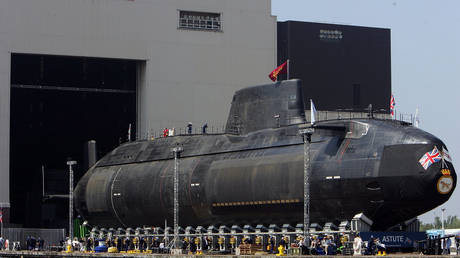
The Royal Navy is facing a silent disaster. If you look out across the North Atlantic right now, you won't find a single British nuclear-powered attack submarine on patrol.
Every single one of the Navy's core hunter-killer vessels—the multi-billion-pound Astute-class—is currently sitting in a port somewhere, tied up for repairs or waiting in a massive maintenance backlog. For a nation that prides itself on maritime dominance and serves as a vital pillar of NATO’s underwater shield, the operational availability rate for these front-line attack subs has hit absolute zero.
People searching for updates on British naval power usually ask two things. First, how does an entire fleet of cutting-edge submarines end up stuck in the mud at the same time? Second, are the UK's shores completely unprotected?
The short answer to the second question is no, the UK isn't defenseless. The government relies on a mix of surface warships, maritime patrol aircraft, and allied NATO assets to keep tabs on British waters. But losing the entire hunter-killer fleet creates a massive, dangerous gap in undersea capability exactly when Russian submarine activity in the North Atlantic is surging at levels not seen since the Cold War.
This isn't a problem with the design of the submarines themselves. It's a structural breakdown of the infrastructure meant to keep them running.
The Logistical Bottleneck Paralyzing the Fleet
The Royal Navy operates five commissioned Astute-class submarines: HMS Astute, HMS Ambush, HMS Artful, HMS Audacious, and HMS Anson. A sixth boat, HMS Agamemnon, was launched recently but is still stuck in post-commissioning trials and isn't ready to fight. The final boat, HMS Agincourt, won't arrive until later.
The problem is that the five operational boats are stuck in a queue.
[HMS Astute] ----\
[HMS Ambush] -----\
[HMS Artful] ------+---> [Devonport Naval Base] ---> MAINTENANCE JAM
[HMS Audacious] --/      (Shared with Vanguard Nuclear Deterrent)
[HMS Anson] ------/
To understand how we got here, you have to look at where these machines go when they break down. The UK can only execute complex nuclear submarine maintenance at specific docks equipped with radiological safety facilities, primarily Devonport in Plymouth.
Because the Ministry of Defence prioritizes the Vanguard-class ballistic missile submarines—the ones carrying the UK’s actual nuclear deterrent—at all costs, the attack submarines get pushed to the back of the line.
When limited dry dock space meets an ongoing shortage of highly specialized nuclear technicians, a single delay ripples through the entire system. Boats end up stuck alongside the pier for one to two years just waiting for routine work. HMS Anson, the newest boat to enter service, recently returned from an extended deployment to Australia and promptly went straight into the maintenance queue after technical defects were identified, slamming the door on the last operational hull.
Why the Timing is Horrible
Losing your underwater eyes and ears is bad enough at any time, but right now it's a massive strategic liability. Nuclear attack submarines don't just sit around looking for enemy ships; they perform highly sensitive, invisible tasks.
- Protecting the deterrent: When a Vanguard ballistic missile sub leaves its base at Faslane to start a nuclear deterrent patrol, it is incredibly vulnerable to being shadowed by foreign vessels. An Astute-class attack sub usually sweeps the area ahead of it, ensuring the nuclear-armed boat slips out into the deep ocean undetected. Without that protection, the continuous at-sea deterrent is exposed.
- Guarding subsea cables: About 64 data cables support the UK’s global connectivity, handling digital transactions worth close to $1.9 trillion every single day. Russian naval doctrine has placed a massive emphasis on mapping and potentially sabotaging this exact kind of critical undersea infrastructure.
- The GIUK Gap: The Greenland-Iceland-UK gap is the strategic gateway for Russian vessels trying to break out from the Northern Fleet into the wider Atlantic. British attack subs have traditionally done the heavy lifting to monitor this choke point.
With the Astute fleet sidelined, NATO has to rely heavily on US and alternative European assets to patch over the hole. It is an embarrassing reality for a nation trying to project power globally through projects like AUKUS—the trilateral security pact between the US, UK, and Australia. If the UK cannot keep its own submarines at sea, its credibility as a major partner in building Australia’s future fleet takes a serious hit.
How to Fix the Availability Crisis
The defense establishment knows it messed up. The Royal Navy recently launched a submarine operations recovery framework explicitly designed to break the maintenance logjam, but you can't build dry docks or train nuclear engineers overnight.
To get out of this mess and prevent it from happening again, the UK needs to shift its focus away from just buying flashy hardware and start investing heavily in the unglamorous world of logistics.
1. Expand Radiological Maintenance Sites
Relying so heavily on Devonport creates a single point of failure. The government must upgrade alternative infrastructure, utilizing facilities at Faslane or investing in long-term floating dock projects capable of handling nuclear platforms. If you don't have multiple places to fix boats simultaneously, the queue will always return.
2. Radical Supply Chain Overhaul
A major driver behind the current delay is the collapse of secondary defense suppliers. Bankrupt subcontractors and obsolete tooling components mean simple parts can take months to source. The Ministry of Defence needs to incentivize domestic manufacturing and speed up initiatives like advanced 3D printing for certified naval components to bypass broken global supply chains.
3. Tackle the Workforce Deficit
You can have the best submarines in the world, but they are useless without the crews to sail them and the shore staff to fix them. The Royal Navy needs to radically reform its retention packages for technical personnel, matching private-sector nuclear industry salaries to keep experienced engineers from walking out the door.
The immediate military goal is to get at least three of the five Astute-class submarines back to high-readiness operational status before the year ends. Until that happens, Britain’s underwater defense policy is essentially just a paper tiger waiting in line at the shipyard.