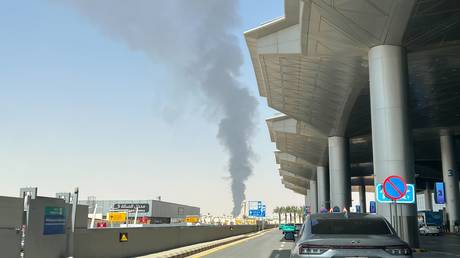
If you woke up this morning in Los Angeles with a scratchy throat and a thick layer of grey haze over your car, you aren't alone. The massive Boyle Heights warehouse fire at the Lineage Logistics cold storage facility has been burning since June 17, 2026, and fire officials say the smoke won't disappear for days. This isn't your typical structural fire. It's a logistical nightmare that has triggered a local emergency from Mayor Karen Bass and a state of emergency from Governor Gavin Newsom.
When a 500,000-square-foot building packed with dense insulation, solar panels, and millions of pounds of food catches fire, you can't just douse it with water and walk away. Understanding why this blaze is so stubborn explains why local schools are shifting activities and why a looming biohazard threat is creeping closer to East Los Angeles.
The Insane Engineering Making the Boyle Heights Storage Fire Impossible to Put Out
Most people think putting out a building fire is straightforward. Firefighters show up, aim hoses, and extinguish the flames. But the Lineage Big Bear facility at 1400 S. Los Palos Street was engineered to do one thing perfectly: keep things freezing cold.
LAFD Chief Jaime Moore described the structure as a giant cooler. The building features corrugated steel walls packed tightly with thick foam insulation, reinforced by interior steel panels. This design locks temperatures in. Unfortunately, it also locks fires in.
+---------------------------------------------------------+
|                  SOLAR PANEL FARM (Roof)                |
|  [Ignition Source -> Melted & Collapsed Into Structure] |
+---------------------------------------------------------+
|   Corrugated Steel Exterior / Dense Foam Insulation     |
|   (Traps heat, smolders continuously, blocks water)     |
+---------------------------------------------------------+
|   85 Million Pounds of Frozen Food (Thawing/Spoiling)  |
|   (Zero visibility, collapsing internal rack systems)   |
+---------------------------------------------------------+
When the blaze ignited on Wednesday afternoon, it started on the high-voltage solar panels covering the roof. The fire quickly melted through the roof and compromised the dense foam insulation inside the walls. Once that foam catches fire, it smolders indefinitely. Water sprayed from the outside simply bounces off the steel panels, never reaching the burning foam underneath.
Firefighters faced an impossible choice. Sending crews inside a dark, unstable freezer with collapsing roof sections and zero visibility is a suicide mission. Instead, crews have been forced to fight from a distance. They are using massive excavators to rip away sections of the exterior steel walls just to get water streams inside. Over the weekend, the LAFD even brought in water-dropping helicopters—a tactic usually reserved for raging wildfires, not neighborhood warehouses.
Inside the 85 Million Pound Biohazard Crisis
The immediate chemical threat is over, but a grosser problem is taking its place.
During the initial hours of the firefight, a major ammonia line ruptured inside the facility. Ammonia is excellent for keeping industrial freezers cold, but it is highly toxic and flammable when airborne. That leak is what triggered the frightening shelter-in-place orders early on. Crews successfully shut down the valves and pumped the dangerous ammonia off-site, eliminating the chemical hazard.
But turning off the refrigeration system started a ticking clock.
Inside that giant, smoldering cooler sits 85 million pounds of frozen food. We are talking about massive quantities of poultry, beef, pork, and bread. Right now, the insulation is still holding the interior temperature at around 45 degrees, but that won't last. The food is thawing. As the fire dies down, the city is shifting from a fire crisis to a massive biohazard cleanup operation.
Rotted meat on this scale generates putrid odors and toxic organic gases as it decomposes. Ripping open the building to put out the remaining hot spots accelerates the thawing process. The LAFD cannot easily send crews inside to pull out the pallets because the internal storage racks are warped, unstable, and holding up sections of the collapsed roof. The city will have to manage a delicate, slow extraction process to avoid releasing an unbearable stench across East Los Angeles.
School Disruptions and Worsening Air Quality
Local families are bearing the brunt of this environmental mess. The South Coast Air Quality Management District has kept a strict smoke advisory in place for everything east of Boyle Heights. The air quality index across large swaths of the city has hovered in the unhealthy and moderate zones, blanketing landmarks like Dodger Stadium in a nasty, acrid haze.
The smoke fluctuates wildly. Every time firefighters use heavy machinery to tear open a new section of the wall to extinguish hidden hot spots, a fresh plume of dark smoke shoots into the air.
Because of these shifting, unpredictable air conditions, the Los Angeles Unified School District has relocated all student activities for nearby schools. Kids can't play outside, and keeping classrooms safe requires heavy-duty filtration that older school buildings simply don't have.
Smoke Exposure Symptoms to Watch For:
* Scratchy, irritated throat or persistent coughing
* Burning sensation in the eyes or redness
* Shortness of breath and wheezing
* Chest tightness or sudden headaches
If you live within a few miles of the facility, don't assume the air is safe just because you can't see thick black clouds outside your window. Particulate matter from burning industrial foam is irritating to anyone, but it is downright dangerous for kids, elderly residents, pregnant individuals, and anyone dealing with asthma or heart disease.
Actionable Steps for Boyle Heights Residents Right Now
You don't have to just sit there and breathe in industrial smoke. If you live in the affected zone, take advantage of the emergency resources mobilized by the city and state.
Maximize Your Indoor Air Quality
Run your central air conditioning if you have it, but make sure the fresh-air intake is closed so you aren't pulling smoky air inside. If you own an air purifier with a HEPA filter, run it on high in the room where you spend the most time. Avoid vacuuming, burning candles, or frying foods right now, as these activities add more particulate matter to your indoor air.
Use the Free Emergency Rides
Uber is offering free transportation to help residents get away from the worst smoke zones. You can get up to two free rides, worth up to $40 per trip, if you are within 2.5 miles of the fire. Open your Uber app and apply the promo code ELASAFE26. This code remains valid through June 27, 2026.
Visit a Smoke Relief Center
If your home lacks air conditioning or you can smell smoke inside your living room, do not stay there. The city and county have set up dedicated smoke relief centers equipped with commercial-grade air filtration, clean water, and cool seating areas.
- Pecan Recreation Center: 145 S. Pecan Street, Los Angeles, CA 90033
- City Terrace Park: 1126 N. Hazard Avenue, Los Angeles, CA 90063
Protect Your Pets
Animals have smaller lungs and suffer from smoke inhalation much faster than humans. Keep your dogs and cats indoors. Limit outdoor bathroom breaks to quick, essential trips, and avoid long walks or outdoor playtime until the LAFD officially declares the fire completely extinguished.
What Happens Next
Chief Moore expects the active burning to continue for at least two to three more days. Firefighters have successfully split the building in half and confined the active flames to one side, meaning the fire is unlikely to spread to adjacent properties. However, the slow, methodical process of tearing down walls and drowning the smoldering foam insulation means the haze isn't leaving the Los Angeles basin anytime soon.
Keep your windows tightly shut, track live evacuation and safety statuses via the Genasys Protect platform, and check daily air updates through the official AQMD website. Do not attempt to drive near the intersections of Union Pacific Street, Calzona Street, or Indiana Street, as heavy emergency vehicle traffic has those areas completely locked down. Stay inside, protect your lungs, and let the crews handle the mess.