The old guard of philanthropy loved a long timeline. For decades, the standard playbook for the ultra-wealthy was simple: build an empire, accumulate an unimaginable mountain of capital, set up a private family foundation, and let a board of trustees slowly dole out five percent of the asset base every year long after you died. It was a system designed for permanence, ego, and multi-generational control.
That system is breaking down.
A quiet mutiny is brewing at the dinner tables of the world’s wealthiest families. Driven by a massive generational transfer of wealth, younger heirs are turning to their parents with a blunt message: you have made enough money, it is time to give it away, and we need to do it immediately. They are completely rejecting the concept of the slow-drip foundation. Instead, they want to deploy capital at a breakneck pace to address immediate global crises, often to the deep discomfort of the matriarchs and patriarchs who signed the checks.
This is not just a change in timing. It is an entirely new philosophy of what wealth is for, and it is reshaping the flow of global capital.
The Friction Inside the World’s Wealthiest Families
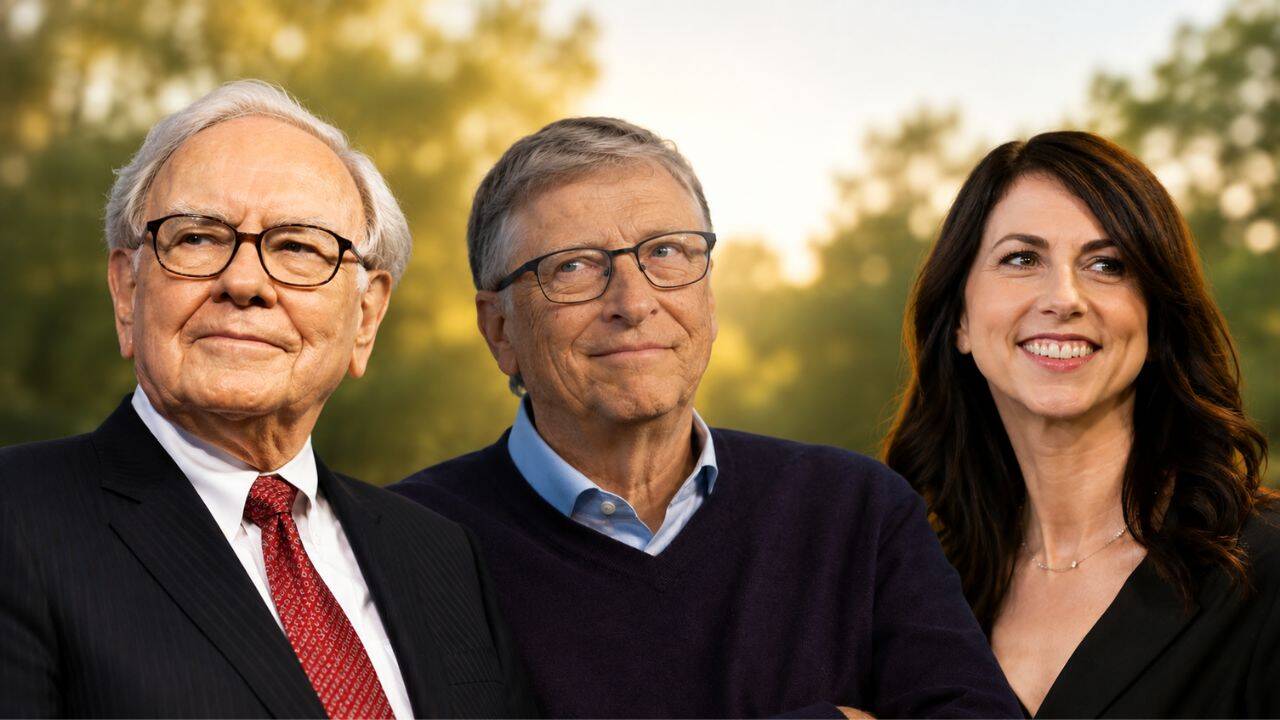
We are sitting on the precipice of a historic shift in capital. Over the next two decades, aging baby boomers will pass down an estimated $84 trillion in assets. A significant chunk of that sits in the hands of billionaires. For years, initiatives like the Giving Pledge—launched in 2010 by Warren Buffett, Bill Gates, and Melinda French Gates—encouraged the ultra-wealthy to commit at least half of their fortunes to charity. But that pledge came with a glaring loophole: there was no expiration date. You could promise the money and let it sit in compounding investments for fifty years.
Younger family members are calling foul on that loophole.
Katherine Lorenz, who leads the Giving Pledge’s Next Gen group, recently pulled back the curtain on these private family dynamics. She noted a distinct pattern of younger relatives openly pushing their parents to accelerate their timelines. They are pointing at the compounding problems of climate change, staggering economic inequality, and systemic instability, arguing that saving money for a rainy day makes no sense when it is already pouring outside.
The barrier is almost always the older generation. Founders are wired to accumulate, protect, and optimize. They treat capital like a scoreboard or a tool for long-term security. The heirs, having grown up under the intense public lens of historic wealth inequality, view that same capital as an urgent liability. They do not want to inherit a legacy of hoarding. They want the money out the door before they even take full control of the estate.
The MacKenzie Scott Effect and the Death of the Bureaucratic Grant
If Warren Buffett and Bill Gates created the modern framework for committing wealth, MacKenzie Scott blew up the framework for distributing it. Her approach has become the ultimate case study for younger heirs looking to bypass traditional, slow-moving philanthropic structures.
Since her divorce from Amazon founder Jeff Bezos, Scott has distributed over $26 billion through her organization, Yield Giving. What makes her a radical figure in business and philanthropy is not just the dollar amount. It is her complete embrace of trust-based philanthropy.
Traditional philanthropy requires non-profit organizations to jump through endless administrative hoops. Organizations spend hundreds of hours writing grant proposals, creating complex metric systems, and submitting multi-year progress reports just to secure a few hundred thousand dollars. The donor dictates exactly how every penny is spent.
Scott did the opposite. She gave out multi-million-dollar, entirely unrestricted gifts to thousands of local organizations, historically Black colleges, and community groups. She did not demand board seats. She did not require lengthy applications. She essentially said: you know your community better than I do, take the money, and use it where it helps most.
This methodology relies on speed and autonomy. It is deeply tied to a concept Scott discovered in Annie Dillard’s book, The Writing Life. Dillard advised writers not to save their best ideas for a future project, warning that the impulse to keep something valuable for later is a sign that it should be deployed now. Scott applied that exact logic to her multi-billion-dollar fortune.
For younger heirs, Scott is proof that you do not need a massive corporate hierarchy to move billions of dollars effectively. Her rapid-fire deployment has set a benchmark that makes traditional family foundations look painfully obsolete.
Why the Slow Philanthropy Model Fails
To understand why billionaire heirs want to donate sooner, look at how the traditional private foundation operates under the hood.
By law in the United States, private non-operating foundations are only required to distribute roughly five percent of their endowment value each year to maintain their tax-exempt status. The other 95 percent remains invested in the stock market, private equity, and real estate.
During a strong market bull run, a foundation’s investments often grow faster than the five percent they give away. The result is a bizarre paradox: a charitable entity that actually grows richer over time while the social problems it was created to solve get worse.
Intermediary Hoarding vs Direct Action
A massive critique of the traditional Giving Pledge model revolves around where the money actually goes. Research by organizations like the Institute for Policy Studies indicates that a staggering percentage of billionaire donations do not go to working charities on the ground. Instead, they flow directly into donor-advised funds (DAFs) or private family foundations.
A donor-advised fund gives the billionaire an immediate, massive tax deduction. But once the money hits the DAF, it can sit there indefinitely. There is no legal mandate forcing a DAF to distribute its funds to an actual shelter, food bank, or research initiative on any specific timeline.
Younger philanthropists see this as a shell game. They recognize that using intermediaries to warehouse wealth preserves donor control and shields the family from taxes while doing nothing for the public good. The push to donate sooner is a direct attack on this warehouse model. Heirs want direct, unmediated capital deployment.
The Backlash Against Elite Giving
We cannot ignore the broader cultural shift driving this urgency. The public sentiment surrounding billionaires has shifted from admiration to deep skepticism. Extreme wealth concentration is under a microscope, and younger heirs feel that heat acutely.
They understand that holding onto a massive fortune while the world struggles creates a profound reputational risk. It is no longer prestigious to have your family name on a museum wing or a university building if that wealth was preserved through decades of tax avoidance.
This reality has triggered a fierce ideological battle within the ultra-wealthy community. On one side, you have figures like tech billionaire Peter Thiel, who has actively opposed the Giving Pledge, arguing that capital is better spent driving innovation through for-profit businesses rather than non-profit entities. We have also seen tech executives like Brian Armstrong of Coinbase sign the pledge and then later quietly walk away from it.
Furthermore, public scandals have tarnished the prestige of the old-school philanthropic clubs. High-profile divorces, revelations of problematic financial ties, and the realization that many pledgers actually grew wealthier after signing the promise have eroded public trust.
Younger heirs see this reputational decay and want out of the elite club structure. They do not want to sign a vague declaration of intent to be celebrated at a private dinner in Manhattan. They want to systematically dismantle the fortune before the public narrative turns completely against them.
The Operational Playbook for Accelerating Your Giving
If you are managing an estate, family office, or substantial corporate fortune and want to align with this modern shift toward immediate impact, you have to change your operational framework. Waiting for the estate planning phase is too late.
Here is exactly how progressive wealth managers and forward-thinking families are shifting their strategies right now.
Shifting to a Spend-Down Mandate
The most decisive move a family can make is converting a perpetual foundation into a spend-down or "limited-life" foundation. This means the entity is legally structured to distribute all of its assets and close its doors within a set timeframe—usually ten to twenty years.
By removing the goal of permanence, the investment strategy completely shifts. You stop investing for infinite growth and start liquidating assets to maximize immediate cash flow for grants.
Automating Unrestricted Flow
Emulate the trust-based model by removing administrative friction. Instead of forcing small non-profits to produce hundreds of pages of documentation, rely on independent investigative vetting. Look at their past operational efficacy, transfer the funds with zero strings attached, and let them execute.
Re-Evaluating the Family Office
Traditional family offices are built to grow wealth across generations. If the goal is to give it away sooner, the key performance indicators (KPIs) of the family office must change. Success should not be measured by the percentage of portfolio growth, but by the volume of high-impact capital successfully deployed into the field each quarter.
The transition from asset accumulation to rapid distribution is messy, uncomfortable, and forces difficult conversations across generations. But the heirs pushing for this change are entirely correct about one thing: a fortune held in perpetuity is just a monument to past success. True leverage requires moving the money while it still has the power to change the future.