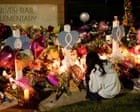
Tragedies arrive with a terrifying speed. When a 16-year-old former student walked onto the Silver Rail Elementary campus in Bend, Oregon, armed with a shotgun and violent intent, the normal routines of a quiet afternoon dissolved instantly. Three children and a teacher died. Others sustained critical injuries.
Yet within the fog of carnage, a different narrative emerged about how civilian intervention works in real-time chaos. Kaylub Giamanco, a 36-year-old carpenter and father with two daughters enrolled at the school, drove up during his lunch break, heard gunfire, retrieved his legally registered 40-caliber pistol from his vehicle, and ran toward the danger. He shot and killed the gunman at close range, halting a massacre while teachers and staff scrambled to shield students. Meanwhile, you can explore other developments here: Why Florida Just Charged Raúl Castro With Murder Decades After The Brothers To The Rescue Tragedy.
Subsequent reporting revealed a curious detail from Giamanco's past. Years prior, in a 2018 social media post, he mentioned participating in shooting drills alongside combat veterans who had served in Iraq. Investigators and commentators immediately latched onto this tidbit, treating it like some missing origin story. But boiling a split-second, life-or-death decision down to past target practice misses the raw, messy reality of how people react under extreme pressure.
The Myth of Tactical Pre-Programming
We love neat narratives. When an ordinary civilian steps up during a crisis, society tries to reverse-engineer their bravery. People want to find a secret manual, a specialized training course, or an elite background that explains why one person charged into gunfire while others fled. To see the bigger picture, check out the recent analysis by BBC News.
Former military drills sound impressive in a news headline. They imply muscle memory, tactical coolness, and calculated precision. But human biology under fire rarely respects past resume bullet points. When adrenaline floods the system, your vision narrows, your heart rate spikes past 175 beats per minute, and fine motor skills degrade rapidly.
Giamanco wasn't running a simulated clearing exercise in Bend. He was reacting as a father whose children were inside the building. Before he ever fired his weapon, a teacher had already thrown a cellphone at the shooter, tackled him, and tried to wrestle the firearm away. Giamanco arrived during that physical struggle, pulled his pistol, and ended the threat at point-range.
The idea that casual shooting drills with combat vets somehow transformed a carpenter into a tactical operator is a comforting fiction. It helps observers rationalize the irrational horror of school shootings by assigning predictable mechanics to a chaotic event. The truth is much simpler and much heavier: ordinary people make terrifying choices because they have no other choice left.
The Cost of Being Called a Hero
Public discourse loves to crown heroes. Headlines frame individuals like Giamanco as cinematic saviors who swooped in to save the day. But talk to the people actually caught in the aftermath, and the word hero feels entirely wrong.
Giamanco's brother told reporters he wasn't comfortable with the label. His mother, Kenda Freeman, recounted the harrowing phone call she received immediately after the shooting. Her son called simply to say he had just killed someone. While she felt immense relief that her granddaughters survived, that relief was instantly shadowed by the unbearable weight of the wider community's loss. Three children and a beloved teacher did not come home that day. Another young student spent days fighting for life in a hospital bed.
When you strip away the cable news commentary and the social media sleuthing, you are left with a shattered community in Bend, Oregon, mourning lives that can never be recovered. Labeling a bystander a hero doesn't fix a broken security infrastructure. It doesn't bring back the victims, and it doesn't solve the recurring nightmare of American gun violence.
Focusing on peripheral details like past shooting drills distracts from the systemic failures that allowed a teenager with a shotgun to breach a locked elementary school door in the first place. Until society addresses the root causes of these tragedies, relying on armed parents to intervene at the last second is not a safety plan. It's a desperate gamble.