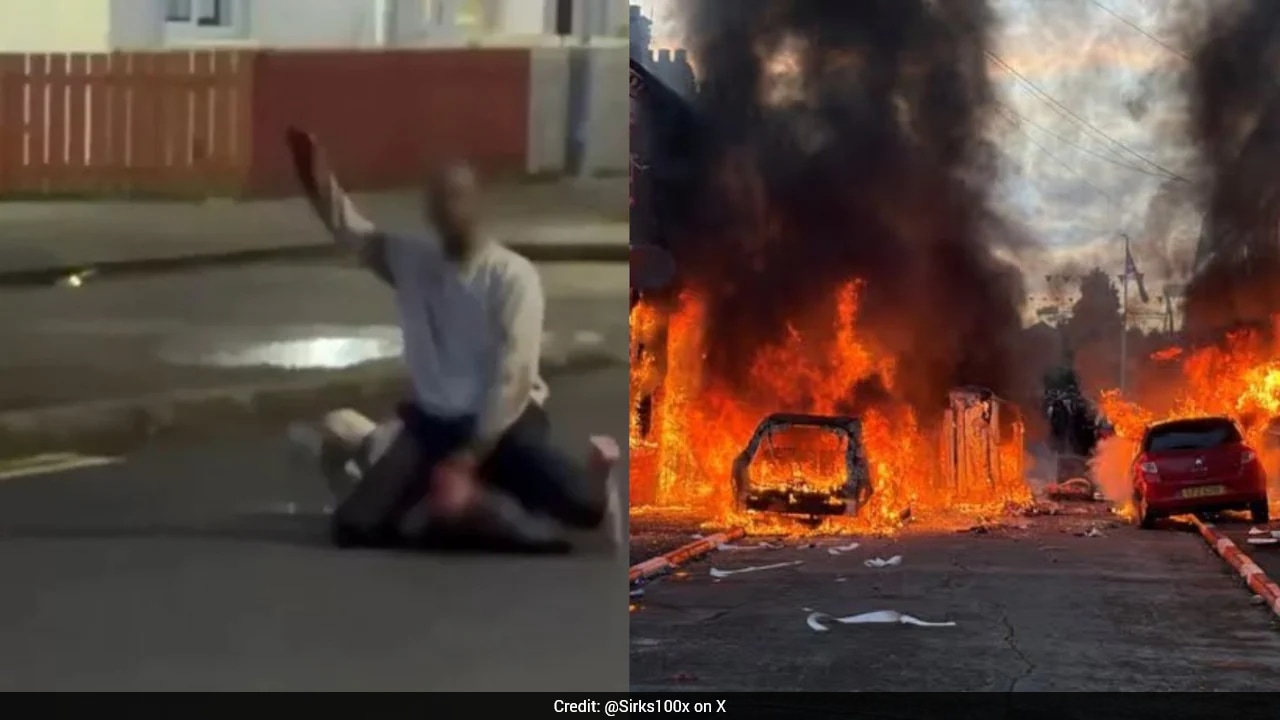
A graphic video clips onto your social media timeline. Within minutes, it has a thousand retweets. Within an hour, it's viral. By nightfall, neighborhoods are burning.
That's exactly how Belfast transformed into a flashpoint of violence. On Monday night, a horrific street stabbing left a local man in his 40s critically injured with severe wounds to his eyes, face, and back. The suspect, a 30-year-old Sudanese asylum seeker named Hadi Alodid, allegedly carried out the assault with a kitchen knife in North Belfast. Ordinary bystanders, including one brave soul wielding a hurling stick, rushed the attacker and effectively saved the victim's life.
But the real-world intervention couldn't halt the digital wildfire.
By Tuesday, prominent far-right online agitators seized on the footage. They amplified the suspect’s immigration status to demand immediate action. What followed was a night of absolute chaos across Northern Ireland's capital. Masked mobs carrying bricks and bottles marched through the streets, chanting xenophobic slogans and setting fire to cars, transit buses, and residential homes.
We aren't just looking at isolated criminal acts anymore. We're looking at a terrifyingly efficient pipeline where online anger turns into street-level violence in fewer than 24 hours. If you want to understand why Belfast erupted so quickly, you have to look past the headlines and dissect how algorithmic outrage is outrunning local policing.
The Trigger Event and the Digital Firestorm
When the Police Service of Northern Ireland (PSNI) detained the suspect, they charged him with attempted murder, possession of a bladed weapon in a public place, and making threats to kill. Chief Constable Jon Boutcher confirmed the suspect had traveled from Sudan through Paris and Dublin, eventually arriving in Belfast where he was granted a five-year visa in September 2023. He wasn't on any national security watchlists. He wasn't known to local police.
To the justice system, it was a horrific, isolated crime requiring a meticulous investigation. To the internet, it was fuel.
High-profile far-right figures immediately weaponized the graphic footage of the attack. They didn't wait for police briefings. They didn't care about legal due process. Instead, they framed the incident as a direct consequence of open borders and failing immigration policies. This narrative targeted a community already experiencing simmering economic and social anxieties.
The algorithm did the rest. It pushed the shocking video directly into the feeds of angry, disaffected locals. By Tuesday evening, hundreds of men in balaclavas and black hoodies filled the streets of East and North Belfast, transforming digital rage into physical destruction.
What a Race-Based Pogrom Looks Like on the Ground
This wasn't a peaceful political protest that simply got out of hand. It was targeted intimidation. Local lawmakers and community leaders didn't mince words, with some describing the night's events as a race-based pogrom.
Consider what actually happened on residential streets like Lendrick Street and areas near the Shankill Road:
- Door-to-Door Intimidation: Groups of masked men walked down terraced streets, actively targeting houses known to be occupied by immigrants or ethnic minorities.
- Property Destruction: Rioters smashed windows with bricks, kicked down front doors, and launched fireworks into homes while terrified families watched from upstairs windows.
- Arson and Looting: A Glider commuter bus was hijacked and torched on the Newtownards Road. Phone shops were looted, and an African-owned business was set on fire, leaving neighborhoods choked in heavy black smoke.
- Displacement: Multiple families had to flee their homes under police protection, escaping into the night as rain finally began to suppress the flames late Tuesday.
Northern Ireland’s First Minister, Michelle O’Neill, directly called out the perpetrators, labeling the acts as "disgusting cowardice" that had absolutely nothing to do with community defense. Yet, the physical and psychological damage to Belfast's diverse neighborhoods was already done.
The Policing Blindspot
Why didn't the authorities stop it before the first match was struck?
The uncomfortable truth is that modern police forces are built to respond to physical intelligence, not lightning-fast digital mobilization. Western law enforcement frameworks rely on traditional command structures. They assess physical crowds, look at historical territorial tension, and deploy resources based on predictable patterns.
They aren't equipped to counter an agile, decentralized online network that can coordinate a riot across multiple neighborhoods simultaneously. Assistant Chief Constable Ryan Henderson declared the situation a critical incident, deploying armored police vehicles to handle what he called "sporadic pockets of disorder." But when a mob is moving fluidly based on real-time social media coordination, a localized police presence ends up playing a dangerous game of whack-a-mole.
Furthermore, the UK is already dealing with raw societal tensions. The Belfast riot follows hot on the heels of major legal controversies in England, such as the high-profile conviction of Vickrum Digwa, which sparked its own wave of racially charged protests. When public trust in institutions is brittle, a single viral video becomes a master key to civil unrest.
Turning the Tide Against Algorithmic Riots
If we don't change how we manage the intersection of viral misinformation and public safety, Belfast won't be the last city to burn. Waiting for a crisis to boil over onto the streets before acting is a losing strategy. Here's what needs to happen next to prevent digital outrage from dictating urban safety.
1. Build Digital Rapid-Response Units
Law enforcement must treat viral, hyper-local violent content with the same urgency as a physical bomb threat. The moment a graphic video involving sensitive community dynamics begins to trend, police forces need automated mechanisms to work with platforms to flag unverified claims, offer immediate, transparent factual updates, and surge physical monitoring to predicted flashpoints before crowds assemble.
2. Hold Online Agitators Legally Accountable
Free speech doesn't cover shouting "fire" in a crowded theater, and it shouldn't cover cross-border digital incitement to riot. When public figures utilize their massive platforms to explicitly call for street actions based on breaking, unverified criminal cases, they should face severe legal and financial consequences for the real-world property damage and violence that follows.
3. Strengthen Local Community Integration
The areas targeted in Belfast are often working-class neighborhoods where native residents and newer immigrant populations live side-by-side but rarely interact meaningfully. Local councils must invest heavily in community-led safety networks. When neighbors actually know each other, it becomes much harder for an outside online narrative to convince a local mob to burn down a house on their own street.