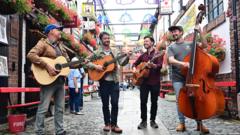
When roughly 800,000 visitors descend on Belfast for Fleadh Cheoil na hÉireann, the city transforms completely. Vacant warehouses turn into packed music venues, car parks host bustling marquees, and streets that usually echo with standard rush-hour traffic fill with the sound of fiddles, pipes, and foot-tapping crowds. It is loud, chaotic, and brilliant.
Then the festival ends. The road blocks come down, the temporary outdoor bars pack up, and everyone asks the same tired question. How do we bottle this magic for the other fifty-one weeks of the year?
The truth is, you cannot just bottle a festival. But you can steal its playbook.
The Blueprint of Temporary Transformation
Belfast City Council handed out around one hundred street trading licenses and numerous temporary entertainment permits to make the Fleadh work. Vacant lots like the North Street car park transformed into performance spaces. Empty commercial spaces like the former Eason warehouse on Donegall Street became thriving social hubs.
Urban planners usually spend years debating how to revitalize dead zones. Yet, faced with a massive influx of traditional music fans, the city solved these space problems in weeks through sheer necessity.
Why does it take a mega-festival to get permission to use empty urban land?
If Belfast wants a thriving nightlife and cultural scene twelve months a year, the bureaucracy needs to loosen its grip permanently. Rigid licensing laws and slow planning approvals kill grassroots venues before they even open. When you grant temporary flexibility for eight days, you prove that alternative use works. Now, city leaders need to translate those temporary measures into permanent policy.
Rethinking How We Move Through the City
Transport is another massive hurdle. During the Fleadh, large chunks of the city centre pedestrianized to handle massive pedestrian footfall, supported by massive park-and-ride operations drawing from regional transport hubs.
Locals noticed something shocking during those pedestrianized days. The city centre felt better. Without bumper-to-bumper car traffic clogging up core commercial arteries, public spaces felt human again.
Most mid-sized cities treat pedestrianization like an all-or-nothing holy war. Retailers panic about lost parking spaces, while transit advocates push for total vehicle bans. The Fleadh showed a middle ground. You create functional transport loops on the periphery while giving the absolute core back to pedestrians, street performers, and market stalls.
If Belfast wants to compete with other European cultural capitals, reclaiming downtown space from cars cannot just be an annual event for traditional Irish music. It needs to happen every weekend.
Supporting the Spaces That Feed the Culture
Pop-up bars and street food villages brought incredible energy to places like the Cathedral Quarter and the streets surrounding City Hall. Independent traders, local artists, and small food vendors got a massive economic boost.
Too often, municipal policies favor massive corporate developments over local micro-economies. Independent operators face steep hurdles trying to set up outdoor seating, late-night music spots, or pop-up retail kiosks.
When you give small businesses the freedom to spill onto the pavement, the entire street atmosphere improves. People linger longer. They spend more money locally. They actually enjoy being downtown.
What Happens Next
The danger now is that Belfast packs away the pop-up infrastructure, pats itself on the back for a successful hosting gig, and goes right back to business as usual until the next big tourist draw lands on the calendar.
That would be a massive waste.
The city proved it can handle crowds, manage flexible spaces, and shift public transit priorities on the fly. The blueprint is right there. Local authorities need to make temporary licensing permanent, expand weekend pedestrian zones, and trust independent creators to animate empty spaces.
Stop treating vibrancy like a rare seasonal weather event. Build a city that functions like a festival every single day.
:max_bytes(150000):strip_icc()/delta-plane-exterior-KNOWDELTA0621-39eb72ab62704acf9167adb2c08e62e9.jpg)