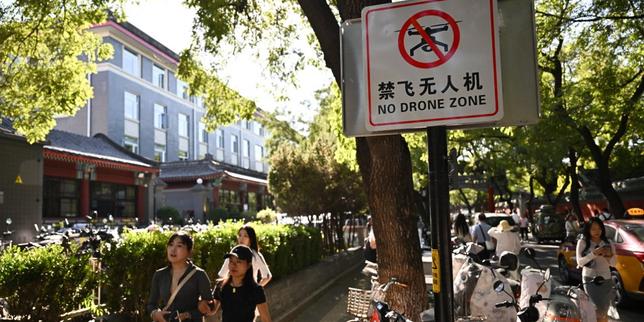
You can't just fly a drone over Beijing anymore. In fact, you soon won't even be allowed to own one inside the city limits.
The Comité permanent de l'Assemblée populaire municipale de Pékin revised its regulations on uncrewed aerial vehicles on September 11, 2026. Starting November 15, the possession, storage, and transport of drones and their essential components become entirely illegal across the entire municipality.
If you own a drone in China's capital, your time is running out. You've got until mid-November to figure out what to do with your gear.
The Tightening Grip on Beijing's Airspace
China didn't arrive at this sweeping ban overnight. For months, regulations have grown increasingly restrictive. Earlier rules banned unauthorized flights and clamped down on retail sales and imports. But those measures weren't enough for municipal authorities obsessed with capital security.
Following a series of security incidents—including a widely discussed crash involving a small aircraft hitting a high-rise building—officials decided that partial measures wouldn't cut it.
Now, the city is drawing a hard line. The upcoming decree goes far beyond restricting flight paths. It outlaws the mere physical presence of these gadgets in apartments, offices, and garages across the city.
What Options Do Drone Owners Actually Have?
Owners aren't just expected to throw their expensive equipment in the trash, though time is ticking. The municipal government has outlined specific pathways for residents looking to comply before the November deadline.
If you're holding onto a registered drone, you have a few choices. You can pack it up and ship it completely out of Beijing to a location where the rules are less draconian. You can hand it over for official destruction. Or, you can take advantage of state-backed buyback and subsidy programs designed to incentivize the surrender of private tech.
The consequences of holding onto your gear are steep. Ordinary citizens caught violating the rule face the immediate confiscation of their hardware and fines running up to 5,000 yuans, which translates to roughly 600 euros. For organizations, those penalties jump tenfold to 50,000 yuans.
Who Gets an Exception?
Of course, rules in large administrative capitals always come with carve-outs. You aren't completely out of luck if your livelihood depends on aerial technology, provided you operate under strict state oversight.
Exemptions exist, but they are narrow. Public safety operations, emergency rescue missions, scientific research, and academic instruction can secure special permits. Industrial production, agriculture, and forestry work also qualify for limited operational waivers after rigorous evaluations by local authorities.
For the average hobbyist, vlogger, or weekend photography enthusiast, though, those doors remain firmly locked.
The Broader Impact on Personal Tech
This dramatic crackdown marks a massive shift in how urban populations interact with consumer electronics. For years, consumer drones grew into a massive market, championed by domestic giants like DJI. People grew accustomed to capturing cinematic 4K footage of urban skylines, historic landmarks, and suburban parks.
Now, that era is crashing to a halt in the world's most heavily monitored metropolises.
As November 15 approaches, local community groups and online forums are buzzing with logistics. People are coordinating shipments across municipal borders, selling off hardware to buyers outside the danger zone, or reluctantly saying goodbye to gear they spent thousands of dollars acquiring.
The skies over Beijing are clearing out permanently. If you're heading there with a quadcopter in your luggage, leave it at home.
Beijing Bans Drone Possession, Import, and Flight Starting in November
This video provides an overview of the new regulations and the reasons behind the strict ban on drones in Beijing.
http://googleusercontent.com/youtube_content/1