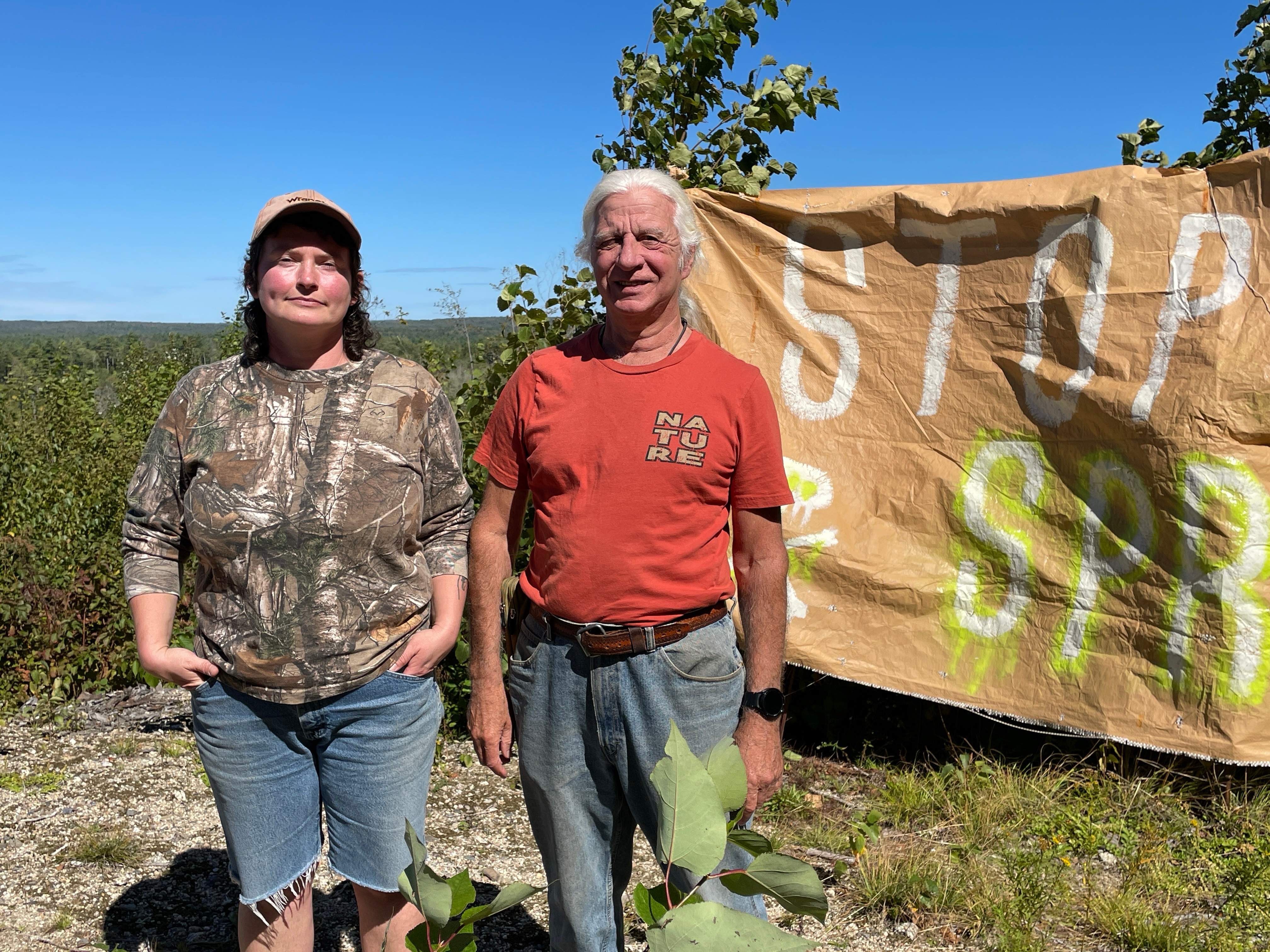
Imagine finding out a helicopter is about to dump herbicide near your home, and your only warning was a tiny sign spotted by a neighbor picking berries.
That is exactly the reality facing residents of Bear River, Nova Scotia right now. A numbered company secured government approval to conduct aerial glyphosate spraying across Annapolis and Digby counties between September 16 and September 30. If a local resident hadn't stumbled through a berry patch and noticed the minuscule warning sign, the community might never have known.
The situation in Bear River exposes a massive flaw in how Nova Scotia regulates corporate forestry practices. When the burden of discovering chemical spraying falls on citizens foraging in the woods, the regulatory system is officially broken.
Finding the Threat in a Berry Patch
Lenny Hornung, a Bear River resident fighting the province's plans, was blunt about how the community found out. His neighbor was out picking berries and happened to see the placard. If she had stayed home that day, the community would have remained completely in the dark.
The signs indicate approval for spraying along Thomas, Guinea, and Victory roads. According to documents obtained by the community, the province quietly approved this spraying on August 19 for a faceless numbered company.
Residents are furious. They have filed a formal complaint with the province alleging clear violations of the mandatory 30-day notice requirement outlined in Nova Scotia's Pesticide Regulations.
Robin Sturley, another local resident, pointed out the obvious absurdity of the government's communication strategy. The signs are barely visible. The actual warning text printed on them is tiny. Government and industry are failing completely at their basic duty to warn the public and keep people safe from chemical exposure.
The Loophole in the Notification Rules
You have to ask how a tiny sign in the brush legally constitutes "public notice" in 2026.
Forestry companies operating in Nova Scotia are required to notify the public before they drop chemicals from the sky. The problem lies in how those rules are interpreted and enforced. A small sign hammered into the dirt on a rural backroad might check a bureaucratic box, but it does absolutely nothing to inform the families living nearby.
The residents of Bear River want the spraying paused until an independent investigation into the notification failure is concluded. They argue that if the industry cannot even manage to put up a readable sign, they cannot be trusted to safely apply agricultural chemicals near a residential community.
Why the Forestry Industry Clings to Glyphosate
To understand why this is happening in Bear River, you have to look at the harsh economics of modern forestry.
Timber companies use glyphosate—the active ingredient in Roundup—to aggressively suppress competing vegetation. When a logging company clear-cuts an area, they want to replant it with commercially valuable softwood trees like pine and spruce. Nature, however, wants to heal that scar with fast-growing broadleaf deciduous trees and dense brush.
Instead of letting the forest regenerate naturally, companies hire helicopters to spray glyphosate. The chemical kills off the broadleaf competitors, leaving the softwoods to grow into a uniform, highly profitable monoculture plantation.
Health Canada re-approved glyphosate for sale back in 2017, extending its use in Canada until April 2032. That single federal decision serves as the ultimate shield for provincial regulators and logging companies. Every time citizens complain, officials simply point to Health Canada.
But public tolerance is evaporating. Court cases and high-profile lawsuits surrounding the health risks of glyphosate are mounting globally. People do not want these chemicals drifting into their water tables, their gardens, or their lungs.
Dead Broadleafs and Rising Wildfire Risks
The reliance on glyphosate does more than just annoy local residents. It actively changes the physical structure of the forest in ways that can prove disastrous.
When you spray herbicide to kill off deciduous trees like maple, birch, and aspen, you are actively removing the forest's natural firebreaks. Hardwood trees hold moisture. Their leaves resist burning. Conifers, on the other hand, are packed with highly flammable resin. They burn incredibly hot and fast.
By chemically forcing the forest into a softwood monoculture, the forestry industry is essentially cultivating matchsticks. Nova Scotia has experienced devastating wildfires in recent years. Continuing to kill off fire-resistant hardwood species just to boost timber yields is a dangerous gamble that rural communities are forced to underwrite.
Bees Do Not Respect Property Lines
The ecological damage extends straight into the local agricultural economy. You cannot put a fence around a toxic zone and expect insects to respect the boundary.
Phyllis Harlow is the local beekeeper for the Bear River First Nation. She was forced to harvest her honey early this year just to avoid the risk of her hives coming into contact with the glyphosate spray.
Bees are active foragers. They easily fly several kilometers from their hives to collect nectar and pollen. Late summer and early fall are critical times for colonies. The goldenrod and English asters are blooming heavily right now. Harlow's bees are bringing all of that nectar back to the hives.
If those flowers are coated in fresh herbicide, the chemical comes straight back to the colony. For a community that works hard to build a sustainable local food system, having a helicopter wipe out a season's worth of clean foraging is unacceptable.
Threatening Mi'kmaw Food Sovereignty
The planned spray zone directly threatens Indigenous land use and treaty rights. The Assembly of Mi'kmaw Chiefs stepped in and demanded a total stop to the spraying, highlighting the deep cultural and practical significance of the Bear River area.
Chief Carol Potter made it clear that this is not just an abstract environmental debate. It is a direct threat to Mi'kmaw survival and tradition. The spraying actively endangers their ability to safely access and harvest the foods, medicines, and natural resources that sustain their community.
These resources are deeply tied to Mi'kmaw identity and their connection to the land. As Harlow pointed out, a community that relies heavily on hunting, fishing, and foraging cannot simply block off entire sections of the woods. The water flows together. The wildlife moves freely. You cannot isolate a poison drop in a living ecosystem.
The Province Passes the Buck
When confronted with angry residents, threatened bees, and Indigenous leaders demanding a halt, the provincial government offered a textbook bureaucratic shrug.
Environment and Climate Change Minister Timothy Halman confirmed his department is investigating the residents' complaint about the lack of notice. He called it "good due diligence" and labeled his department a "responsive regulator." He claimed the process was followed.
Then he used the ultimate escape hatch. Halman told anyone with health and safety concerns about the pesticide to go contact Health Canada.
This response ignores the reality on the ground. Health Canada might approve the chemical for sale, but the Nova Scotia government is the entity handing out the permits to spray it over specific communities. The province has the power to say no. Passing the buck to federal scientists in Ottawa does not absolve local officials of their responsibility to protect their own constituents.
The people of Bear River are tired of the runaround. They don't just want the current spray paused over a paperwork violation. They want aerial glyphosate spraying phased out of the forestry industry entirely.
What You Can Actually Do
If you live in a rural community and want to stop helicopters from dumping chemicals over your local watershed, waiting for the government to do the right thing is a losing strategy. You have to force the issue.
Track the approvals. The Nova Scotia Department of Environment and Climate Change quietly updates their pesticide approval maps. Do not wait for a neighbor to find a sign in the bushes. Check the registry constantly during the late summer spraying season.
Document everything. If you find a tiny, illegible warning sign, take a photo. Note the exact GPS coordinates and time. File an immediate, formal complaint demanding an investigation into improper notification. The 30-day notice rule is often your best weapon for delaying a spray operation.
Support the local pushback. Stand with the Assembly of Mi'kmaw Chiefs and local farmers who are fighting to protect the local food supply. The forestry industry relies on public silence to maintain the status quo. Make sure they don't get it.